Showing posts with label fine tuning. Show all posts

Thursday, March 20, 2025

Rational and scientific inklings about God’s existence

In the previous post I mentioned that science does not provide proof of the existence of God, but it does give inklings. In a book I wrote, which was published in Spanish in 2013 with the title ¿Es compatible Dios con la ciencia? Evolución y Cosmología (Is God Compatible with Science? Evolution and Cosmology) I described a list of those inklings. Here I will summarize a few of them. The first three are scientific, the others are not.

1.      The universe is a physical object. During the 19th century, atheist philosophers denied that the universe is a concept applicable to a concrete object that exists outside our mind. The universe is usually defined as the set of everything that exists. According to those philosophers, such a set does not exist, since the concept of the universe is an invention of the human mind, which does not correspond to any physical object. Therefore, it would not be necessary to look for its origin (its cause) outside our mind. This argument was disproved in the 20th century: Einstein’s theory of general relativity leads to a cosmological equation that applies to the universe, which implies that the cosmos has real existence, that it is a physical object.

Thursday, May 9, 2024

Will the multiverse cause a change in the scientific paradigm?

Thomas Kuhn

I continue my comments on Man Ho Chan’s article, which reviews and refutes recent attempts to make multiverse theories scientific. In this post I’ll refer to those attempts that try to modify the current scientific paradigm to include the theories of the multiverse, so that they can be considered scientific. To do this, epistemological changes or scientific paradigm changes should be made.

According to Thomas Kuhn, there are five criteria that make it possible to evaluate the paradigmatic character of a theory:

  1. Accuracy: Indicates whether the predictions of the theory agree with experimental data discovered after the theory is formulated. This criterion is similar to falsifiability in the Popper-style theory, and corresponds to what I have called in another post validation of the theory. It is clear that multiverse theories do not meet this criterion, since they do not make testable predictions.

Thursday, May 2, 2024

Are the multiverse theories scientific?

Virgo galactic cumulus

In previous posts I have said that the theories of the multiverse (there are several, some of them contradictory to the others) are not scientific, because it’s not possible to prove them false, according to Karl Popper’s criterion: a theory is not scientific unless it can be proved false with an experiment.

A recent article by Man Ho Chan reviews and refutes various attempts to claim that multiverse theories are indeed scientific. Here I am going to speak about those that try to prove that the multiverse theories should be considered scientific without asking big changes to the current criteria. Carroll 2018 uses three main arguments to justify this:

Thursday, March 28, 2024

The mystery of the cosmological constant

Alexander Friedmann
(Александр Фридман)

This post completes a previous post with a similar title:

The problem of the cosmological constant.

First of all, we should define three different concepts that could be closely related:

  1. Vacuum energy: due to the constant appearance of pairs of particles and antiparticles that immediately mutually disintegrate, so they are undetectable through direct experimentation. Their appearance is a consequence of the uncertainty principle: ΔΔt<ħ/2, which implies that a particle with energy ΔE can appear spontaneously during a time Δt<ħ/(2ΔE), which is smaller for larger ΔE. Thus, a virtual electron would last less than 4×10-21 seconds. A proton, whose mass is 1837 times greater, would last 1837 times less. By applying quantum field theory to all the known particles, the energy of the vacuum can be estimated.
  2. The cosmological constant: introduced by Einstein in his cosmological equation, which in the format devised by Alexander Friedman is expressed as follows: The symbol Λ is the cosmological constant. Einstein proposed a negative value, to compensate for a cosmic expansion, in which he initially did not believe. Today it is thought to be positive, which would explain the accelerated expansion of the universe discovered in 1998.
  1. Dark energy: an unknown agent that would cause the accelerated expansion of the universe.

Thursday, October 19, 2023

A new fine-tuning case and the “great design”

Almost every case of fine-tuning discussed so far concerns nuclear reactions and their consequences, in the realm of the very small. This is what could happen if the universal constants and parameters were not fine-tuned:

  • Either there would be no hydrogen in the universe, and the stars would last too short a time for life to appear.
  • Or the fusion of hydrogen to give helium would not be possible, so there would be no stars.
  • Or oxygen or carbon, essential elements for life, would not be generated in stars.

In all these cases, concepts and ideas are drawn from particle physics, astronomy, and cosmology.

Thursday, May 11, 2023

An Evolving Universe: PopulScience in Book Form

CEU Ediciones has published in book form, under the title Un universo en evolución (An evolving universe), a compilation of about a hundred posts published in this blog and its Spanish version, Divulciencia, over nine years, thematically arranged. Currently this book is only available in Spanish. These are the titles of the fifteen chapters:

  1. Introduction (3 posts)
  2. The beginning (5 posts)
  3. The standard cosmological model (9 posts)
  4. The fine-tuning problem and the theories of the multiverse (7 posts)
  5. The problem of time (7 posts)
  6. Life on Earth and on other worlds (3 posts)
  7. The evolution of life (7 posts)
  8. Man (5 posts)
  9. Natural and artificial intelligence (7 posts)
  10. Synthetic life and artificial life (3 posts)
  11. The future of man (8 posts)
  12. The end of man and of the universe (4 posts)
  13. Science, faith, and atheism (14 posts)
  14. About science in general (17 posts)
  15. Conclusion (1 article)

Julio A. Gonzalo

The book starts by a presentation by Javier Pérez Castells, and a prologue by Julio A. Gonzalo. This is a paragraph from the presentation, which has been highlighted on the back cover of the book:

Manuel Alfonseca presents us in this book with a selection of posts from his blogs arranged by topic. The guiding thread is the story of creation. Beginning with the start of the universe (where he expands more, given his experience and knowledge on this subject), going through the origin of life and evolution, ending with anthropological conceptions of the human being. After that, he turns towards the supposed conflict between science and faith, grouping together a set of posts where he answers to this false tirade. Along the way, he stops to deal with the issue of artificial intelligence, the author’s favorite subject, and devotes a good number of chapters to an optimistical look at the future, albeit not forgetting that everything, together with the story of creation, will have an end. The book concludes with a few pertinent reflections on the limits of science, today considered by many as the only source of knowledge, in the exacerbation of what we call scientism.

Most of the posts (about one hundred) that have become part of the book have been previously published on the blogs Divulciencia and PopulScience, although a few are completely new, others have been built from several consecutive original posts or from those that dealt with the same topics, and the rest, those who have passed directly from the blogs to the book, have been updated.

The same post in Spanish

Thematic Thread on Anniversaries and Organization: Previous Next

Manuel Alfonseca

Wednesday, January 26, 2022

The hijacking of the Big Bang

The Big Bang theory was invented in 1931 by the Belgian priest Georges Lemaître, through the backward application in time of the Hubble-Lemaître law, discovered by Lemaître in 1927 and independently by Hubble in 1929. Indeed, if most galaxies are moving away from one another, because of the expansion of the space separating them, billions of years ago they must have been much closer, and at the limit all the visible universe would have shrunk to a point. We believe today that this happened about 13.8 billion years ago.

In 1948, George Gamow, Ralph Alpher and Robert Herman made two predictions that should be fulfilled if the Big Bang theory were true: the mass of the universe should consist of about 75% hydrogen and 25% helium; and there should exist a cosmic background radiation with a temperature of about 5º Kelvin. Other cosmologists, however, took this theory as a joke, and to make fun of it they gave it the name Big Bang, which although not quite appropriate, has remained fixed, perhaps forever.

Wednesday, January 27, 2021

The fine-structure constant

Arnold Sommerfeld

One of the latest scientific advances of 2020 was a new, more precise measurement of the fine-structure constant. The last value officially accepted in 2018 by the Committee for Data on Science and Technology (CODATA) is equal to 1/137.035999084. The value obtained in December 2020 is equal to 1/137.035999206. It will be seen that the difference with the previous value is very small and affects only the seventh decimal place.

But what is the fine-structure constant? It's a dimensionless constant, defined by the following formula:

Thursday, November 26, 2020

Atheism, theism and science

Today, the world’s population is divided between two competing, irreconcilable systems: atheism and theism. They are irreconcilable, because they start from opposite fundamental axioms (God does not exist and God exists). The approximate distribution of the population is this:

  • About 10% convinced atheists, willing to defend their ideas.
  • 10-20% convinced theists, who try to live according to their beliefs.
  • 10% agnostics, who in theory don’t accept either of the two axioms, although in practice they tend to approach one of the two opposite poles.
  • 60-70% indifferent, either because they don’t care about the debate; or because they live as if God does not exist, without considering whether He exists; or because they have beliefs, but don’t let them affect their way of life.

Thursday, October 1, 2020

A Singular Universe

Javier Sánchez Cañizares is one of the contributors to the book Preguntas sobre Ciencia y Fe, published in 2014 and republished this year. In 2020, Javier has published a book in Spanish with the same title as this post, which can be considered as a book on philosophy of science at a high level of popularization. The goal of the book is to show that materialistic reductionism has no chance of providing a correct complete explanation, as our universe is singular because of several different reasons:

Thursday, April 23, 2020

The Game of Life and the multiverse

John Horton Conway
As I said in the previous post in this blog, The Game of Life is a cellular automaton devised by John Conway. Let's see how it works, in a little more detail:
This cellular automaton acts on a potentially infinite two-dimensional space, divided into square cells. In each cell there is a simple automaton, or if you want, a program with two states that we can call alive and dead, or 1 and 0. The program in each cell takes as input its own state and the states of its eight neighbors. If it is alive (i.e. in state 1) and two or three of its neighbors are alive, in the next instant it will still be alive. If it is dead (in state 0) and exactly three of its neighbors are alive, in the next instant it will become alive. In any other case, it will become dead. Let's look at a figure to make it clearer:

Thursday, October 11, 2018

Interview with Manuel Alfonseca in a Spanish Newspaper


On February 23, 2018, a Spanish Newspaper (La Opinión, El Correo de Zamora) published this interview with me, performed by Ana Arias, which I am now translating into English. The interview was re-published a few days later (March 10) in the website ReligionEnLibertad (ReligionInFreedom). This is the translation of the interview:

He took an interest in science since he was quite small, as he says. At age 16 he wrote a book of zoology in two volumes that was never published. Anyway, whenever he has to consult information about some little known animal, he consults his book. "And I can find almost everything there," he adds. Now, at 71, he is an honorary professor at the Autonomous University of Madrid.

He believes in science. And also in God. Under the sponsorship of the Caja Rural Foundation and the Science-Religion University Forum held yesterday at the University College, Manuel Alfonseca gave a lecture about The Faith of Contemporary Atheist Scientists.

What is the faith of those scientists?

That God does not exist.

Thursday, August 11, 2016

Happy anniversary

Tomorrow August 12th is the second anniversary of the opening of this blog on popular science. The Spanish version of the blog appeared a little earlier, on January 15th 2014. In these two years I have published over 100 articles, usually one per week, although I have interrupted publication during the summer, and slowed it somewhat in Christmas.
In this anniversary I want to take stock of what has been done so far, and the goals I imposed myself when I started this activity. The decision on whether I have achieved any of these goals is left open to the consideration and critical judgment of the readers.

Thursday, May 12, 2016

The god of the gaps

In 1977 Pergamon Press published a curious book called The Encyclopedia of Ignorance, which tried to collect, in a collection of articles written by specialists in different areas, most of the problems (then) unresolved in fields such as cosmology, astronomy, particle physics, mathematics, evolution, ecology, biological development, medicine and sociology. Some of these problems have not yet been solved, almost 40 years later; others, like the mystery of the missing neutrinos in the solar radiation, which I mentioned in the previous post, seem to be in the way of being resolved, although this has led to the emergence new problems, as often occurs in science.
Since the nineteenth century, one of the typical accusations of atheists against believers has been that they resort to the god of the gaps, i.e. to use God to explain those things we still don’t know about the structure of the world. We are still far from knowing everything, because science is (and probably always will be) incomplete: there will always be mysteries. Well, believers are accused to rely precisely on the mysteries (the gaps of science) to justify the existence of God. According to this view, God would be nothing more than the deus ex machina of the Greco-Roman drama, who appeared to solve the unsolvable problems where the playwright had entangled his characters. As science advances, the holes will be filled and the need to turn to God will get lower.

Thursday, February 5, 2015

The monkey pounding on a typewriter

In connection with the fine tuning problem, the argument of the typist monkey is often used as an illustration that even very unlikely events can occur spontaneously. Depending on the author of the quote, the text supposedly written by the monkey can be the complete works of Shakespeare, Don Quixote, or even a shorter and less specific work. For instance, John Leslie, in his book Universes (Chapter One), writes:
Our universe can indeed look as if designed. In reality, though,  it may be merely the sort of thing to be expected sooner or later. Given sufficient many years with a typewriter, even a monkey would produce a sonnet.

Thursday, January 8, 2015

Anthropic and supranthropic properties

In a previous post I wrote about the fine tuning problem, based on the verification that many of the properties of the universe seem designed to make our existence possible. In other words: those properties verify the anthropic principle, another way of saying that the universe must fulfill all the conditions needed for our existence, since we are here. On the other hand, the mediocrity principle states that the anthropic conditions of the universe should be the necessary minimum to make our existence possible.
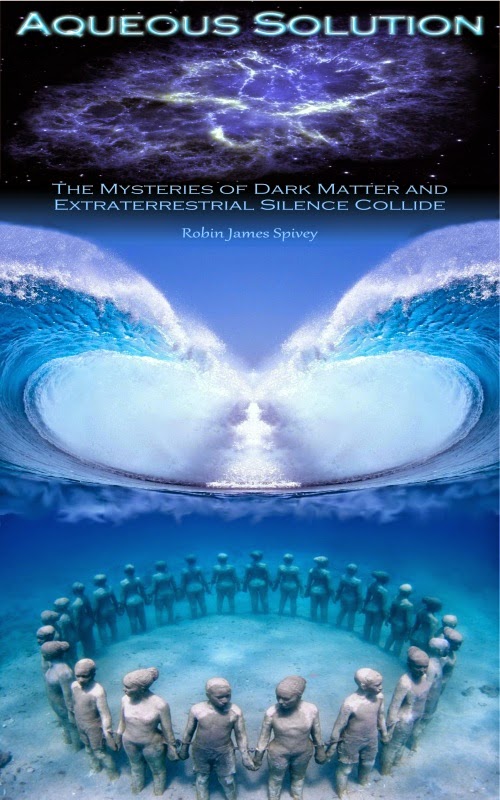
Robin James Spivey has lately published a book titled Aqueous solution, where he asserts that certain properties of the cosmos are supranthropic (they go beyond the anthropic principle) because they are not required for our existence, but their presence guarantees our long-range survival. According to Spivey, those properties are an inkling of design stronger than the anthropic properties, as the mediocrity principle opposes their presence.

Thursday, December 4, 2014

The fine tuning problem

In two previous posts I dealt with the relation between the multiverse theories and the problem of fine tuning, noting that those theories do not solve the problem. This third post describes briefly what is the fine tuning problem.
Brandon Carter
In 1973 Brandon Carter formulated the anthropic principle, a name later deplored by its author, because it may be prone to misunderstandings. This principle is simply the verification that the universe must fulfill all the conditions necessary for our existence, since we are here.
Over a decade later, John Barrow and Frank Tipler published a book entitled The anthropic cosmological principle, which offered a stronger version of the anthropic principle, posing that the values of many of the universal constants are critical and minor variations would make life impossible. This finding raises the fine tuning problem, based on the analysis of the possible effects of changing the values of those constants. In other words, the universe seems designed to make life possible. Let’s look at a few examples:

Thursday, November 20, 2014

The multiverse does not solve the fine tuning problem

Atheists use the multiverse theories to escape the need to accept God’s existence as the cause of a universe which seems to have been designed to make life possible (fine tuning). While they do this, they are contradicting one of their most beloved arguments against God’s existence, which they have been using since the nineteenth century. This one:

The theist hypothesis offers an explanation for the origin of the world based on two entities: God and the universe.
The atheist hypothesis only needs a single entity: the universe.
Ergo Occam’s razor favors the atheistic explanation.
As it is well known, the lex parsimoniae, also called Occam’s razor, one of the fundaments of the scientific method, asserts that, between two competitive theories, we must prefer that one with the fewest entities (or assumptions).
But the current situation is quite the opposite. The alternative to the theist hypothesis is no longer a single entity, the universe, but rather many (between 10500 and an infinity of universes). The previous argument must therefore be re-written thus:

Thursday, November 13, 2014

The multiverse and the fine tuning problem

The multiverse theories appeared in cosmology over half a century ago, but they have proliferated and spread starting at the eighties, together with the discovery of the fine tuning problem, the verification that the universe appears to have been designed to make life and our existence possible: many of the physical parameters we consider independent adopt quite critical values, so that very small differences in those values would make the universe hostile to life.
The fine tuning problem has three possible solutions:
·         The universe has been designed by a creator.
·         Our existence is the result of a huge, incredible chance.
·         There are many universes and we are located in that one which is compatible with our existence (the multiverse hypothesis).

Thursday, October 23, 2014

Atheist arguments are still in the nineteenth century while theists have modernized

Interview with Manuel Alfonseca published in http://www.religionenlibertad.com/los-ateos-siguen-con-argumentos-del-siglo-xix-pero-los-teistas-38204.htm

Manuel Alfonseca was born in Madrid in 1946. He is the son of the painter and sculptor Manuel Alfonseca (Santana), is a doctor in Telecommunication Engineering and a Computer Scientist, has been a full professor, and is currently a honorary professor at the Universidad Autónoma of Madrid. 

His great gift is his ability to popularize science and express himself clearly, which has led him, not only to teaching and science, but also to the literary world (he has published fantasy, science fiction and historical novels). His work makes a bridge between "science" and "humanities", attested in his blog on popular science and his personal website. Now, in addition, he is one of the co-editors (along with Francisco-José Soler-Gil) of an unusual work for its breadth and ease of comprehension: 60 preguntas sobre ciencia y fe respondidas por 26 profesores de universidad (60 questions on science and faith answered by 26 professors). Without getting into the 60 questions, we shall try to explore the science-faith dialogue with a few questions, while strongly recommending the book to those who seek answers to the others.