Showing posts with label science-fiction. Show all posts

Thursday, February 8, 2018

Scientific questions in Blade Runner

Philip K. Dick's sci-fi novel Do androids dream with electric sheep? was published in 1968 and quickly became a cult book, with many supporters and not a few detractors, among them myself. Fourteen years after its publication, its adaptation to the cinema with the title Blade Runner multiplied the number of its supporters.
In another post in this blog I mentioned that, in my opinion, the film is much better than the novel. When I read the latter, I did not like it. The time has come to explain why. This is the plot:
In a future world, in the year 2019, the advance of technology makes it possible to build androids (replicants in the film), beings of appearance identical to a human being, endowed with intelligence, but who have not been born in the usual way; they have been built. This future society tries to keep replicants segregated, so that they won’t mix with traditional humans. To achieve this, a new profession is invented: the killer of replicants who try to pass themselves off as humans. As soon as they detect a replicant doing this, the destroyer pursues and kills the replicant in cold blood, without a trial.
The above summary can be applied almost equally to the novel and to the film. So far, the argument is interesting, original and attractive. Why then did I say that I did not like the novel, but did like the movie?

Thursday, October 5, 2017

Scientific mistakes in Planet of the Apes

In 1963, the French writer Pierre Boulle published a famous science-fiction novel titled Planet of the Apes, which was adapted to the cinema for the first time in 1968, with Charlton Heston as the protagonist and script by Michael Wilson and Rod Serling, the latter famous for the TV series The Twilight Zone. A decade earlier, Boulle had published another bestseller, also successfully adapted to the movies: The Bridge over the River Kwai.
Boulle’s novel tells the story of three astronauts embarking on a two-year journey (measured in relativistic time) to a planet revolving around Betelgeuse (alpha of the Orion constellation) and find there an extraterrestrial civilization at a level similar to ours in the mid-twentieth century, where intelligent beings are three species of apes (identical to the terrestrial gorillas, chimpanzees and orangutans) while human beings (also identical to us) are devoid of reason. Of course, the only surviving terrestrial astronaut finds it very difficult to convince the apes that he is an intelligent being.

Thursday, September 21, 2017

The Tunguska event

On June 30th, 1908, at dawn, a mysterious explosion took place in an almost uninhabited region of central Siberia. The explosion leveled 2000 km2 of taiga, uprooting about 80 million trees, which were left lying on the ground, away from the central point of the event, like the spokes of a wheel. The most probable theory considers the event as the impact of a meteorite or comet, although nobody could find the debris. Unlike other cases, as the Arizona Meteor Crater, no crater was found in the place of the event. As an explanation of these anomalies, it was concluded that the explosion of the celestial body took place at a high altitude (between 5 and 10 km). Taking into account the effects, it has been calculated that the energy released by the explosion would be in the span of 3 and 30 megatons. Recall that the most powerful nuclear weapon ever detonated (by the Soviet Union) was a 50 megatons hydrogen bomb, over 1000 times stronger than the Hiroshima bomb, which only released 20 kilotons. (One megaton equals 1000 kilotons). During the cold war, the Soviet Union boasted of possessing an even larger bomb (100 megatons) that they couldn’t use in Europe, as the effects of its explosion would reach their own territory.

Thursday, March 19, 2015

Are we about to become immortal?

Arthur C. Clarke
In 1965 Arthur C. Clarke published a short story, titled Dial F for Frankenstein, later published in the collection The wind from the sun: stories of the space age. In that story Clarke proposed the following scenario:
When all global telephone systems are connected via geostationary satellites, the number of components of the global system will exceed those in the human brain. As such a system will have access to the information in all the computers connected to the network, we’ll have a very complex system with an extremely high amount of information. If conscience arises automatically from such a system, the computer network, connected by telephone, should be conscious and, being far superior to any human brain, will take control of the Earth.

Sunday, March 1, 2015

Interview with Manuel Alfonseca

This is the translation of an interview about my activity as an author of fiction, published in El Templo de las Mil Puertas


1.         What drives an apparently scientific person to get involved on the wonderful task of creating, writing and sharing stories?
Many scientists have written novels, especially in the genre of science fiction. To name a few: Carl Sagan, Leo Szilard, George Gamow and Willy Ley. I also like to try other genres. Throughout my life, I've been interested in many subjects that are not supposed to be science, such as history or philosophy. Later, when I tried to express myself in the field of fiction, such knowledge found its natural place.

Thursday, January 8, 2015

Anthropic and supranthropic properties

In a previous post I wrote about the fine tuning problem, based on the verification that many of the properties of the universe seem designed to make our existence possible. In other words: those properties verify the anthropic principle, another way of saying that the universe must fulfill all the conditions needed for our existence, since we are here. On the other hand, the mediocrity principle states that the anthropic conditions of the universe should be the necessary minimum to make our existence possible.
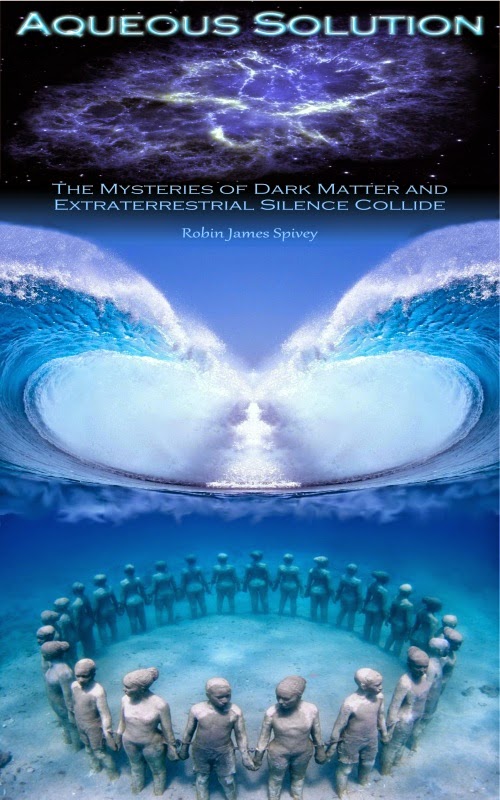
Robin James Spivey has lately published a book titled Aqueous solution, where he asserts that certain properties of the cosmos are supranthropic (they go beyond the anthropic principle) because they are not required for our existence, but their presence guarantees our long-range survival. According to Spivey, those properties are an inkling of design stronger than the anthropic properties, as the mediocrity principle opposes their presence.

Thursday, October 23, 2014

Atheist arguments are still in the nineteenth century while theists have modernized

Interview with Manuel Alfonseca published in http://www.religionenlibertad.com/los-ateos-siguen-con-argumentos-del-siglo-xix-pero-los-teistas-38204.htm

Manuel Alfonseca was born in Madrid in 1946. He is the son of the painter and sculptor Manuel Alfonseca (Santana), is a doctor in Telecommunication Engineering and a Computer Scientist, has been a full professor, and is currently a honorary professor at the Universidad Autónoma of Madrid. 

His great gift is his ability to popularize science and express himself clearly, which has led him, not only to teaching and science, but also to the literary world (he has published fantasy, science fiction and historical novels). His work makes a bridge between "science" and "humanities", attested in his blog on popular science and his personal website. Now, in addition, he is one of the co-editors (along with Francisco-José Soler-Gil) of an unusual work for its breadth and ease of comprehension: 60 preguntas sobre ciencia y fe respondidas por 26 profesores de universidad (60 questions on science and faith answered by 26 professors). Without getting into the 60 questions, we shall try to explore the science-faith dialogue with a few questions, while strongly recommending the book to those who seek answers to the others.

Monday, August 25, 2014

Solution to the time machine problem

Answer to the problem posed in a previouspost, on August 18th 2014:

This is what happened in the second scenario: 

At 16:01, the original Max traveled to the future in the second time machine. When he arrived, he found there the second Max waiting for him with the first time machine. He moved to the other machine and traveled back to the past, arriving at 15:59. After changing machines again, he traveled to the future in the original time machine. He never returned.

Only these two scenarios are possible. Any other you may try to build would be inconsistent (try and you will see).

Consequences: 

It is easy to see that the world line for the machine is the same in both scenarios. What changes is the traveler’s world line.

1.            In scenario 1, the traveler does not change machines either in the present or in the future.
2.            In scenario 2, the traveler changes machines both in the present and in the future.

Therefore, if time travel to the past were possible, the traveler would not be free. What he does in the present logically determines what he must do in the future. If he changes machines now, he must change in the future. If he doesn’t, he mustn’t.

Conclusion: 

Nobody doubts that a human being is free to take an elementary decision such as changing chairs or not. 


Therefore time travel towards the past must be impossible.

Thematic thread on Time: Previous Next
Manuel Alfonseca

Monday, August 18, 2014

The time machine problem

I am posing here a problem with interesting consequences about the (im)possibility of time travel. I'll pose the problem by means of two science-fiction vignettes. If you decide to try your hand at solving it, you can describe your solution in a comment to this blog post. Next week I'll explain the solution and its consequences.

First vignette

At 15:55, Max told me:
“I have just invented a time machine. Do you want to see it?”
Of course, I accepted. 

  • At 15:58, Max and I entered the room where the machine was. It looked like a simple metal chair. The machinery seemed to be located under the seat.
  • At 15:59, while Max and I looked at the machine from the room’s door, a second exact copy of it suddenly appeared, just near the machine. In the second machine was seated an exact copy of Max. Amazed, Max and I looked at him.
  • At 16:00, the original Max crossed the room, sat on the original machine, pressed a control and disappeared towards the future. The copy of Max, still sitting on the copy of the machine, observed attentively what he was doing.
  • At 16:01, the copy of Max pressed a control in the copy of the machine and disappeared towards the future. Max and the machine never returned.


After thinking for some time, I deduced what had happened. At 16:00, Max travelled to the future in his time machine, but when he arrived he travelled back to the past, arriving at 15:59. He watched the original Max leaving on the original time machine at 16:00, went again to the future at 16:01 and never returned.

In the figure, the blue line represents Max, while the red broken line is the time machine.

Second vignette 


At 15:55, Max told me:
“I have just invented a time machine. Do you want to see it?”
Of course, I accepted. 

  • At 15:58, Max and I entered the room where the machine was. It looked like a simple metal chair. The machinery seemed to be located under the seat.
  • At 15:59, while Max and I looked at the machine from the room’s door, a second exact copy of it suddenly appeared, just near the machine. In the second machine was seated an exact copy of Max. Amazed, Max and I looked at him.
  • At 16:00, the copy of Max stood up, went to the original machine, sat on it, pressed a control and disappeared towards the future. The original Max, near me, observed attentively what he was doing.
  • At 16:01, the original Max crossed the room, sat on the copy of the machine, pressed a control and disappeared towards the future. Max and the machine never returned.
Please, kind reader, can you help me find out what had happened in this second scenario?


See solution
See Spanish version
Thematic thread on Time: Preceding Next
Manuel Alfonseca