Showing posts with label science. Show all posts

Thursday, November 21, 2024

Scientific productivity is declining

String Theory

A team of Chinese and American researchers published on arXiv an article in September 2024 summarizing their study of the development of science and technology over more than two centuries. The study analyzes 213 million scientific articles published between 1800 and 2020, along with 7.6 million patents granted between 1976 and 2020.

The result of this study is the following: while the number of scientific publications has grown exponentially, the knowledge obtained by humanity grows linearly; in other words, the speed of knowledge acquisition is constant and does not grow in the same proportion as the number of publications.

Wednesday, August 21, 2024

Is science taught correctly?

According to many evaluations, education at the elementary and secondary levels is faulty. Every year, students arrive at the university knowing less, which makes it necessary to lower the level at the university or use desperate remedies, such as the implementation of level zero courses.

On the other hand, textbook publishers sometimes launch a race. Secondary education is supposed to provide students with general, non-specialized training. However, in some subjects, such as chemistry and biology, students may be made to learn questions or solve problems that should be encountered in college, several years later. It seems a contradiction that they are forced to learn more, but actually get out knowing less.

Thursday, February 16, 2023

Science and Scientism

Allegory of science
Attributed to Sebastiano Conca
The Dictionary of Oxford Languages defines science as follows:

The systematic study of the structure and behavior of the physical and natural world through observation, experimentation, and the testing of theories against the evidence obtained.

This definition is complete, because it covers the three branches in which scientific knowledge is normally classified: theory (reasoning), observation and experimentation. We could add applied science (technology), which is often classified separately.

On the other hand, scientism is defined thus:

The belief that scientific methods can be applied to all problems, with the consequent application of inappropriate scientific methods in unsuitable circumstances.

Thursday, October 28, 2021

The end of science?

The magazine Science News has just turned 100 years old. It began with the year 1922. From the beginning, it has numbered its magazines by semesters, rather than years, so the issues of the second half of 2021 bear the number 200. It is one of the longest-lived magazines of scientific information in existence. But its evolution in recent decades is worrying, and does not bring us to be optimistic about the current state of world science.

Thursday, August 26, 2021

Is there a future for scientific research?

In recent decades, the trend to give preference to applied research over basic research has been clear in the Western countries. Yes, there are special calls for funding basic research projects, but we should clarify what those in charge of allocating research budgets understand by basic research.

This is the Wikipedia definition for basic research: scientific research with the aim of improving scientific theories for better understanding and prediction of natural or other phenomena.

Thursday, June 21, 2018

Is History science or literature?

Allegory of Science, by Sebastiano Conca
There are different kinds of sciences. Some are rigorous and have great predictive power, others less, others practically none. Let us look at a classification of the sciences:
·         Formal sciences: They start from axioms or postulates, more or less unassailable, and use deduction as the main method of reasoning. A few play the role of fundamental basis for other sciences. In this group, we can include mathematics, logic and theoretical computer science.
·         Natural sciences: They use induction as the main method of reasoning. Their objective is to discover fundamental laws that explain the working of the world. They rely more or less on logic and mathematics. These sciences include (in order of decreasing rigor) physics and astronomy; chemistry; biology, geology and paleontology.
·         Social Sciences: They use abduction as the main method of reasoning (see an earlier article in this blog). Their object of study is man or society. These sciences include psychology, economics, sociology, anthropology, politics, archeology and history.
·         Finally, the applied sciences, whose objective is to develop practical applications from the theoretical knowledge provided by the experimental and social sciences. They usually associate under the name of technology, although there are some disciplines that fall outside that umbrella, such as legal sciences, applied economics, medicine, or applied psychology.

Thursday, November 5, 2015

More about the end of science

Science News, January 19, 2008
In a previous post I mentioned some inklings that seem to indicate that scientific development is decelerating. In this post I will focus on further evidence: the fact that most of the new discoveries being made in many sciences are almost always conditional. Rather than findings of fact, usually they just forecast possible findings that could be made in the future.
To show that this surmise may be true, I will consider a particular issue of the magazine Science News, one of the most prestigious among those engaged in high-level popular science. Specifically, I have taken the issue of January 19, 2008, which contains 18 news. Let us consider the titles or the first words, where I have enhanced those terms that indicate that the results of the investigation were provisional or tentative (unless you are really interested, you don’t have to read them all, you can skip to the last three paragraphs):

Thursday, September 10, 2015

The end of science

Servers at LAAS
by Guillaume Paumier
Licensed under CC BY 3.0
via Wikimedia Commons
In my previous article I wrote this: perhaps our scientific civilization won’t endure beyond this century. This is what I mean by the title of this article (the end of science), rather than the possibility that science is over because it has already discovered everything that can be discovered, which is very unlikely, as I pointed out in another post.
Science has been an integral part of our civilization for centuries, more than is usually believed, for scientific activity was already palpable during the Middle Ages. Isn’t it absurd to predict that such activity can be ended? How might this happen? Here I propose a few, far from exhaustive considerations:

Thursday, February 19, 2015

Science is a tool

Francis Bacon
The utopia The New Atlantis, written by Francis Bacon, a contemporary of Galileo and pioneer of modern philosophy of science, describes a perfect society that would automatically arise from the practice of science, which the inhabitants of the island of Bensalem have made the basis of their society and its government. Like many of his encyclopedic followers, who a century later created the myth of indefinite progress, Bacon believed that science in the future will save man and solve all human problems, opening the way to a paradise on Earth.
This mistake is common. Tools are often confused with their good uses, forgetting that the same tools can also be misused. Let’s look at a few examples, among the thousands that could be cited:

Thursday, January 8, 2015

Anthropic and supranthropic properties

In a previous post I wrote about the fine tuning problem, based on the verification that many of the properties of the universe seem designed to make our existence possible. In other words: those properties verify the anthropic principle, another way of saying that the universe must fulfill all the conditions needed for our existence, since we are here. On the other hand, the mediocrity principle states that the anthropic conditions of the universe should be the necessary minimum to make our existence possible.
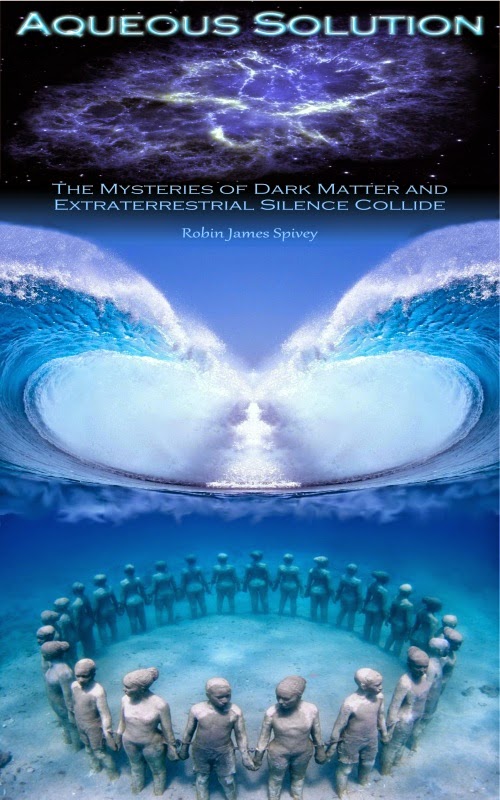
Robin James Spivey has lately published a book titled Aqueous solution, where he asserts that certain properties of the cosmos are supranthropic (they go beyond the anthropic principle) because they are not required for our existence, but their presence guarantees our long-range survival. According to Spivey, those properties are an inkling of design stronger than the anthropic properties, as the mediocrity principle opposes their presence.

Thursday, December 25, 2014

Science, ethics and democracy

John Boyne’s novel, The boy in the striped pajamas (2007) is about the slaughter in the gas chamber in the Nazi concentration camps. The book ends thus:
Of course all this happened a long time ago and nothing like that could ever happen again.
Not in this day and age.
Is this true? Those things can never happen again?
I think this ending is not right. First, it’s not true that it all happened a long time ago. Seventy years is not a long time for historic events. Second, it’s not true that those things could never happen again. Have we forgotten the Ruanda massacres in the nineties?
But perhaps the author meant that those things can never happen again in Europe. Have we forgotten the Srebrenica massacre and the Sarajevo tragedy, also in the nineties?
Or perhaps he means that these things cannot happen in a democratic country. Has he forgotten that Hitler reached power after a democratic election? Has he forgotten that the Athenian democracy was discredited for millennia by their death sentence against Socrates, the result of a secret vote that took place just after the restoration of democracy, which followed the oligarchy imposed by Sparta after the Peloponnesian war?

Thursday, November 27, 2014

Consequences of scientific fraud, a lesson for politicians

Scientific fraud is an important issue that can give rise to complex ethical problems. The mystery novel Gaudy night (1936), by Dorothy L. Sayers, offers a concrete example. When he is about to defend his doctoral thesis, a scientist discovers a little-known document that demolishes his work. Temptation is too strong, he steals the document and proceeds with his thesis. Unfortunately (for him) one of the university committee was aware of the existence of the document, tries to look it up and discovers that it is missing, and who was the last person who consulted it. The fraud is thus discovered, the thesis is rejected, the case is made public and the researcher is dismissed with unfavorable comments that put an end to his scientific career. As he must support a family, he has to accept a job below his level and finally commits suicide.
The characters in the novel formulate the following ethical problem: Must a person give up his vocation because of having yielded just once to a temptation of fraud? What comes first, the integrity of science or the fate and perhaps even the life of an individual human being? In the words of one of the characters: [That old piece of paper] made no difference to anybody. It wouldn’t have helped a single man or woman or child in the world - it wouldn’t have kept a cat alive; but you killed him for it.

Thursday, September 25, 2014

What's the use of a child?

The importance of basic research

The secretary of the Royal Society of Sciences stood up and said:
“Mr. Faraday has the floor.”
“In today’s lecture, rather than speaking about a scientific subject, I’ll perform an experiment before your eyes. But first, allow me a short historical introduction. As you know, Oersted, Ampère and Arago proved that an electric current can give rise to magnetic phenomena. If you set a magnetic needle near an inactive copper wire, the needle points North. If a current passes through the wire, the needle deflects. If the wire is coiled and a current goes through it, the coil behaves as a magnet with two poles, North and South, the same as a typical ordinary magnet.

Wednesday, September 3, 2014

The precariousness of scientific theories

It is better to keep a certain skepticism about scientific theories,. Not only because these theories are always simple approximations tuned by further advances, as in the case of Newtonian gravitation and Einstein’s general relativity, quoted in a previous article. It may also be the case that a scientific theory, after decades, centuries or even millennia of total domination, turns out to be simply wrong. This has happened many times in all the sciences, as will be seen with a sample of a few selected cases.
·         In astronomy, Aristotle’s theory of quintessence, arguing that the heavenly bodies are not made of the same stuff as the Earth, was the standard theory for nearly two thousand years.
·         In mathematics, the problem of squaring the circle with ruler and compass wasted efforts for centuries until it was shown to have no solution. Although amateurs keep trying, at least professionals no longer have to waste their time with the alleged demonstration they regularly receive.
Lavoisier
·         In chemistry, the phlogiston theory, which dominated for nearly a century, tried to solve the problem of combustion assuming that a burning body loses a part of its substance (the mysterious phlogiston). The real process turned out to be precisely the opposite. Rather than losing phlogiston, burning bodies absorb oxygen, as Lavoisier showed in the late eighteenth century.
·         In physics, for almost half a century in the late nineteenth century, no one doubted the existence of the ether, a mysterious substance with strange properties, which should provide support for the movement of electromagnetic waves. In the early twentieth century it was concluded that the ether does not exist.

Thursday, August 14, 2014

The God Particle

Peter Higgs
With the discovery of Higgs boson, two years ago, the media and a few scientists have presented the discovery as the final completion of the standard theory of particle physics, in such a way that we now know everything and do not need God. Hence the nickname given to Higgs boson, the God particle, a name, by the way, that Higgs does not like.

The discovery of a particle whose existence was predicted nearly a half century ago is a spectacular success of the standard theory, comparable to the success achieved in 1846 by Newton’s theory of universal gravitation with the discovery of Neptune, whose existence had been predicted by Le Verrier and Adams. Then it was also said that we now know everything

Urbain Le Verrier
True, there was still a loose end, a very small discrepancy of just 43 seconds of arc per century in the precession of the orbit of Mercury. Le Verrier tried to repeat his success and predicted that this discrepancy was due to an unknown planet between Mercury and the Sun. He even gave it a name: Vulcan. For 60 years, many astronomers tried to find the mysterious planet in vain, for the problem in this case was in Newton’s theory, which eventually came to be just a first approximation of a new better theory that explained the discrepancy: Einstein's general relativity.

Could something similar happen to the standard theory of particle physics? Will its great success be followed by its first failure? Are there any loose ends still remaining in the theory?

The answer to the last question must be affirmative. The standard theory of particle physics has the following outstanding issues: