Showing posts with label Isaac Asimov. Show all posts

Thursday, December 7, 2023

The prehistory of scientific popularization

Being interested in the world, being curious to find out the causes of natural phenomena, is as old as man, but in the strict sense one cannot speak of science until the invention of writing, as the knowledge communicated through oral transmission was disorganized, imprecise, and fragmentary. For science to appear, the body of knowledge must constitute a coherent and ordered whole, which was practically impossible before more permanent means of storing information than human memory could be used.

As soon as writing systems appeared in the Middle East, India, China and America, sciences began to develop. The first three were medicine, mathematics, and astrology. They arose for practical reasons: to cure diseases; for the good management of the economy; to predict natural phenomena related to the cycle of the seasons. The natural sciences (physics, chemistry, biology, and geology) were less necessary for early human societies, so they did not emerge until the Greek civilization.

Wednesday, September 7, 2022

Andy Weir and the Hail Mary Project

Andy Weir

Andy Weir became famous with his 2011 sci-fi novel The Martian, in which an astronaut is mistakenly abandoned on Mars when the third expedition must be hastily canceled because of a violent dust storm. The novel was the basis for a film, which bears the same title, and which made its author famous.

Weir is not a prolific writer. In 2021, his third novel, Project Hail Mary, was published. In my opinion, this is one of the seven best science fiction novels of all time. My other six favorite works in this genre can be seen here.

Project Hail Mary is a hard science fiction novel about space adventures typical of the genre. It deals with interstellar travel at relativistic speeds, encounter with extraterrestrial intelligences, or the invasion of the solar system by extraterrestrial life forms that threaten our survival. All this is integrated in a coherent way.

Thursday, November 11, 2021

The Incredible Shrinking People

As I mentioned in my previous post, Isaac Asimov wrote the novel Fantastic Journey, based on the script of the science fiction film of the same title; not the other way around, as many people believe. In the film and in the novel, a submarine and its crew are reduced to microscopic size and injected into an artery of a comatose human being, to perform an operation in his brain from within, which would be impossible from the outside.

Will it ever be possible to do something like this in the future? Or are there limits to what technology can achieve?

Thursday, November 4, 2021

Artificial intelligence or computer algorithms?

John MacCarthy

The term artificial intelligence appears frequently in the media. It is usually used to refer to a computer application that behaves in a way that appears to be intelligent. But is it really intelligent? Or is this a case of meaning displacement, the application of a more appealing term to something not really new?

The term artificial intelligence was invented by John MacCarthy in 1956, in a seminar that took place at Dartmouth College in Hanover, U.S.A. At that time, the participants made exaggerated predictions about the imminent advances they expected in this field, some of which have not been fully performed 65 years later. Now the predictions are even more ambitious, but it is quite likely that none will come true in the short term, and that some will never come true.

Wednesday, April 28, 2021

The golden rules of science fiction and my own work

Isaac Asimov

These are, according to Isaac Asimov, the two golden rules of good science fiction:

1.      Any scientific claim (even a prediction) must always be compatible with current science. It would not, therefore, be good science fiction a novel where the squaring of the circle with a ruler and compass was achieved, because it has been shown mathematically that this is impossible. Or traveling through space at a speed greater than that of light, without using some scientific trick that makes it possible to achieve it, such as going through the world of tachyons.

2.      Predicting social consequences is better than predicting technical advances. Thus, in a hypothetical novel written in the nineteenth century, predicting the parking problem would be much better than just predicting the car. An example of this kind of good science fiction, mentioned by Asimov in this regard, is Robert Heinlein's short story Solution Unsatisfactory, written in 1941, which not only predicted the atomic bomb as a means of ending World War II (in which the United States were not yet taking part), but also predicted the subsequent equilibrium between the great powers and the permanent threat of a war of extermination.

To be exact, these two laws are my elaborations of what Asimov wrote in two popular articles published in The Magazine of Fantasy and Science Fiction: Future? Tense! (1965) and O Keen Eyed Peerer into the Future (1974). To be even more exact, Asimov's laws were three and, similarly to his three laws of Robotics, he called them the three laws of Futurics.

Thursday, November 19, 2020

Scientific predictions for 2020

Arthur C. Clarke

It is well known that future forecasts are all the more risky the further in time they go. Readers of my blog know that I love keeping scientific forecasts to use in the future, so as to check them when the corresponding dates arrive. Sometimes I have waited for half a century to perform these checks, which in general prove that the forecasts tend to be unsuccessful, generally due to too much optimism, although sometimes they are correct. In this previous post, I checked some of the predictions made by such distinguished popularizers as Arthur C. Clarke and Isaac Asimov.

The three predictions I’m going to check today were made for the year 2020, with less time to go: 25 years in the first, just 10 years or a little above in the other two. Let’s look at them:

Thursday, July 9, 2020

What is a good scientific popularization?

Isaac Asimov
This news was published on November 20, 2007 in the Spanish major newspaper ABC:
Jugene, the most powerful and ecological civilian computer in the world, is German. [In the] Rhinelandic town of Jülich [was installed] Jugene (Jülicher Blue Gene), whose 167,000 million basic operations (teraflops) per second make it the world's first computer for civilian use...
Actually, the most powerful computers at the time could run at a few hundred teraflops. This news exaggerated the speed of the computer by nine orders of magnitude. This error has not been corrected. It’s still in the web.
Heard on a Radio broadcast on May 30, 2008: Fishermen complain about the rising price of diesel. Five years ago it cost them 320% less. In other words, five years ago they were paid to fill the tank.
Let's look at another example of a wrong headline published on 2/18/2020. The headline says: New green technology generates electricity "out of thin air." The text clarifies that it is generated from the humidity of the air acting on a protein.
These errors, so frequent in the media (I could contribute many more), have led me to formulate the following golden rule of scientific popularization:
Any statement you assert must be correct and contrastable.
Everything one says must be carefully checked to ensure that it is not a mistake, hasty or misrepresented news, or in the worst case, fake news.
Another typical error of scientific popularization in the media is showing as already done news that are really nothing but predictions about the future. This usually happens in headlines, which are usually reduced to the minimum, while keeping maximum impact. For instance, in a recent news published on 2/12/2020, the headline is: Mars was also beaten and for a long time. The text, however, is much less conclusive. What the headline gives as certain, becomes just possible: The red planet could have formed in a longer time scale than previously thought.
Statistics are prone to many manipulations, sometimes with unexpected consequences:
In 1995, one study showed that the contraceptive pill increases the risk of thrombus embolism by 100%. The press published it with great headlines. Thousands of women stopped taking the pill. It is estimated that, as a result, 10,000 more abortions took place, only in Great Britain.
What had really happened? What did that study discover?
Risk of thrombo-embolism in women who do not take the pill: 1 in 14,000. Risk of thrombus embolism in women taking the pill: 2 in 14,000.
In this case, the news was not incorrect. What was wrong was the way of making it public. It’s true, the risk increased by 100% (from 0.00007 to 0.00014). But expressed in that way, it could cause a panic, and it did.
I have given more examples in two old posts in this blog: this one and this one.
This is a list of 24 famous popularizers:
Michael Faraday
Galileo Galilei, Michael Faraday, Jean Martin Charcot, Camille Flammarion, Santiago Ramón y Cajal, Josep Comas and Solà, Gregorio Marañón, George Gamow, Willy Ley, Isaac Asimov, Arthur C. Clarke, Konrad Lorenz, Stephen Jay Gould, Martin Gardner, Félix Rodríguez de la Fuente, Douglas Hofstadter, Ian Stewart, Raymond Smullyan, Steven Weinberg, Richard Feynman, Carl Sagan, Stephen Hawking, Roger Penrose and Paul Davies.
Santiago Ramón y Cajal
Most of them were scientists, distributed among the following fields: 3 mathematicians; 12 physicists, chemists and astronomers; 3 biologists; 4 doctors in medicine; and an engineer. The exception is Martin Gardner, who graduated in philosophy, although he later specialized in philosophy of mathematics. Some of them worked on several disciplines, or kept up to date with them, at least from the informative point of view.
Many of the popularizers mentioned above also addressed the other way of popularizing science: by means of fiction. Some of the names indicated are also famous as authors of science fiction novels, or just fiction, with some scientific stroke: Asimov, Clarke, Gamow, Sagan, Davies, Ramón y Cajal, and Marañón wrote novels, some of which are considered among the best in the genre.
Are popularizers born or made? Surely both things at once. The best definition of a popularizer was given by Willy Ley, when one of his teachers asked the students to write a composition developing the following question: which profession do I want to practice when I’ll be grown up, and why? Willy Ley replied: I want to be an explorer. The teacher did not like the answer, and said there was nothing left to explore. Obviously, the teacher was wrong.
The same post in Spanish
Thematic Thread on Popularization of SciencePrevious Next
Manuel Alfonseca
Happy summer holidays. See you by mid-August

Thursday, January 9, 2020

The three laws of Robotics

Isaac Asimov

Isaac Asimov was a prolific science fiction and popular science writer who published in the 40s a series of stories about robots, later compiled in the I, Robot collection. In these stories he invented a word that has become a part of the technological vocabulary, as the name of a discipline: Robotics. He also formulated the three famous laws of Robotics, which in his opinion should be implemented in every robot to make secure our interactions with these machines that, when Asimov formulated the laws, were simple future forecasts.
The three laws of Robotics are the following:
First Law: A robot may not harm a human being, or through inaction allow a human being to come to harm.
Second Law: A robot must obey any order given by a human being, except those that conflict with the first law.
Third Law: A robot must protect its own existence as long as such protection does not conflict with the first two laws.

Thursday, December 26, 2019

The 25 science fiction stories I most liked

Isaac Asimov

In the United States fiction is classified depending on the length of the work, with four subsequent stages:
  1. Novel, any work that has more than 40,000 words.
  2. Novella, a work between 17,500 and 40,000 words.
  3. Novelette, between 7,500 and 17,500 words.
  4. Short Story, less than 7,500 words.
Naturally, the limits are not strict, and in practice they depend on who classifies each book. In Spanish, however, we have fewer categories:
  1. Novel.
  2. Short novel, which applies to works of intermediate length.
  3. Story, with few characters and a simple plot.

Thursday, August 15, 2019

Five years in PopulScience

Albert Einstein
This week we celebrate a small anniversary: five years since this blog was created. In this time, 245 posts have been published. The Spanish version of the blog is a little older: it was created 30 weeks before, in January 2014, and has published 257 posts.
To mark the date by some kind of celebration, I have decided to compute the list of people most mentioned in the blog in these five years. The following table shows the names of the ten people most quoted and the number of times their name has been quoted:
Name
Times quoted in PopulScience
Albert Einstein
42
Isaac Newton
33
Stephen Hawking
20
C.S. Lewis
20
Aristotle
17
Charles Darwin
14
Isaac Asimov
14
Richard Dawkins
12
Plato
10
Ptolemy
9

Thursday, June 21, 2018

Is History science or literature?

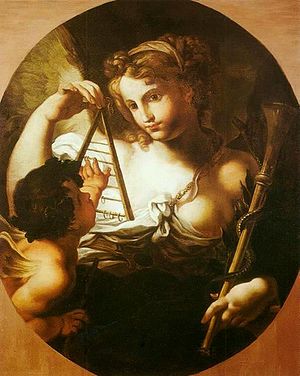
Allegory of Science, by Sebastiano Conca
There are different kinds of sciences. Some are rigorous and have great predictive power, others less, others practically none. Let us look at a classification of the sciences:
·         Formal sciences: They start from axioms or postulates, more or less unassailable, and use deduction as the main method of reasoning. A few play the role of fundamental basis for other sciences. In this group, we can include mathematics, logic and theoretical computer science.
·         Natural sciences: They use induction as the main method of reasoning. Their objective is to discover fundamental laws that explain the working of the world. They rely more or less on logic and mathematics. These sciences include (in order of decreasing rigor) physics and astronomy; chemistry; biology, geology and paleontology.
·         Social Sciences: They use abduction as the main method of reasoning (see an earlier article in this blog). Their object of study is man or society. These sciences include psychology, economics, sociology, anthropology, politics, archeology and history.
·         Finally, the applied sciences, whose objective is to develop practical applications from the theoretical knowledge provided by the experimental and social sciences. They usually associate under the name of technology, although there are some disciplines that fall outside that umbrella, such as legal sciences, applied economics, medicine, or applied psychology.

Thursday, December 28, 2017

The best 40 science fiction novels I have read

Blade Runner poster
Lists of favorite books have always existed, and with the rise of the Internet they have proliferated. That’s why I decided to make a new list (in case there were not enough). But what I’m showing here is not just the list of my favorite books in this genre, but something a little more complex.
To build the list, I started with four lists made by others, sometimes individually, sometimes collectively. For example, one of those lists has been created in Goodreads, the social network for books, is called Best Science Fiction and contains over 2,000 books. In order to build this list, the members of Goodreads vote (almost 1000 people have voted for at least one book), together with the book’s score and the number of people who have read it (in some cases several million).
To form my new list I used the following criteria:
  1. It just contains books that I have read.
  2. It does not contain books that I have read, but did not like at all (i.e. those I would assign one star in the Goodreads or Amazon ratings). As an example of these books I will mention Do androids dream with electric sheep? by Philip K. Dick. Its argument is based on an interesting idea, but the way it has been developed in the form of a novel is deplorable, sometimes absurd. This is one of the rare cases where the film based on a book (Blade Runner) turned out to be far superior to the original work.
  3. Therefore, if one of your favorite books is not listed here, it may be for three reasons: because I have not read it, because I did not like it at all, or because it didn’t come among the top 40 in the average of the lists I have used to build mine.
  4. It only contains science fiction books. The Lord of the Rings, for example, has not been included, although it is on one of these lists, because I don’t consider it science fiction.

Thursday, June 29, 2017

Newton, the greatest scientist of our civilization

Isaac Newton
As I said in the previous article, in my biographical dictionary 1000 great scientists (1996) and an unpublished book, I proposed an objective quantification of the importance of different scientists, using measures such as the number of lines that various encyclopedias assign to each. Six scientists, one Greek (Aristotle), of whom we have already spoken, and five from the West (Descartes, Newton, Darwin, Freud and Einstein) were tied with the highest score in these studies. Among these five, is there one who can be considered the greatest scientist of our civilization?
In 1964 Isaac Asimov conducted another study (The Isaac Winners) on the relative importance of men of science, which resulted in a list of the 72 best scientists of all time, in his opinion. This list is simply qualitative and does not establish a relative order among the names that appear in it, although Asimov (again in his opinion) asserts that Isaac Newton, who happened to be his namesake, was the greatest scientist of all time.