Thursday, November 27, 2025

The origins of man

The title of this post is similar to the title of a work by Charles Darwin, The descent of Manhis second most famous, although it can't be compared to his most famous work, The Origin of Species. But I’m not going to talk about Darwin or this book, as I dedicated another post to it before. I’m going to speak about a book with a similar title, Los Orígenes del Hombre (The Origins of Man) by Francisco de Paula Rodríguez Valls, with whom I’ve collaborated more than once and whom I’ve mentioned in another post in this blog.

In a similar way as my books The Fifth Level of Evolution and Evolución biológica y evolución cultural en la historia de la vida y del hombre, this book aims to show the uniqueness of man in relation to the other living beings. Its point of view is somewhat more philosophical than mine, but we agree on almost everything.

Thursday, November 20, 2025

The Best Nobel Prize Winners in Physics of the 21st Century

Matin Durrani, writing in Physics World, analyzes the 25 Nobel Prizes awarded during the 21st century and selects those that he believes to be the five best. His criteria are based on looking for prizes that meet the following conditions:

·         It must be easy to understand.

·         The awarded theoretical or experimental work was an exceptional effort (a tour-de-force).

·         It opened new paths for science.

Thursday, November 13, 2025

Sight for the Blind?

Blindness is one of the most terrible conditions that human beings can experience, since those of us who can see depend on sight for almost all of our daily activities. Therefore, aids for the blind have always been given special consideration. These aids include texts written in Braille, Braille printers, electronic magnifying glasses, mobility aids, books and other texts read aloud, talking watches, and many more. A 2008 article published in Communications of the ACM summarizes the state of these aids at that time. In particular, Chieko Asakawa has been working in the field of mobility aids for the blind for years, having published at least ten articles on the subject between 1998 and 2019.

Thursday, November 6, 2025

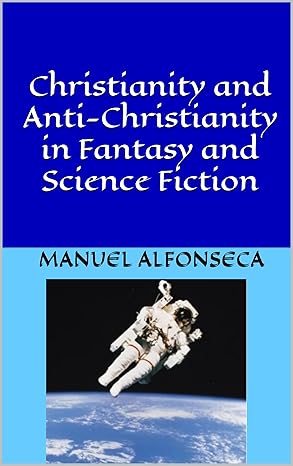
Christianity and Anti-Christianity in Fantasy and Science Fiction

A new book of mine has just been released with the same title as this post. It was published in Spanish by CEU Ediciones, and in English by Amazon.

There is a fairly widespread idea that we shouldn’t speak about Christian literature as a literary genre, except perhaps in fantasy, where the Christian character of such famous literary works as J.R.R. Tolkien's The Lord of the Rings or C.S. Lewis's The Chronicles of Narnia cannot be denied. In science fiction, the matter is not so clear. However, no one doubts that atheist literature does exist.

My book starts from the premise that an evident Christian literature exists in both genres, and demonstrates this by analyzing a series of authors and literary works, without neglecting anti-Christian literature, to which almost a third of the work is dedicated.

My predilection for fantasy and science fiction has been clear in this blog, given that over almost 12 years I've dedicated 34 posts to those two genres in literature and film; in other words, more than 6% of the posts.