Showing posts with label scientific theories. Show all posts

Thursday, May 2, 2024

Are the multiverse theories scientific?

Virgo galactic cumulus

In previous posts I have said that the theories of the multiverse (there are several, some of them contradictory to the others) are not scientific, because it’s not possible to prove them false, according to Karl Popper’s criterion: a theory is not scientific unless it can be proved false with an experiment.

A recent article by Man Ho Chan reviews and refutes various attempts to claim that multiverse theories are indeed scientific. Here I am going to speak about those that try to prove that the multiverse theories should be considered scientific without asking big changes to the current criteria. Carroll 2018 uses three main arguments to justify this:

Thursday, June 1, 2023

Relativism in science?

Karl Popper

As I have said in other posts, quoting Popper, a scientific theory can never be considered utterly confirmed. In other words, we can never be completely sure that it is true. But some people try to rely on this (and on Kant’s philosophy) to reach the conclusion that we cannot know anything about reality, that scientific knowledge is relative, and that science is no different from other human activities, such as arts or fashion, whose productions cannot be said to be true or false.

Against this position, in an article published in 1990 in defense of realism, Martin Gardner wrote the following paragraph, which in my opinion hits the center of the bull’s eye:

Wednesday, May 11, 2022

Compatible, incompatible, possible, impossible

I wish to clarify the four concepts of the title, which are sometimes confused when talking about physical theories and their application:

  • An event (real or imagined) can be compatible with a theory. In this case, if the event were real, it would not pose any problem for the theory, which admits in principle the possibility of that event taking place.

Wednesday, January 6, 2021

Influence of aesthetic ideas in physics

The Birth of Venus by Botticelli

In a previous post I reviewed the new book in Spanish by Francisco José Soler Gil, entitled The enigma of the natural order. Its third chapter, whose title is Aesthetic ideas in physics, which reproduces a lecture given by the author at the Faculty of Chemistry of the University of Seville, has provided me with matter for this post in my blog.

The influence on physics of aesthetic ideas is very old, perhaps as old as physics. One of its oldest precursors is Pythagoras, who proposed the concept of the harmony of the celestial spheres, according to which the distances between the planets would reproduce harmonious musical intervals.

Thursday, January 2, 2020

The theological multiverse

In other posts in this blog (see one of the thematic threads at the end of this post) I have talked about various theories of multiverses and asserted that none of them is scientific, as it is impossible to prove that they are false. In fact, I doubt if they can even be considered philosophical. I consider them imaginative fantasies: science fiction, rather than science.
The funny thing is that the idea of the multiverse is not new. I’ve mentioned before that its first appearance in science fiction was in a novel by Clifford Simak (Cosmic Engineers, 1950) that develops a short story published in 1939 by the same author.
But Simak’s novel also has precedents; quite old, by the way. Chapter 21, verse 1 of Revelation, a book written towards the end of the first century, says this:
And I saw a new heaven and a new earth: for the first heaven and the first earth are passed away; and the sea is no more. 
A new heaven and a new earth. What is this talking about? Obviously about another universe, where we are supposed to go, after our death. It seems, therefore, that in the Christian vision of the cosmos, God has made at least two universes: ours, and another one for the next life. This would be the theological multiverse, a name I’ve just invented.
When physicists talk about other universes, they often give free rein to their imagination. I’ll do the same.
The second universe would have its own time, independent of ours. If we want them to be related somehow, I’d say that the two axes of time are orthogonal (perpendicular to each other). Christ (God incarnated as a man), in his death, leaves our time and passes through to the other time. On his way, he captures all the human beings that have ever existed or will exist, and drags them to the other universe. We all reach the other universe at the initial moment of its own time. We all arrive at the same time. No one must wait for anyone in the next life.
I will add two additional considerations:
  • Some atheist cosmologists cling to the various theories of the multiverse to safeguard their atheism. They seem to believe that, if the multiverse were proven to exist, this would show that God does not exist. I can’t see why. If God has created a universe, what can prevent him from creating two, one hundred or one hundred thousand? The discovery of a multiverse would do nothing but expand our field of vision, pointing out that there are more levels in the universe than are dreamt of in our philosophy, paraphrasing what Hamlet told Horatio. But this has happened before: Until the beginning of the 20th century, it was believed that the universe consisted just in the nearby stars. Later it was discovered that these stars make a galaxy, and that there are billions of galaxies, separated by huge empty spaces. This enormous increase in the size of the universe posed no problem for the faith of believers. If it were discovered that there is a multiverse (in other words: that the universe is even larger and more complex than we thought) it won’t be a problem either.
  • I’d never dare to present my theory, described in this article, as if it were science. As things stand just now, none of the theories of the multiverse is science. There are several, most of them incompatible with the others. If an unexpected scientific advance were ever to take place, proving that one of them were true, that theory would become science. Just now there are no signs that such thing can happen. As for my theory, I am afraid we won't know whether it is true until after our death.
Thematic Thread on Multiverse and Fine Tuning: Previous Next
Thematic Thread on Science, Faith and Atheism: Previous Next

Thursday, March 28, 2019

Pierre Duhem, Popper’s predecessor

Karl Popper
In a previous post in this blog, I mentioned how Karl Popper defines what is, and what is not, a scientific theory:
A theory is scientific if and only if it is possible to design an experiment that demonstrates that this theory is false.
I also said there that, according to Popper, a scientific theory can never be considered completely confirmed. In other words, we can never be absolutely sure that it is true.
After writing that post, which I published almost one year ago, I have discovered that these two Popper’s fundamental ideas had been anticipated by Pierre Duhem, to whom I dedicated the previous post in this blog.
Popper detailed both these ideas in his book The Logic of Scientific Research, published in German in 1934 and in English in 1959, both versions written by himself. Duhem, however, had anticipated them in 1913, in a letter addressed to Réginald Garrigou-Lagrange, which the latter published in his book Dieu. Son existence et sa nature (1914). By then, Popper was about 12 years old. Did Popper read Duhem? Perhaps not this letter, although other works certainly, since in The Logic of Scientific Research he quotes Duhem five times, usually to show his discrepancy. The problem is that misunderstanding Duhem is quite easy. To avoid it, one should probably read his whole work, which not everybody can do.

Thursday, August 17, 2017

Is time an illusion?

Albert Einstein
Physicists sometimes deny the reality of irreversible time and consider it an illusion, a psychological phenomenon. In a letter of condolence written in 1955, Einstein said this: ...the distinction between past, present and future is only an illusion, although persistent. A curious way to comfort those who have lost a beloved one. His reasons for saying this were the following:
·         In Newton equations of universal gravitation, if the sign of the variable representing time is changed, the equations don’t change. If we look at the film of a gravitational process, the theory predicts that we won’t be able to detect if the projection was made in the right sense or in reverse.
·         The same is true of Maxwell equations, which describe the behavior of electromagnetic waves.
·         The same is true of Einstein equations of General Relativity, which replace Newton equations to describe gravity.
·         The same happens with the Schrödinger equation, the basis of quantum mechanics.
But there is a problem: the equations mentioned do not make all of physics. The second principle of thermodynamics implies the existence of an arrow of time. In 1928, in a book titled The nature of the physical world, the inventor of this term (Arthur Eddington), said the following: if your theory [opposes] the second law of thermodynamics... [it will] collapse in deepest humiliation.
Every physical theory is a simplified abstraction where some parts of reality have been eliminated. If the irreversibility of time is one of those simplifications, it is not surprising that the final result is always reversible. In real events, however, there is no abstraction or simplification. All the physical theories, including the second law of thermodynamics, must be applied together. If this is done, the alleged temporal symmetry goes away.
·        
Newton and his apple
One of the first applications of Newton’s theory describes the fall of an apple. If a film being projected shows several pieces of an apple on the ground, which suddenly set in motion and gather in a single fruit, which then rises upwards until it gets attached to a tree, would we doubt that it has been projected in reverse? The fact that we don’t is a consequence of the second law of thermodynamics.
·         This also applies to the movements of celestial bodies. Imagine a recording of Mercury moving in its orbit, with the sun visible. By studying the solar sunspots we could deduce whether the film is projected correctly or in reverse. Sunspots are a consequence of thermodynamic phenomena.
·         Radioactive decay is another example of a theoretically reversible process that in practice is irreversible. In fact, the proportion of uranium-238 and lead-206 in a rock provides a reliable method to calculate its age. The chain of disintegrations from uranium to lead is far more likely than the reverse chain, although physical theories affirm that both things could happen in theory.
·         Whatever Schrödinger equation says, the Copenhagen interpretation of quantum mechanics requires an irreversible time. If a photon hits an electron with some energy, the electron is left in two overlapping spin states. If the spin is measured, the quantum superposition collapses into a positive or a negative value. This process involves a direction of time: first comes the impact of the photon, then the electron in two superimposed states, finally a measurement and a quantum collapse. The reverse process cannot happen.
In these examples, when all of physics is taken into account without excluding thermodynamics, the supposed reversibility of time disappears. Apparently physicists put their theories above reality, doing the opposite of what the scientific method demands. Not even great men like Einstein were exempt.

El mismo artículo en español
Thematic thread on Time: Next
Manuel Alfonseca

Thursday, January 8, 2015

Anthropic and supranthropic properties

In a previous post I wrote about the fine tuning problem, based on the verification that many of the properties of the universe seem designed to make our existence possible. In other words: those properties verify the anthropic principle, another way of saying that the universe must fulfill all the conditions needed for our existence, since we are here. On the other hand, the mediocrity principle states that the anthropic conditions of the universe should be the necessary minimum to make our existence possible.
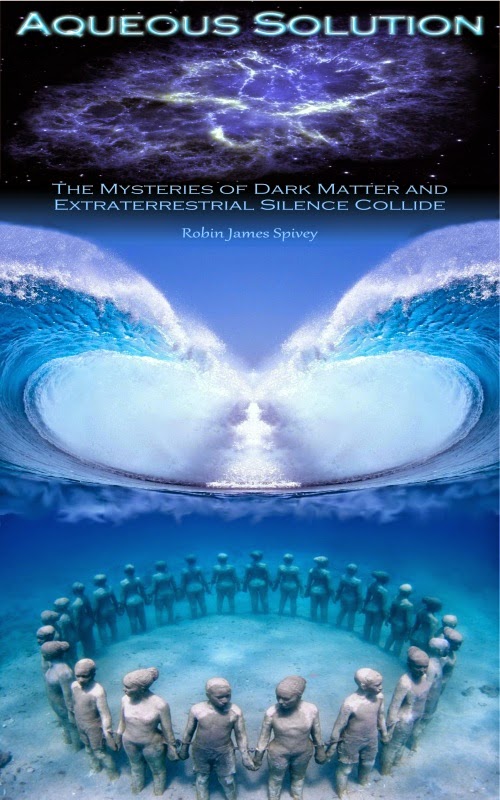
Robin James Spivey has lately published a book titled Aqueous solution, where he asserts that certain properties of the cosmos are supranthropic (they go beyond the anthropic principle) because they are not required for our existence, but their presence guarantees our long-range survival. According to Spivey, those properties are an inkling of design stronger than the anthropic properties, as the mediocrity principle opposes their presence.

Thursday, October 23, 2014

Atheist arguments are still in the nineteenth century while theists have modernized

Interview with Manuel Alfonseca published in http://www.religionenlibertad.com/los-ateos-siguen-con-argumentos-del-siglo-xix-pero-los-teistas-38204.htm

Manuel Alfonseca was born in Madrid in 1946. He is the son of the painter and sculptor Manuel Alfonseca (Santana), is a doctor in Telecommunication Engineering and a Computer Scientist, has been a full professor, and is currently a honorary professor at the Universidad Autónoma of Madrid. 

His great gift is his ability to popularize science and express himself clearly, which has led him, not only to teaching and science, but also to the literary world (he has published fantasy, science fiction and historical novels). His work makes a bridge between "science" and "humanities", attested in his blog on popular science and his personal website. Now, in addition, he is one of the co-editors (along with Francisco-José Soler-Gil) of an unusual work for its breadth and ease of comprehension: 60 preguntas sobre ciencia y fe respondidas por 26 profesores de universidad (60 questions on science and faith answered by 26 professors). Without getting into the 60 questions, we shall try to explore the science-faith dialogue with a few questions, while strongly recommending the book to those who seek answers to the others.

Wednesday, September 3, 2014

The precariousness of scientific theories

It is better to keep a certain skepticism about scientific theories,. Not only because these theories are always simple approximations tuned by further advances, as in the case of Newtonian gravitation and Einstein’s general relativity, quoted in a previous article. It may also be the case that a scientific theory, after decades, centuries or even millennia of total domination, turns out to be simply wrong. This has happened many times in all the sciences, as will be seen with a sample of a few selected cases.
·         In astronomy, Aristotle’s theory of quintessence, arguing that the heavenly bodies are not made of the same stuff as the Earth, was the standard theory for nearly two thousand years.
·         In mathematics, the problem of squaring the circle with ruler and compass wasted efforts for centuries until it was shown to have no solution. Although amateurs keep trying, at least professionals no longer have to waste their time with the alleged demonstration they regularly receive.
Lavoisier
·         In chemistry, the phlogiston theory, which dominated for nearly a century, tried to solve the problem of combustion assuming that a burning body loses a part of its substance (the mysterious phlogiston). The real process turned out to be precisely the opposite. Rather than losing phlogiston, burning bodies absorb oxygen, as Lavoisier showed in the late eighteenth century.
·         In physics, for almost half a century in the late nineteenth century, no one doubted the existence of the ether, a mysterious substance with strange properties, which should provide support for the movement of electromagnetic waves. In the early twentieth century it was concluded that the ether does not exist.

Thursday, August 14, 2014

The God Particle

Peter Higgs
With the discovery of Higgs boson, two years ago, the media and a few scientists have presented the discovery as the final completion of the standard theory of particle physics, in such a way that we now know everything and do not need God. Hence the nickname given to Higgs boson, the God particle, a name, by the way, that Higgs does not like.

The discovery of a particle whose existence was predicted nearly a half century ago is a spectacular success of the standard theory, comparable to the success achieved in 1846 by Newton’s theory of universal gravitation with the discovery of Neptune, whose existence had been predicted by Le Verrier and Adams. Then it was also said that we now know everything

Urbain Le Verrier
True, there was still a loose end, a very small discrepancy of just 43 seconds of arc per century in the precession of the orbit of Mercury. Le Verrier tried to repeat his success and predicted that this discrepancy was due to an unknown planet between Mercury and the Sun. He even gave it a name: Vulcan. For 60 years, many astronomers tried to find the mysterious planet in vain, for the problem in this case was in Newton’s theory, which eventually came to be just a first approximation of a new better theory that explained the discrepancy: Einstein's general relativity.

Could something similar happen to the standard theory of particle physics? Will its great success be followed by its first failure? Are there any loose ends still remaining in the theory?

The answer to the last question must be affirmative. The standard theory of particle physics has the following outstanding issues: