Showing posts with label life in other worlds. Show all posts

Thursday, June 11, 2026

A new Goldilocks zone

We are familiar with the Goldilocks zone, considered necessary for the emergence of life in a planetary system. It is the region where the surface temperature of the planet allows for the existence of liquid water, which is generally considered essential for life as we know it, although in science fiction literature (remember Fred Hoyle's The Black Cloud) there are life forms that might not require this condition.

Planets very close to their star would have a temperature too high for the existence of liquid water; all the water would vaporize, and in some cases escape the planet's gravitational pull. On very distant planets, the temperature would be too low, and all the water would be in a solid state (ice). In both cases, it is thought that the emergence of life would not be possible.

Thursday, April 10, 2025

Evolutionary convergence

Stephen Jay Gould

One of the most spectacular controversies to have arisen in biology at the end of the 20th century was that between two famous biologists: the American Stephen Jay Gould and the British Simon Conway Morris. The controversy began with the former's book, published in 1989, Wonderful Life: The Burgess Shale and the Nature of History, to which Conway Morris responded in 1997 with another book, The Crucible of Creation. As the subtitle of Gould's book indicates, both biologists based their work on the discoveries of the Cambrian fauna of the Burgess Shale (Canada), which I referred to in another post, and which was discovered and studied precisely by Conway Morris.

In his study, Stephen Jay Gould focuses in particular on the surprising and abrupt diversification that took place 550 million years ago and left its mark on the Burgess Shale fauna to argue that evolution is dominated by the effects of chance, so that, if we rewound the history of life and repeated the evolutionary process, the results would not resemble anything we have now. As a corollary, if there is animal life on other worlds, around other stars, it won’t resemble anything on Earth. And if there is intelligent life outside Earth, their physical appearance will not resemble ours.

Thursday, April 3, 2025

Water and the origin of life

All living beings, from microbes to humans, live in water or contain water. All chemical reactions that take place inside cells are carried out in water.

Liquid water is an extraordinary compound, with strange properties. It has one of the highest specific heats of all substances. This means that when heat is added to or removed from a body of water, the temperature varies more slowly than in any other liquid. This is important for living beings, as water acts as an environmental stabilizer. Also, it is the non-metallic liquid with the highest thermal conductivity, so local temperature variations are balanced very quickly.

Most liquids contract when they solidify, but water is an exception. It has its maximum density at a temperature of 4°C. The density of ice is lower, 0.92 times lower, so ice floats on water. So, when the temperature drops, water freezes from top to bottom, while other liquids solidify from bottom to top. This also has important biological consequences. In polar seas and in fresh waters of cold regions, when the temperature drops below the freezing point, the surface layer of ice insulates the water below from the cold, so that it never freezes and the beings that live there can remain alive and active, despite the harsh environmental conditions.

Thursday, March 27, 2025

The chemical composition of life in other worlds

Is it a coincidence that life on Earth is based on carbon? Is this the only element capable of becoming the basis for life? Could there exist, somewhere in the Universe, a type of life different from ours, whose chemical composition is not based on carbon? On what atom or group of atoms could a chemistry of comparable complexity to organic chemistry be built, in theory?

There are 91 different chemical elements on Earth. Others have been generated artificially in the laboratory, and it is suspected that they can be produced in small quantities inside a giant star that becomes a supernova, but their life is short, because they are very radioactive and disintegrate quickly, transforming into more stable elements. Therefore, the search can be reduced to the 91 natural elements. We will select from these those that meet the following two conditions, essential to be able to be the chemical basis of life:

  1. They must be capable of establishing more than two covalent bonds with other atoms.
  2. They must be stable. That is, they must have at least one non-radioactive isotope.

Thursday, January 30, 2025

Probability of the existence of extraterrestrial life

In a previous post I talked about the probability of the existence of extraterrestrial intelligence and mentioned the difficulty of its calculation, as we don’t know of any planet where they exist, apart from Earth, and to calculate the probability of an event one must know the number of favorable cases and the number of possible cases. For extraterrestrial life, we ​​don’t know either.

In another post I detailed the conditions that should be necessary if life similar to ours were to be possible on a planet similar to Earth. These conditions are many, which reduces the probability that we will find life on some extrasolar planet located in our vicinity. In fact, among the almost 10,000 planets detected so far (of which just over half have been confirmed), 65 are at a distance from their star that could be favorable for life (the Goldilocks zone), but only three of them orbit around stars similar to the Sun (of the stellar class G).

Wednesday, November 9, 2022

Is there life in the solar system beyond Earth?

At the end of 1981, Editorial Mezquita (a subsidiary of Editorial Alhambra) published my book entitled La Vida en Otros Mundos (Life in Other Worlds), one of whose chapters addressed the question in the title of this post. When the book was discontinued, it was again published in 1992 by MacGraw Hill of Spain, in an updated version, in a collection dedicated to science popularization, which kept my book in its catalog for around a decade. It is currently out of print.

Since then, things haven't changed much. Subsequent research has added a couple of satellites that weren’t considered in the 80s and the 90s to the list of bodies where it might be possible to find microscopic life. Of course, nobody expects to find intelligent life, or multicellular animals and plants, in any body in the solar system outside the Earth, although in science-fiction literature those things happen.

Wednesday, January 19, 2022

The weak anthropic principle: Are we alone in the galaxy?

Allen Telescope Array in the SETI project

In its initial formulation, the weak anthropic principle says that, although the appearance of intelligent life on a planet may be very unlikely, the Earth must meet all the conditions, since we exist. We know that the Milky Way contains about 1011 stars. At least one (the sun) has a planet populated by intelligent life. It looks like the probability of this happening should be equal to or greater than 10-11. Note that the weak anthropic principle does not say what the value of that probability might be.

Thursday, October 27, 2016

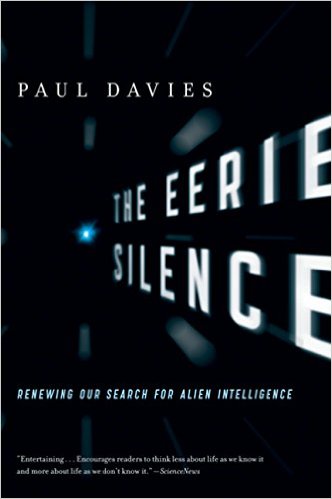
The eerie silence

A little over half a century ago, saw the beginning of project Ozma (named for the princess ruling the fictional country of Oz), which continued with the SETI program (Search for ExtraTerrestrial Intelligence). Assuming that there must be many cases of extraterrestrial intelligence, most of which will undoubtedly have reached a technology capable of communicating by means of electromagnetic waves, surely some of them are sending messages that perhaps we can detect and answer. Initially it was thought that we could take the initiative, sending messages to stars that might harbor planets with life similar to ours, but this was soon considered too expensive, so all efforts were allotted to intercept messages, not necessarily addressed to us. After half a century of efforts, nothing has been achieved. There have been a few false alarms, but none that has been confirmed.
In a previous article I mentioned the Fermi paradox, which holds that we must be alone in the galaxy, because otherwise any extraterrestrial intelligence with several million years advantage would by now be here, because it would not take long to colonize the whole galaxy, even at the interstellar speeds we will reach in the next few centuries.

Thursday, September 1, 2016

The fallacy of life on Mars

Mars image mosaic from the Viking 1 orbiter
In a previous post I discussed the fallacy of the invisible cat, where the cause was the confusion between a sufficient and a necessary condition, as indicated by the following table:

Correct deduction:
Necessary condition
Fallacious deduction:
Sufficient condition
B is true only if A is true.
B is true.
Therefore A is true.
B is true if A is true.
B is true.
Therefore A is true.

There is another very similar fallacy, which also consists of confusing necessary and sufficient conditions, but in reverse. In this case, the right and wrong syllogisms are indicated by the following table:

Correct deduction:
Sufficient condition
Fallacious deduction:
Necessary condition
B is true if A is true.
A is true.
Therefore B is true.
B is true only if A is true.
A is true.
Therefore B is true.

Let us look at one example of this fallacy, applicable to the existence of life in Mars:
Water is necessary for the existence of life.
There is water on Mars.
Therefore there is life on Mars.

Thursday, January 8, 2015

Anthropic and supranthropic properties

In a previous post I wrote about the fine tuning problem, based on the verification that many of the properties of the universe seem designed to make our existence possible. In other words: those properties verify the anthropic principle, another way of saying that the universe must fulfill all the conditions needed for our existence, since we are here. On the other hand, the mediocrity principle states that the anthropic conditions of the universe should be the necessary minimum to make our existence possible.
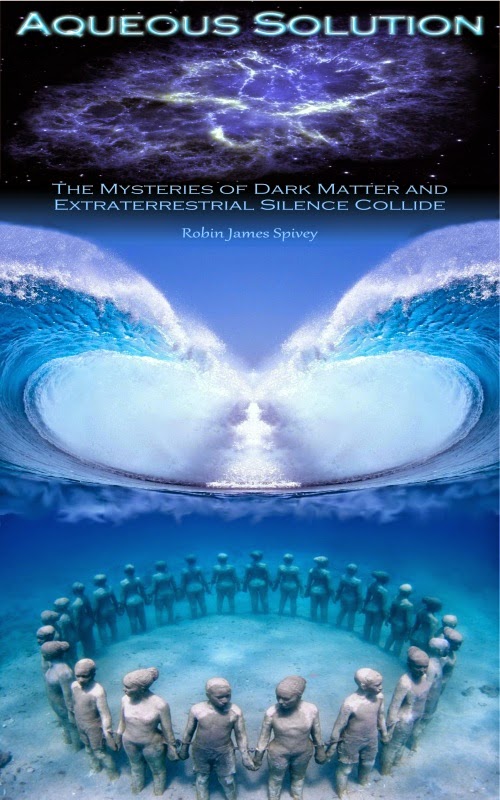
Robin James Spivey has lately published a book titled Aqueous solution, where he asserts that certain properties of the cosmos are supranthropic (they go beyond the anthropic principle) because they are not required for our existence, but their presence guarantees our long-range survival. According to Spivey, those properties are an inkling of design stronger than the anthropic properties, as the mediocrity principle opposes their presence.

Thursday, November 6, 2014

The probability of existence of extra-terrestrial intelligence

Normal statistical distribution.
The text makes reference to a uniform statistical distribution.
Probability is a well-known mathematical concept that was initially defined to quantify random data in mathematically known environments and has been extended to other situations.
For instance, the probability that the next car passing near me has a license plate with four identical figures is computed by dividing the number of favorable cases between the number of possible cases. The first number is ten: 0000, 1111, 2222, ... , 9999. The second is ten thousand: 0000, 0001, 0002, ... , 9998, 9999, in a uniform distribution. Therefore the indicated probability can be computed as one thousandth. Here we haven’t considered that vehicles can be removed from circulation, an independent random process that would not change significantly the result of the computation.
The problem is, sometimes we are interested in computing data in mathematically unknown environments. This can happen, for instance, when we ignore the number of favorable cases, or the number of possible cases, or both. In such situations, we can estimate the unknown data with more or less uncertainty. We speak then of a priori probability.

Thursday, October 2, 2014

The origin of life in other worlds

In a recent article published in the Annals of the National Academy of Sciences of the United States of America, Christopher McKay analyzes the requirements and limits for life in other worlds. Since we have no data at all about any concrete planet outside the Solar System, and very few about the planets and satellites in our system, apart from the Earth, the study focuses on the limits for life in our world and tries to extrapolate the results to the possible existence of extraterrestrial life.
Thus, for instance, he notices that on Earth there are extremophile organisms, able to survive in environments apparently hostile for life: between -15 and 122ºC; in conditions of extreme dryness; in an almost total absence of light (100.000 times less than the solar flux we use to receive); in the presence of ultraviolet rays and ionizing radiation...