Thursday, August 16, 2018

Has research on the human genome stopped?

We all know the Human Genome project, officially launched in 1990, although it had been working partially since 5 years earlier. Its purpose was to identify and decipher all the genes in human DNA in 15 years. The project was completed in 2003, within the foreseen term, although in the year 2000 partial results were published. From the scientific point of view, the project was a success, but perhaps for a part of the public it can look like a failure, as the exaggerated expectations aroused by some media have not been fulfilled.
The media hailed the project as the door to a new medical revolution. Among the revolutionary applications announced were: gene therapy to prevent or correct genetic diseases; premature diagnosis of actual or potential diseases, even from the embryonic stage; or personalized medicine, which would adapt treatments of diseases to the ailing person. Possible dangers were also discussed, such as the manipulation of human embryos to adapt their genes to the wishes of parents or dictatorial governments; or the use of genetic data to select personnel, or to grant or deny insurance and credit...

Thursday, July 12, 2018

Extraterrestrials in literature

Extraterrestrials can only appear in two types of literary works: in essays, or in novels, and in the latter only in the genre of science fiction. If an extraterrestrial appears in any novel, the novel automatically becomes science fiction.
Science fiction literature shows very many types of extraterrestrials:
  • Fully humanoid, such as the red men in the Mars series by Edgar Rice Burroughs, who are so humanoid that they are even fertile when mating with terrestrials, as shown by the two sons of John Carter and Dejah Thoris, despite the fact that Martian women are oviparous (!!!) To this group also belong the aliens of The People series by Zenna Henderson, who are only different from us by their mental abilities, and those of Perelandra by C.S.Lewis, also titled Voyage to Venus.
  • Partially humanoid, such as those in Star Ways by Poul Anderson, whose women are also capable of falling in love with terrestrials. This novel develops a typical Anderson argument: extraterrestrials who differ culturally from us in their ecological view of the world, but who are fated to be defeated when confronting terrestrials, who are much more active and aggressive than they are.

Thursday, July 5, 2018

Is Physics science or literature?


Freeman Dyson, who proposed a way
to extract energy from stars
We usually assume that physics is the most rigorous of the experimental sciences, the closest to mathematics, which serve as the fundamental basis for all sciences. However, some recent developments raise doubts about this. In other articles I have spoken of a few: the theories of the multiverse, time travel, that usually provide appealing headers in the media, but cannot be considered scientific theories, not because they cannot be verified, but because they cannot be proved false.
A recent article published in the high-profile journal Science News can be classified within this group, and in my opinion adds fuel to the fire, endangering the prestige of physics as a rigorous science and turning it into science fiction literature. This publication refers to an article recently published in arXiv, whose title is quite indicative: Life versus Dark Energy: How an Advanced Civilization Could Resist the Accelerating Expansion of the Universe. This article has been classified in the category Cosmology and Nongalactic Astrophysics.

Thursday, June 28, 2018

What is a good historical novel

Battle of Borodino, by Louis-François Lejeune
In the previous post I mentioned War and Peace by Leo Tolstoy as a paradigmatic example of a good historical novel. In my opinion, the three golden rules for good historical novels are the following:
1.      The main characters are fictitious: In the case of War and Peace those characters are Pierre, Natasha, Prince André and their relatives, friends and spouses.
2.      The real historical characters are secondary: In War and Peace the historical characters are Napoleon, Alexander I of Russia and General Kutuzov. These characters act in the novel exactly as they did in reality. Regarding them, facts are not invented, they are interpreted.
3.      The lives of both groups of characters are intertwined perfectly.

Thursday, June 21, 2018

Is History science or literature?

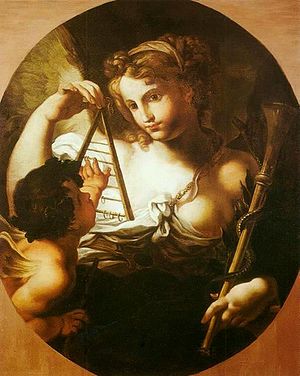
Allegory of Science, by Sebastiano Conca
There are different kinds of sciences. Some are rigorous and have great predictive power, others less, others practically none. Let us look at a classification of the sciences:
·         Formal sciences: They start from axioms or postulates, more or less unassailable, and use deduction as the main method of reasoning. A few play the role of fundamental basis for other sciences. In this group, we can include mathematics, logic and theoretical computer science.
·         Natural sciences: They use induction as the main method of reasoning. Their objective is to discover fundamental laws that explain the working of the world. They rely more or less on logic and mathematics. These sciences include (in order of decreasing rigor) physics and astronomy; chemistry; biology, geology and paleontology.
·         Social Sciences: They use abduction as the main method of reasoning (see an earlier article in this blog). Their object of study is man or society. These sciences include psychology, economics, sociology, anthropology, politics, archeology and history.
·         Finally, the applied sciences, whose objective is to develop practical applications from the theoretical knowledge provided by the experimental and social sciences. They usually associate under the name of technology, although there are some disciplines that fall outside that umbrella, such as legal sciences, applied economics, medicine, or applied psychology.

Thursday, June 14, 2018

Mistakes in popular science in the media: Stephen Hawking didn’t discover everything

Stephen Hawking
Stephen Hawking has been in the last decades a scientific icon for the media. His painful personal situation turned him into a celebrity who inevitably attracts attention. Therefore, the media have a tendency to exaggerate his scientific work, attributing to him achievements that weren’t his, which he would be the first to repudiate, if he were still among us.
For example, on the occasion of his death, the following headlines appeared in several media:
         ElTiempoHoy: Creador de la teoría del Big Bang y los agujeros negros: fallece Stephen Hawking a los 76 años. (Creator of Big Bang’s theory and black hole theory: Stephen Hawking dies at 76).

Thursday, June 7, 2018

Gödel and realism

Kurt Gödel

Kurt Gödel (1906-1978) was one of the most important mathematicians of the 20th century. In 1931, when he was 25, he rose to fame with his mathematical proof that the attempt to build a complete axiomatic system, from which one can deduce all the arithmetic of natural numbers or any equivalent system, is doomed to failure.
His first incompleteness theorem says the following:
Every consistent formal system as powerful as elementary arithmetic is not complete (it contains true undecidable propositions).
Let us look at a simplified informal demonstration:
Let theorem G say the following: This theorem G cannot be proved from the axioms and rules of system S.
    • If we assume that Theorem G is false, system S is inconsistent, since a false theorem can be proved from the axioms and rules of S.
    • Then if S is consistent, G must be true, and therefore cannot be proved from the axioms of S.
Gödel’s theorem shows that every axiomatic formalization of arithmetic is either inconsistent (it allows false theorems to be proved), or incomplete (it contains true theorems that cannot be proved).