Thursday, May 7, 2026

The Synthesis of Science and Faith in Western History

S.Augustin, by Louis Comfort Tiffany
Lightner Museum

By studying the history of science, one fact becomes evident: while other civilizations reached remarkable technical, mathematical, or astronomical heights, within European Christendom germinated a systematic, accelerated, and extraordinary scientific development, incomparable to that of any other civilization, past or present. Why this spectacular difference? The answer is not a matter of chance, but of worldview. Science and faith are not adversaries, but pieces of a puzzle designed with astonishing precision.

The supposed war between science and faith is a false diatribe fueled by nineteenth-century prejudices. While science deals with the material and experimental world, philosophy and faith deal with being and purpose. The error of scientists like Stephen Hawking was to declare that philosophy is dead and then, immediately afterward, propose theories (such as model realism or the multiverse) that are philosophical speculations.

Thursday, April 30, 2026

Quantification of science

Chapter 2 of my book, The Quantification of History and the Future of the Western World, is dedicated to quantifying science, something I had done in the introduction to my dictionary, 1.000 grandes científicos (1,000 Great Scientists, Editorial Espasa, 1996), although in this new book I have introduced new tables and figures, and expanded upon the analyses carried out there. Here I will summarize some of the results of this chapter.

The following table shows the list of the 24 greatest scientists in the history of Greco-Roman and Western civilizations. The complete study considers the names of 1,000 scientists, who have been ordered according to the number of lines dedicated to them in the sources and encyclopedias used as the basis for the selection. Personally, I don't agree with all the results, but if I were to give in to the temptation to alter them at any point, that would have been an end to the objectivity I was seeking.

Thursday, April 23, 2026

Quantification of literature

William Shakespeare

The analyses conducted about the literary field in the book The Quantification of History and the Future of the Western World cover almost three thousand years of Greco-Roman and Western literary history. This is a biographical analysis, based on recording the birth, flourishing, and death dates (if known), as well as the nationality of the writers. Each of the 210 historical figures considered has been assigned a quantitative rating, represented by a number between zero and ten. This number was calculated based on the number of lines dedicated to each author in the texts or encyclopedias used as the basis for the study.

Thursday, April 16, 2026

Can history be quantified?

Can the history of culture be quantified? I believe many historians would answer this question in the negative. The prevailing view seems to be that historical events are unique and unrepeatable, and any attempt to discover laws or recurring patterns in these phenomena is usually met with extreme suspicion. Let us remember as an example the antagonistic reaction provoked by works such as The Decline of the West by the German philosopher and historian Oswald Spengler, or A Study of History by the British historian Arnold Joseph Toynbee, whose conclusions, however, were based on qualitative analysis. It is not surprising, therefore, that to find true quantifiers of history, one must turn to authors who were not professional historians.

Wednesday, April 8, 2026

The case of Galileo

The case of Galileo is one of the most widespread modern historical myths, widely used by anti-Catholic propaganda, along with the anti-Spanish Black Legend. It surfaces even in the most unexpected places. For example, in the book A Song for Nagasaki, an excellent biography of Takashi Nagai, scientist, convert, and atomic bomb survivor, whose beatification process is underway, his biographer Paul Glynn, an Australian Catholic priest, states twice that Nagai's conversion was delayed due to his concern about the atrocities committed by Catholics throughout history, and cites four: a) the Crusades; b) the Inquisition; c) the genocide of native Americans in South America; and d) the case of Galileo. It is curious that Nagai says nothing about this in his autobiography, and it is surprising that a Catholic priest would fall for such historical fallacies.

Thursday, March 26, 2026

New Ways to Scam the Unwary

Wallet scam
Spanish film "Los Tramposos"

About 30 years ago, I received my first attempt at the Nigerian scam: a letter from someone unknown to me offering me the chance to participate in a capital evasion operation involving several million dollars, which they proposed depositing into my bank account, offering to share the profits in return. Of course, I didn't reply, although I kept the Nigerian stamp that came with the letter. I suppose that if I had replied, they would have asked for access to my account to make the transfer, and instead, it would have been emptied.

Since then, I've received dozens of similar attempts, since a certain time via email, always originating from some African country. This scam is, in a way, similar to the wallet scam, because in addition to the swindler, the victim also tries to commit fraud; in one case against the supposed mentally challenged person offering the alleged money, in the other against the governments affected by the capital evasion.

Thursday, March 19, 2026

The inconstant constant

Georges Lemaître

In a previous post, The Hubble-Lemaître Law, I explained how Georges Lemaître discovered in 1927 the expansion of the universe, but as he published in a French-language journal, it didn't make a great impact, and for almost a century the discovery was attributed to Edwin Hubble, who published in 1929 in a much more widely circulated English-language journal. This injustice was corrected on October 29, 2018, by the International Astronomical Union, and I echoed the renaming of the law in my post, published three days later in this blog.

The Hubble-Lemaître Law says this: The farther away a galaxy is, the faster it is receding from us. Its recessional velocity is proportional to its distance. The constant of proportionality is called the Hubble constant, which has the dimension of 1/time. In the International System of Units, this dimension would be expressed as seconds⁻¹ or 1/second, but in practice, its definition (speed/distance) is used, with the following units: km/s/Mpc, which means: the increase in the recessional velocity of a galaxy (in km/s) as its distance from us increases (measured in Megaparsecs). One Megaparsec (Mpc) is one million parsecs, and one parsec is equal to 3.2616 light-years.

Thursday, March 12, 2026

A Radio Telescope on the Moon

One of the most interesting radio frequencies for radio telescopes is that emitted by hydrogen atoms when excited by an energy input. Upon returning to its ground state, the atom emits a photon with a frequency of 1.42 gigahertz. This frequency corresponds to the microwave region, which ranges from 300 MHz to 300 GHz. If we focus a radio telescope on a cloud of gas and dust in our galaxy, which is composed mostly of hydrogen, this frequency is easy to detect.

But what happens if we try to detect this frequency in very distant regions of the universe? The expansion of the universe affects these waves by lengthening them (that is, decreasing their frequency), in the same way as the frequency of the cosmic microwave background radiation, which was initially in the visible and infrared regions of the spectrum, is now in the microwave region, with its peak at a frequency of 160.2 GHz.

Thursday, March 5, 2026

A Language Model Trained with Populscience

Since this blog has almost 550 posts, and it's becoming increasingly difficult to find the information you're looking for, my friend Manuel Márquez suggested allowing readers to ask questions to a Language Model (LLM) trained with the blog's content. I thought it was an excellent idea, so I used Google's NotebookLM tool, and you can use it from now on.

One of the features this product offers is the automatic generation of blog posts. To test it, as an experiment, I requested it to generate one, without specifying a particular topic. Of course, I’ll go on writing my posts without the help of the LLM. Before publishing it here, I corrected it manually, because there were many references to my name (which I removed), and also some curious errors, such as making its title 5 Keys to the Universe, 'AI,' and Evolution and then dividing the text into six points. The following is the resulting post, which summarizes the content of this blog in just two pages:

Thursday, February 26, 2026

The Use of “AI” Tools

The second entry for the word tool in the Merrian-Webster dictionary states:

Something… used in performing an operation or necessary in the practice of a vocation or profession

Since the origin of the genus Homo, human beings have used tools, which together with skeletons or fossilized bone fragments are one of the main sources of information about our ancestors. Monofacial and bifacial pebble tools seem primitive today, but during human prehistory they served as weapons and tools and surely helped us survive.

Information technology, which has developed significantly during the last century, has provided us with many useful tools. Throughout the 21st century, these tools have become increasingly “intelligent,” tackling tasks that until very recently could only be performed by humans. But when using them, we should keep in mind some very general ideas, which should always be applied, but not always are:

Thursday, February 19, 2026

The Kingdoms of Cladistics

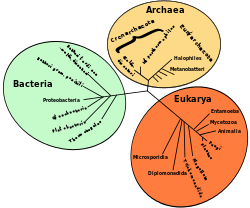
In the previous post, I discussed cladistics, the new way of classifying living things based on their position in the tree of life, and mentioned some of the difficulties that arise when trying to adapt the previous classification system, based on the taxonomic tree and Linnaeus's classic categories—kingdom, phylum, class, order, family, genus, and species—to cladistics.

There are more difficulties. For example, let's consider the concept of kingdom, Linnaeus's highest taxonomic category. Traditionally, living things were divided into two kingdoms: animals and plants. These two kingdoms were clearly separate, with very different characteristics. Thus, animals were defined as organic beings that live, feel, and move by their own impulse, while the plant kingdom were beings that live but do not feel and do not move. It was acknowledged that these definitions were imperfect, because there were exceptions, such as sponges, which barely move but are animals, and some plants, like mimosas, which seem to sense certain stimuli and move in response.

Thursday, February 12, 2026

Cladistics: A new classification of living beings

Tree of life
https://evogeneao.s3.amazonaws.com/
images/content/es/tree-of-life_2000.png

In 1735, the Swedish naturalist Carl von Linné (Linnaeus) created the binomial system of biological nomenclature still in use today, and a classification system for living things that is becoming obsolete. This system used at first seven successive categories: kingdom, phylum, class, order, family, genus, and species. The last two categories are used to name the species. Thus, according to Linnaeus's classification, the human species belongs to the animal kingdom, the phylum Chordata, the class Mammalia, the order Primates, the family Hominidae, the genus Homo, and the species sapiens. Its scientific name, according to Linnaeus's binomial system, is therefore Homo sapiens.

Thursday, February 5, 2026

Time Travel and Christ’s Crucifixion

Christ crucified, wood carving
by Manuel Alfonseca Santana

If time travel were possible, the greatest incentive for travelers would be to witness firsthand famous events of the past, such as the assassination of Julius Caesar and many others. The fact that we have no record of the presence of strangers in any of these cases is a significant argument against the feasibility of time travel.

There is no doubt that one of these events, perhaps the most famous of all, would be the Crucifixion of Christ. If time travel were possible, there should have been an avalanche of visitors from future times at Golgotha ​​to witness the most important event in the history of humankind.

In fact, this idea has been used in science fiction literature. In a novella titled There Will Be Time, Poul Anderson has his protagonist travel to Jerusalem on the day of the Crucifixion to witness Christ's death. Upon arriving, he discovers a large crowd, almost all of whom are time travelers.

Thursday, January 29, 2026

Quantum Conscience or Conscient Quantum?

The second hard problem of modern science is the origin of consciousness or the problem of free will. This post focuses on the relation of this problem with quantum mechanics. As an example of the difficulty of the matter, I begin by including two famous quotes from renowned scientists:

·         J. B. S. Haldane, Possible Worlds (1927): The universe [of quantum theory] is, not only queerer than we suppose, but queerer than we can suppose.

·         James Jeans, The Mysterious Universe (1930): The universe begins to look more like a great thought than a great machine.

Thursday, January 22, 2026

Natural and artificial intelligence

As we saw in the previous post, the book Free Agents by Kevin Mitchell deals with the origins of human consciousness and free will. In a brief epilogue, the book addresses the topic of strong artificial intelligence—the real kind, which doesn't yet exist—and formulates some hypotheses about the possibility of its becoming feasible.

It emphasizes that one of the most active branches of research in AI, especially in recent years, is the field of artificial neural networks, which has led to advances such as Large Language Models (LLMs). It compares these neural networks in our programs with those that exist in our brains and in the brains of many animals more or less similar to us. It says that we are witnessing impressive advances in fields such as image recognition, text prediction, speech recognition, and language translation, based on the use of deep learning, remotely inspired on the architecture of the cerebral cortex.

Thursday, January 15, 2026

The future is not written

In several posts in this blog, I've discussed determinism, always from a critical perspective. For example, in a post entitled The debacle of determinism, I mentioned the three devastating attacks suffered by determinism during the 20th century: Heisenberg's uncertainty principle (although it would be better to use the name Heisenberg originally proposed: the indeterminacy principle); chaos theory; and the Copenhagen interpretation of quantum mechanics.

Chapter 7 of Kevin Mitchell's book Free Agents, titled, like this post, The future is not written, analyzes and refutes determinism. However, it doesn't discuss just one type of determinism, but three, refuting them one after another in successive chapters. What are these three types of determinism?

1.      Physical predeterminism: the idea that only one possible timeline exists. In other words, that the future is entirely determined by the past; that the entire history of the universe is predetermined from the beginning; that nothing that happens could have happened otherwise.

Thursday, January 8, 2026

The problem of the origin of life

In a previous post titled Paul Davies, popularizer of science, I mentioned the two hard problems of modern science, so called because after several centuries trying to solve them, and although considerable progress has been made, the solution to these problems seems to recede further as we move forward, a paradigmatic case of the horizon effect, which I discussed in another post in this blog with the same title. These problems are: on the one hand, the origin of life, and on the other, the origin of free will, which is sometimes identified with the problem of consciousness, although they are not exactly the same, but are closely related. In this post, I will discuss the first problem. The next post will deal with the second.

The problem of the origin of life is not scientific. It is historical. Happened only once in the history of our planet, and is impossible to reproduce, so it is beyond the reach of experimental science. Even if we were able to create synthetic life (not to be confused with artificial life, a branch of computer science), we would not know if that method of generating life was the same as what took place shortly after the origin of the Earth.