Showing posts with label science fiction. Show all posts

Thursday, February 5, 2026

Time Travel and Christ’s Crucifixion

Christ crucified, wood carving
by Manuel Alfonseca Santana

If time travel were possible, the greatest incentive for travelers would be to witness firsthand famous events of the past, such as the assassination of Julius Caesar and many others. The fact that we have no record of the presence of strangers in any of these cases is a significant argument against the feasibility of time travel.

There is no doubt that one of these events, perhaps the most famous of all, would be the Crucifixion of Christ. If time travel were possible, there should have been an avalanche of visitors from future times at Golgotha ​​to witness the most important event in the history of humankind.

In fact, this idea has been used in science fiction literature. In a novella titled There Will Be Time, Poul Anderson has his protagonist travel to Jerusalem on the day of the Crucifixion to witness Christ's death. Upon arriving, he discovers a large crowd, almost all of whom are time travelers.

Thursday, January 22, 2026

Natural and artificial intelligence

As we saw in the previous post, the book Free Agents by Kevin Mitchell deals with the origins of human consciousness and free will. In a brief epilogue, the book addresses the topic of strong artificial intelligence—the real kind, which doesn't yet exist—and formulates some hypotheses about the possibility of its becoming feasible.

It emphasizes that one of the most active branches of research in AI, especially in recent years, is the field of artificial neural networks, which has led to advances such as Large Language Models (LLMs). It compares these neural networks in our programs with those that exist in our brains and in the brains of many animals more or less similar to us. It says that we are witnessing impressive advances in fields such as image recognition, text prediction, speech recognition, and language translation, based on the use of deep learning, remotely inspired on the architecture of the cerebral cortex.

Thursday, November 6, 2025

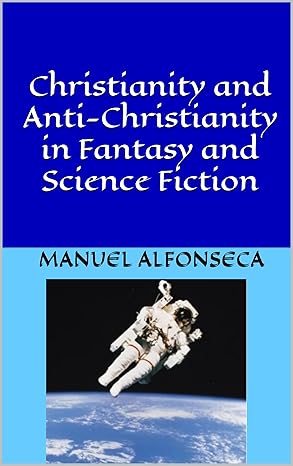
Christianity and Anti-Christianity in Fantasy and Science Fiction

A new book of mine has just been released with the same title as this post. It was published in Spanish by CEU Ediciones, and in English by Amazon.

There is a fairly widespread idea that we shouldn’t speak about Christian literature as a literary genre, except perhaps in fantasy, where the Christian character of such famous literary works as J.R.R. Tolkien's The Lord of the Rings or C.S. Lewis's The Chronicles of Narnia cannot be denied. In science fiction, the matter is not so clear. However, no one doubts that atheist literature does exist.

My book starts from the premise that an evident Christian literature exists in both genres, and demonstrates this by analyzing a series of authors and literary works, without neglecting anti-Christian literature, to which almost a third of the work is dedicated.

My predilection for fantasy and science fiction has been clear in this blog, given that over almost 12 years I've dedicated 34 posts to those two genres in literature and film; in other words, more than 6% of the posts.

Thursday, October 30, 2025

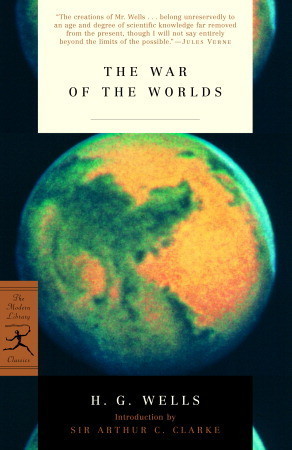
127 Years of The War of the Worlds

In October 30, 1988, the Sunday supplement of La Vanguardia (a major Spanish newspaper) published an article I had written, commemorating the 90th anniversary of the publication as a book of Herbert George Wells’s novel The War of the Worlds. (It had been published in instalments the previous year). That year also marked a half-century after Orson Welles’s radio adaptation of that novel, which caused panic in part of the United States, because many people didn’t realize it was an adaptation of a novel and thought that the Martians were invading Earth.

This year marks the 127th anniversary of the publication of this novel, perhaps the best-known of works of H.G. Wells. A generation after Jules Verne, Wells is the second great precursor of a literary genre (science fiction) that enjoyed enormous expansion in the 20th century. In light of this anniversary, I wonder: Why do these celebrations always take place when the number of years is a multiple of 25? Why can't the 127th anniversary be celebrated? 

Thursday, September 11, 2025

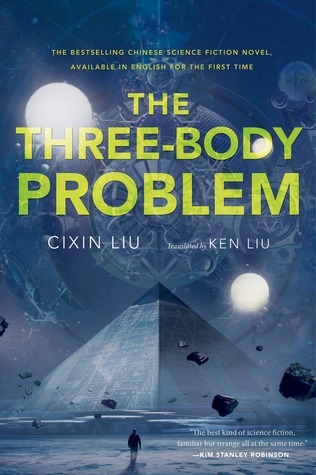
Traitors to the Human Species

The Three Body Problem is a gripping science fiction novel by Liu Cixin, which contains a wealth of information about ancient and modern Chinese history. But I fear it distorts science. And my first golden rule of good science fiction is not to distort science. I think distortions are dangerous because uninformed readers can be led to believe that certain false things are true.

I’m not worried about the assumption that string theory is true. It could be, although it has lost a lot of backing in recent years. But the description in the novel of the three-star system Alpha Centauri has nothing to do with reality, even though that description is crucial to the plot.

Thursday, December 26, 2024

The lost worlds of 2001

Arthur C. Clarke

2001: A Space Odyssey (1968) is one of the most representative science-fiction films in the world of cinema. Its script, which took several years to develop, was elaborated jointly by Arthur C. Clarke, a renowned science-fiction writer during the golden age of this genre, and Stanley Kubrick, a famous film director. While he was working on the script, Clarke wrote a book with the same title as the film, which was published after the film’s release.

In 1972 Arthur C. Clarke published a book entitled The Lost Worlds of 2001, where he mixes reminiscences about the elaboration of the script with discarded chapters from the book. By reading this book, we can follow the process of the construction of the film by Clarke and Kubrick and the successive stages of the plot. I agree with them that the final script was much better than the intermediate versions. Reading this book has led me to the following two comments:

Thursday, December 12, 2024

Time travel in science fiction

H.G. Wells

A few years ago, I published in this blog a series of posts about the scientific aspect of time travel, the paradoxes it could cause if it were possible (which almost certainly it is not) and proposed solutions to these paradoxes, such as the quantum multiverse, one of the most absurd theories physicists have ever concocted. In another post I talked about the scientific errors in Michael Crichton’s sci-fi novel Timeline, which tries to avoid the paradoxes in this way, but does it poorly.

Here I am going to speak about time travel from a literary point of view, as a subgenre of science fiction. In this context, it’s irrelevant that time travel may or may not be possible. We are interested in the question, because this is one of the most frequent topics in this type of literature.

Thursday, June 20, 2024

The dream of antigravity

Man has always wished to be able to fly. Seeing how birds do it and not being able to do it has obsessed him, to the point of causing quite a few accidents. It is a craving that even very young children know. Some mishaps caused by the viewing of the movie Superman at the end of the seventies may be proof.

At the end of the 19th century, two fundamental interactions were known: electromagnetic and gravitational. In one respect, both are quite different. Electrically charged bodies can have a positive or a negative charge. A positive and a negative charge attract each other; two positive or two negative charges repel each other. Likewise, magnetic bodies have two ends with magnetism of a different type, north and south. If we bring two magnets together, the north end of one and the south end of the other attract each other; ends of the same type repel each other.

Thursday, April 18, 2024

The aliens are coming!

Before the 20th century, some philosophers considered the possibility of the existence of intelligent aliens, from outside the Earth. We can cite Lucretius (De Rerum Natura, book II, 1st century BC), Nicholas of Cusa (15th century), and Giordano Bruno (16th century). The idea was happily adopted by science fiction writers, such as Lucian of Samosata (Vera Historia, 2nd century) and Cyrano de Bergerac (Comic History of the States and Empires of the Moon, 1656), of whom I spoke in another post.

During the 19th century, public attention focused on possible intelligent inhabitants of other bodies in the solar system, especially the moon and Mars. In 1835, The Sun newspaper published in New York six false reports declaring that flying men had been discovered on the moon. It is said that nine out of ten Americans believed it. In fact, The Sun had published a science fiction novel as though if it were real news, making reference to existing people, such as the astronomer Sir John Herschel. Near the end of the century, The War of the Worlds by H.G. Wells (1898) raised the possible existence of Martians, at the time of the scientific controversy over the canals of Mars, which was not finally solved until 1965.

Wednesday, December 27, 2023

Responses to a reader who rejects Christianity

A loyal reader of my blog, who praises my way of popularizing science, rejects Christianity and seems bothered by the fact that my articles imply that I am a Catholic. In a series of comments that he wrote in one of my posts, he explains his arguments. I did not answer him there, because of the length of his comments, which in total contain 3,346 words, while my article only has 644 (more than five times less).

I think that this reader should be classified as an agnostic rather than an atheist, as it’s possible to deduce from the following words:

There is nothing stupid about rambling about the possible existence of God and deciding "I'm going 100% that he does exist." The universe is SO complex that, as long as there is no evidence to the contrary, believing that there may be someone/something that "designed" all this... cannot be dismissed as "stupid thinking."

I think the reader's various criticisms can be summarized by quoting the following words, which also appear in his first comment:

The problem comes when we try to use all these reasonings (which, in principle, speak of God as something completely ethereal and impersonal) to try to validate the story of Jesus Christ, which seems to be the goal.

Simple, right? The reader accepts my speaking about God, but not about Jesus Christ. Apparently, he deeply resents my doing so. I have named Jesus Christ in eight posts out of more than 450, although perhaps my Christianity is also clear in posts where I don’t name him. And he accuses me of trying to bring water to my mill (or sweeping home). This is a textbook case of the ad hominem fallacy. As we know, this fallacy (which in this case can be summarized as follows: you say this because you are Catholic) can be answered in the same way: you say that because you are an atheist, or agnostic, or whatever corresponds.

Most of the comments of the reader (2092 words) are directed against the possibility of miracles, and in particular against the miracle of Fatima, to which I have dedicated several posts in this blog. I suspect that the reader thinks that his arguments contradict what I said in those posts, but on the whole I think that he has just provided a confirmation. I said this:

  1. Either the event really occurred, i.e., the witnesses told the truth.
  2. Either the event did not take place, and the witnesses deliberately lied.
  3. Or the event did not take place, but the witnesses did not lie, they were simply mistaken, or were the prey of a collective hallucination, or some equivalent explanation.

And I added:

Skeptics say that the miracle was a collective hallucination, or an optical effect due to the contemplation of the sun. Believers prefer the first option.

G.K.Chesterton

And what does the reader do? Assert that the only valid alternatives to my trilemma are the second and the third. In other words, what I had anticipated. An agnostic or an atheist must deny the possibility of miracles, therefore must necessarily adopt the other two alternatives. A believer has one more alternative, the first. (Catholics don’t automatically accept everything we are told is a miracle, as proved by G.K. Chesterton’s stories in the collection The Incredulity of Father Brown.) Then those 2000 or so words confirm what I had predicted.

There is also some reference to the other argument used usually by atheists to deny the existence of God: the problem of evil. In this regard he says:

If the planes that were going to hit the Twin Towers had frozen in the air 20 meters from the impact... it would have been amazing, there would have been no explanation of any kind and it would have been recorded on video... However, that did not happen... And thousands of people died. And many others suffered a mind-blowing psychological impact. It seems that miracles only happen to do inconsequential nonsense.

This is the problem of human evil, to which the usual response is to point out that we are trying to blame God for the evil that men do. Or as Mark Twain may have said: There are many scapegoats, but the most common is Providence. In this specific case, God is blamed for not having performed a miracle to prevent a barbaric human act. Others usually mention Auschwitz. This demand of miracles reveals a magical-mechanical concept of God, who would only be the automatic corrector of the evil done by human beings. Times don’t change much; that was also what they said to Christ crucified: Save yourself by coming down from the cross! (Mk. 15:30).

It’s curious: some time before the reader posted these comments in my blog, I had used similar arguments in a debate about the existence of God between two artificial intelligences in my latestscience fiction novel: Operation Viginti. The debate ends in a draw, which is what usually happens in this type of debate. Reaching an agreement is almost impossible, for both sides start from different axioms: one affirms that God exists, the other denies or questions it, so it’s difficult to find a convincing argument.

The same post in Spanish

Thematic Thread on Science, Faith and Atheism: Previous Next

 Manuel Alfonseca

Thursday, September 28, 2023

Descriptions and explanations

Lavoisier

An example will illustrate the difference between these two concepts:

  • Antoine-Laurent de Lavoisier is considered the father of modern chemistry. His Traité Élémentaire de Chimie revolutionized many of the ideas that until then had dominated this science. However, when it comes to the chemical reactions it describes, this book is a mere catalogue. So we are told something like this:

If we mix oxygen gas and hydrogen gas and apply fire or an electric spark to the mixture, an explosion occurs and the result is water.

This is a description. It tells what happens but offers no explanation of the phenomenon.

Thursday, September 21, 2023

Exploration of the solar system in science fiction

The exploration of the solar system is one of the classic themes of science fiction, although it is surpassed by the exploration of the galaxy, both in the number of works and in the variety of arguments to which it has given rise.

Among my favorite works on this subject I will cite the following:

  • Exploration and colonization of the moon. Two novels that make a series: De la Terre à la Lune and Autour de la Lune by Jules Verne, whose protagonists circumambulate the moon, but are unable to land; and two short stories: The Singing Bell by Isaac Asimov and The Menace from Earth by Robert Heinlein. In the second there is a well-established base on the moon.

Thursday, March 9, 2023

The paradox of unsourced information

Ted Chiang

In a previous post in this blog I discussed the paradoxes that would take place if time travel were possible. One of them was this:

  • The existence of objects without a cause, illustrated by the science fiction story Find the sculptor by Sam Mimes, which can be summarized thus: on his first trip, the inventor of the time machine jumps 100 years into the future, where he finds a statue that has been erected in his honor. He takes the statue, travels with it 100 years into the past (i.e., to the starting point of his journey), and places it in the same place where he found it, where it will remain for 100 years without anyone touching it. But who made the statue? Nobody. It is an object without a cause, that only exists during those hundred years.

Thursday, January 26, 2023

The world of tachyons and science fiction

In previous posts in this blog I have mentioned various procedures often used by the authors of science fiction novels to make interstellar travel almost as simple and brief as today's airplane trips to different points on Earth. One of these procedures consists of disintegrating the ship and reintegrating it into the universe of tachyons: hypothetical particles, compatible with the theory of relativity, that would always travel at speeds greater than the speed of light. Thus it would be possible (in principle) to travel very fast to the point we are interested to go to, reintegrate the ship into the world of tardions (in other words, into our world), and presto! We have traveled faster than the speed of light.

In fact, the authors of these novels (of which I am one) don’t usually go into detail about what the world of tachyons would be like. We simply assume three necessary conditions for interstellar travel to be possible:

Wednesday, October 5, 2022

Klara and the Sun

Kazuo Ishiguro

Those who are considered great writers don’t usually dedicate part of their efforts to science fiction. This genre has traditionally been considered second-rate, despite the fact that some prestigious authors have occasionally engaged on it. In this context, the most cited work is Brave New World, by Aldous Huxley (1932), a book I have talked about in previous posts in this blog.

But there has been a recent foray into this genre, by no less than a Nobel Prize winner for Literature. Kazuo Ishiguro, who writes in English and received the award in 2017, is well known for works such as The Remains of the Day, or An Artist of the Floating World, plus his science-fiction novel, Never Let Me Go, a dystopia along the same lines as Corinna Turner's I am Margaret, which I mentioned in my post on dystopias in this blog. Now, in 2021, he has published a science fiction novel that touches on the theme of strong artificial intelligence.

Wednesday, September 14, 2022

Time travel and matter transfer

C.S. Lewis

Apart from the Chronicles of Narnia, C.S. Lewis wrote a science fiction trilogy and left an unfinished fourth novel, The Dark Tower, which was published as-is after his death. In this novel, Lewis offers an argument against the possibility of time travel, not commonly advanced in this context. Usual arguments are a version of the Fermi paradox, or the enumeration of the paradoxes that could occur if it were possible to travel to the past, and in some cases also to the future.

The argument offered by C.S. Lewis consists of two parts:

Wednesday, September 7, 2022

Andy Weir and the Hail Mary Project

Andy Weir

Andy Weir became famous with his 2011 sci-fi novel The Martian, in which an astronaut is mistakenly abandoned on Mars when the third expedition must be hastily canceled because of a violent dust storm. The novel was the basis for a film, which bears the same title, and which made its author famous.

Weir is not a prolific writer. In 2021, his third novel, Project Hail Mary, was published. In my opinion, this is one of the seven best science fiction novels of all time. My other six favorite works in this genre can be seen here.

Project Hail Mary is a hard science fiction novel about space adventures typical of the genre. It deals with interstellar travel at relativistic speeds, encounter with extraterrestrial intelligences, or the invasion of the solar system by extraterrestrial life forms that threaten our survival. All this is integrated in a coherent way.

Wednesday, June 15, 2022

A Canticle for Leibowitz

This novel, one of my favorites in the science-fiction genre, belongs to the catastrophic subgenre, also called post-apocalyptic. This is its summarized argument:

An atomic war has destroyed our civilization. After the catastrophe, the surviving masses hate science and books, considering them responsible for the tragedy. In the same way as after the fall of the Roman Empire, the Catholic Church collects the remains of knowledge and preserve them for posterity, so they can be used by a new civilization, capable of understanding them, if one day it would arise. But when this happens, history repeats and man self-destructs again.

Wednesday, April 20, 2022

October the first is too late

Fred Hoyle was one of the great scientists of the 20th century, as well as one of the most controversial, due to the eccentric theories he defended. His most important scientific discovery had to do with the nucleosynthesis of elements in stars, heavier than hydrogen and helium, which are the simplest and lightest in existence. In particular, from his theory on the formation of carbon atoms, Hoyle deduced an early version of the fine-tuning problem, which made him go from atheism to a vaguely theistic position, as can be seen in this paragraph from his article The universe: past and present reflections (Engineering & Science, 1981):

Would you not say to yourself… "Some super-calculating intellect must have designed the properties of the carbon atom, otherwise the chance of my finding such an atom through the blind forces of nature would be utterly minuscule... A common sense interpretation of the facts suggests that a superintellect has monkeyed with physics, as well as with chemistry and biology, and that there are no blind forces worth speaking about in nature. The numbers one calculates from the facts seem to me so overwhelming as to put this conclusion almost beyond question."

Thursday, March 24, 2022

Superluminal interstellar travel

James H. Schmitz

The human imagination knows no limits. Einstein can tell us that the speed of light sets an insurmountable limit for objects with mass, but deep down we don't believe it. There has to be a way to break that limit! Otherwise, how could we reach the stars during the short span of our lives, return to Earth and tell here what we have seen?

People in our time, especially our civilization, are determined that we must get everything we want. I want to be immortal, so I must be; if I can't, at least my children or my grandchildren. (We don’t usually go beyond our grandchildren…) I want to travel to the center of the galaxy; if I can't, someone will. I want to do whatever I want with my life, so I will… no matter what!