Showing posts with label cosmology. Show all posts

Wednesday, April 20, 2022

October the first is too late

Fred Hoyle was one of the great scientists of the 20th century, as well as one of the most controversial, due to the eccentric theories he defended. His most important scientific discovery had to do with the nucleosynthesis of elements in stars, heavier than hydrogen and helium, which are the simplest and lightest in existence. In particular, from his theory on the formation of carbon atoms, Hoyle deduced an early version of the fine-tuning problem, which made him go from atheism to a vaguely theistic position, as can be seen in this paragraph from his article The universe: past and present reflections (Engineering & Science, 1981):

Would you not say to yourself… "Some super-calculating intellect must have designed the properties of the carbon atom, otherwise the chance of my finding such an atom through the blind forces of nature would be utterly minuscule... A common sense interpretation of the facts suggests that a superintellect has monkeyed with physics, as well as with chemistry and biology, and that there are no blind forces worth speaking about in nature. The numbers one calculates from the facts seem to me so overwhelming as to put this conclusion almost beyond question."

Wednesday, June 16, 2021

The end of the universe

Will the cosmos expand indefinitely, or will its expansion stop one day? What could stop it? It is clear only gravity could do it. The expansion of the universe, which makes galaxies separate, goes against the gravitational attraction, which tries to hold all bodies together.

If we look at Einstein's cosmic equation of general relativity, the question of whether gravity will succeed in stopping the expansion of the universe depends on the relative values and signs of the three terms in the equation. Depending on them, three things can happen:

Thursday, March 18, 2021

Did Dante anticipate Einstein?

A recent article has stated that Dante Alighieri's Divine Comedy offers a cosmology that closely resembles what Einstein expressed in his general theory of Relativity. Is there any truth in this?

In another post in this blog I summarized the history of cosmology, from the geocentric Greek version formalized by Ptolemy, to the modern version by Copernicus, Kepler and Newton. It is evident that Dante, who wrote the Divine Comedy at the beginning of the fourteenth century, could not know about modern cosmology, but he did know the Ptolemaic system, which he adopted in its entirety, with an important addition.

The relationship between the systems of Dante and Einstein was pointed out in an article published in Scientific American in August 1976, written by J.J. Callahan and entitled The curvature of space in a finite universe. This article compares Newton's universe (finite, non-homogeneous, Euclidean and with one center), Leibnitz's (infinite, homogeneous, Euclidean and without a center) and Einstein's (finite, homogeneous, non-Euclidean and without a center). By adapting to Euclid's plane geometry, the first two can be represented by graphic models as those in the attached figure.

Thursday, November 26, 2020

Atheism, theism and science

Today, the world’s population is divided between two competing, irreconcilable systems: atheism and theism. They are irreconcilable, because they start from opposite fundamental axioms (God does not exist and God exists). The approximate distribution of the population is this:

  • About 10% convinced atheists, willing to defend their ideas.
  • 10-20% convinced theists, who try to live according to their beliefs.
  • 10% agnostics, who in theory don’t accept either of the two axioms, although in practice they tend to approach one of the two opposite poles.
  • 60-70% indifferent, either because they don’t care about the debate; or because they live as if God does not exist, without considering whether He exists; or because they have beliefs, but don’t let them affect their way of life.

Thursday, February 27, 2020

4 clarifications about the history of the universe

James Peebles
Certain statements by James Peebles, recent Nobel Prize in physics, have aroused controversy, although what he said is not something new, as theoretical physicists have long been saying precisely the same thing.
The Big Bang theory was proposed in 1931 by Georges LemaƮtre, by extending to the past the Hubble-LemaƮtre law. In 1948, Ralph Alpher and Robert Herman predicted that, if the Big Bang theory is correct, there must be a cosmic background radiation with a temperature close to 5 Kelvin. In 1965 Arno Penzias and Robert Wilson discovered the existence of such cosmic radiation, whose temperature proved to be 2.72548 Kelvin. The temperature is exactly the same in all directions, except for two effects that cause small differences, but never affecting more than the third decimal place.

Thursday, October 31, 2019

Media manipulation: the Nobel Prizes and religion

James Peebles
The 2019 Nobel Prize in Physics has been assigned to cosmology and divided among three scientists: James Peebles, a Canadian, who receives half the prize for his theoretical work; and Michel Mayor and Didier Queloz, who have shared the other half for having discovered the first planet outside the solar system that revolves around a star in the main sequence.
The theory of the Big Bang was proposed in 1931 by George LemaƮtre, as a consequence of the extension to the past of the Hubble-LemaƮtre law. In 1948, Ralph Alpher and Robert Herman predicted that, if the Big Bang theory is correct, there must be a cosmic background radiation with a temperature close to 5 Kelvin. In 1965 Arno Penzias and Robert Wilson discovered the existence of such cosmic radiation, whose temperature turned out to be close to 3 Kelvin. That same year, Robert Dicke, James Peebles and other collaborators reasoned that the radiation discovered by Penzias and Wilson is precisely the signature of the Big Bang predicted by Alpher and Herman. During the 70s, Peebles was one of the leading theoretical cosmologists who studied the field of the formation of the great cosmic structures (galaxies and groups of galaxies). For these works he has now been awarded the Nobel Prize.

Thursday, June 13, 2019

Algorithmic censorship and diversity in scientific research

Manuel Cebrian

Manuel Cebrian started working in USA at MIT, and after a long journey that took him to the West Coast of the United States and then Australia, he returned to MIT and is now in Berlin. He became famous thanks to having won two important competitions organized by the government of the United States, related to the use of social networks to solve more or less complex problems:
  • DARPA Network Challenge (2009), which offered $40,000 reward to the first team that managed to discover, in less than 8 hours, the location of fifteen red balloons distributed in different locations in the United States by Pentagon personnel, using a social network of their own creation, built for one month before the competition date. Although they received many news about false sightings (fake news) Cebrian’s team managed to win the competition, against over 9000 participating teams.
  • DoS Tag Challenge (2012), which offered $5,000 reward to the team that managed to locate five actors, identified by their photograph, who acted as though they were five criminal suspects that would remain visible for 12 hours in five European and American cities: New York, Washington, London, Bratislava and Stockholm. Although they just managed to locate three of the five suspects, Cebrian's team won the competition again, despite the unethical behavior of other participating teams, one of which copied their website to deceive possible informants, so they’d send their information to the web of a different group.
During his stay in Australia, Cebrian worked on forecasting the negative effects of natural catastrophes by analyzing data provided by social networks (essentially Facebook and Twitter). The bad news is that, increasingly in recent years, algorithms that estimate general interest of news and messages in social networks are influencing whether and how those news and messages are propagated over the networks. These algorithms decide whether the messages and news will be more or less seen, and whether the users will stay more or less time on the platform.
In light of this, Cebrian and his colleagues transferred their research on social networks to the way in which Artificial Intelligence (AI) affects human communication and cooperation. The theoretical analysis of computational models inspired by the changes made in the large platforms made it possible to conjecture that the functioning of social networks can be affected by algorithms capable of enhancing or weakening information. As a result of their use, messages and news originated by certain users reach a smaller number of followers, which could be considered a form of algorithmic censorship.
Concerned about the growing trend towards control of the Internet by large companies, Cebrian and his team have made a thorough analysis of the publications in the field of Artificial Intelligence, and of the cross-references between this and other fields of science and the humanities, between 1950 and 2017. It has been found that, although the number of publications on AI has increased progressively, the mutual impact with other sciences seems to be decreasing. Just four fields (Computer Science, Mathematics, Geography and Engineering) maintain a trend higher than a randomized cross-data distribution, and just one (Computing) is increasing, although at a level below that reached during the seventies and eighties.
Another result obtained by the analysis described in the just mentioned article is that research on AI is increasingly dominated by a few research institutions, and the most cited publications appear in a small number of journals and conferences. This decrease in diversity, which has reached 30% since 1980, affects authors, articles and citations, and suggests that cross-citing research hubs may exist, with well-defined preferences. On the other hand, the preponderance of large companies in these hubs (Google, Microsoft, Facebook) could lead to the goal of research changing, from finding solutions to important technological problems for human beings, to a new situation where the objective is collecting customer data and selling them to advertisers, thus controlling the purchase impulses of society.
Let us look at one of the most important and worrisome conclusions of the article:
The gap between social science and AI research means that researchers and policymakers may be ignorant of the social, ethical and societal implications of new AI systems.
Martín López Corredoira
This decrease in diversity, combined with censorship of what does not fit the orthodox model, also affects other fields of science. Consider, for instance, the field of cosmological physics (cosmology). The publication with the highest impact is now arXiv, to the point that it is currently very difficult to publish there, unless you belong to an important institution, and totally impossible if the article differs in any way from the ΛCDM model, the current standard for cosmology, as denounced in this book:
Nobody should have a monopoly of the truth in this universe. The censorship and suppression of challenging ideas against the tide of mainstream research, the blacklisting of scientists, for instance, is neither the best way to do and filter science, nor to promote progress in the human knowledge. The removal of good and novel ideas from the scientific stage is very detrimental to the pursuit of the truth. There are instances in which a mere unqualified belief can occasionally be converted into a generally accepted scientific theory through the screening action of refereed literature and meetings planned by the scientific organizing committees and through the distribution of funds controlled by "club opinions". It leads to unitary paradigms and unitary thinking not necessarily associated to the unique truth. 

The same post in Spanish
Thematic thread on Natural and Artificial Intelligence: Preceding Next
Thematic Thread on Science in General: Previous Next
Manuel Alfonseca

Thursday, December 13, 2018

Science and civilizations

In my book Biological Evolution and Cultural Evolution in the History of Life and Man, published in Spanish, I analyze the cultural history of 23 civilizations and compare their evolution. In the particular case of science, I wrote this:
...the first-generation civilizations (Mesopotamia, Egypt and the American) reached their maximum scientific development in mathematics and astronomy. Egypt and Mesoamerica added medicine to these sciences. A second-generation (Greco-Roman) and a third-generation civilization (Islam) also practiced the natural sciences. As for the West, it is a unique and unprecedented case, as its scientific development has been overwhelming.
...astronomy was the first cultivated science... Mathematics emerged in parallel... It was soon found that both sciences were related, for mathematics supported astronomy, making it possible to perform complex calculations and predictions.
The pagan religions... tried to predict the future, using for that purpose sacrificed animals, which led to an accumulation of anatomical knowledge, soon applied to man, which mixed with ancient knowledge about the properties of medicinal plants, led to the formation of a corpus of medical doctrines.
On the other hand, the development of the physical, chemical and biological sciences was less urgent... and so it was attempted only by civilizations that had freed from the necessities of survival an important part of human work... This happened for the first time in Greece, the cradle of philosophy and most of the modern sciences.

Thursday, October 11, 2018

Interview with Manuel Alfonseca in a Spanish Newspaper


On February 23, 2018, a Spanish Newspaper (La Opinión, El Correo de Zamora) published this interview with me, performed by Ana Arias, which I am now translating into English. The interview was re-published a few days later (March 10) in the website ReligionEnLibertad (ReligionInFreedom). This is the translation of the interview:

He took an interest in science since he was quite small, as he says. At age 16 he wrote a book of zoology in two volumes that was never published. Anyway, whenever he has to consult information about some little known animal, he consults his book. "And I can find almost everything there," he adds. Now, at 71, he is an honorary professor at the Autonomous University of Madrid.

He believes in science. And also in God. Under the sponsorship of the Caja Rural Foundation and the Science-Religion University Forum held yesterday at the University College, Manuel Alfonseca gave a lecture about The Faith of Contemporary Atheist Scientists.

What is the faith of those scientists?

That God does not exist.

Thursday, May 10, 2018

What’s a scientific theory

Karl Popper
Although it is fashionable to assert that Karl Popper’s theories about the evolution of science are outdated, his definition of what is a scientific theory is unassailable:
A theory is scientific if and only if it is possible to design an experiment that proves that this theory is false.
A paradigmatic case is the Copenhagen Interpretation of Quantum Mechanics. In 1935, Einstein, Podolsky and Rosen designed an experiment that could prove this theory false. A few months later, Niels Bohr published another article in the same magazine, in answer to the previous article. Almost 30 years later, as I explained in another post in this blog, the EPR experiment, which up to that point had been mental, could be carried out and confirmed Bohr’s predictions, rather than Einstein’s. As this theory was able to resist an attempt to prove it false, it must be considered a scientific theory.
Of course, this success of the theory does not imply that it should automatically be considered correct or true. Scientific theories (always according to Popper) never become so. This theory has successfully withstood an attempt to prove it false, but the next attempt could do it.

Thursday, December 21, 2017

What really happened in the history of cosmology

To complete last week’s post, I will offer here a summary of the history of Cosmology, from the Greeks to the paradigm shift that took place in the sixteenth and seventeenth centuries.
The basic elements of Ptolemaic astronomy, showing a planet on an epicycle (smaller dashed circle), a deferent (larger dashed circle), the eccentric (×) and the equant (•).
  • Greek cosmology (with the exception of Aristarchus of Samos) put the Earth at the center of the universe. Plato and, above all, Aristotle established the idea that, since the sky is perfect, the orbits of the planets must be exactly circular, because, for them, the circumference is the most perfect curve of all.
  • The Greek model explained well the movements of the sun and moon, and therefore made it possible to predict eclipses, but had a problem with the retrograde movements of the planets then known (Mercury, Venus, Mars, Jupiter and Saturn). Three centuries before Christ, Apollonius of Pergamum proposed that the orbits of these planets are epicycles, circumferences centered on another circumference (the deferent), which in turn revolves around a point located near the Earth, but apart from its center (the eccentric).

Thursday, December 14, 2017

Was physics wrong in Ptolemy's cosmology?

1919 solar eclipse
A recent article in the journal Science News has this title: Eclipses show wrong physics can give right results. It claims that Ptolemy’s physics was incorrect, because he assumed that the Earth was at the center of the universe, and yet Greek science was able to predict the dates of eclipses.
According to the article, Ptolemy’s physics was less correct than the physics of Copernicus, who fourteen centuries later proposed that it was not the Earth, but the Sun, at the center of the universe.
The analysis in this article in Science News is completely wrong. Ptolemy’s physics was exactly the same as the physics of Copernicus. Copernicus did not propose a change in the physical theories that had governed classical astronomy since Hipparchus (2nd century BC). Copernicus just showed that, with a change in the coordinate system, and applying the same physics, the calculations are easier to perform. Logically, the same results are obtained.

Thursday, September 28, 2017

Plato's Timaeus, the philosophical basis of the medieval cosmological model

Plato, according to Raphael Sanzio
Among Plato’s dialogues, Timaeus has always captured the attention of scholars, for it represents the first description in Greek philosophy of a coherent cosmological model, which reached great resonance by becoming part of the medieval model through the partial translation into Latin of this dialogue by the mysterious Roman philosopher Calcidius.
Very little is known about Calcidius. Although he lived in the fourth century, we do not know his date of birth or death, nor the place where he lived. It is not even known whether he was a Christian or a pagan (a Neo-Platonist). His book is dedicated to a certain Hosius, who may or may not be the bishop of Cordoba who participated in the Council of Nicaea.
It is often said that medieval philosophy in Western Europe was based initially on Plato, and from the twelfth century on Aristotle. This happened because, in the realm of the Western Roman Empire, the knowledge of the Greek language had been lost, therefore the Greek classics could no longer be read in their original language. There were no Latin translations, for the illustrated Romans of the imperial period could read the Greek language perfectly, so did not need them. What is not usually mentioned is that Plato’s works had also become inaccessible, with the sole exception of the Timaeus, which in the partial translation by Calcidius knew an unexpected boom during the Middle Ages, even stronger than Calcidius’s work during his life.

Thursday, May 4, 2017

Is there a universe?

The Spanish Wikipedia defines the universe thus:
The universe is the totality of space and time, all forms of matter, energy and momentum, plus the laws and physical constants that govern them. However, this term is also used in slightly different contextual senses and refers to concepts such as cosmos, world or nature. Its study, at the highest scales, is the object of cosmology, a discipline based on astronomy and physics, which describes all the aspects of this universe, together with its phenomena.
Before applying to the universe, the Greek word cosmos meant order and beauty. Notice that this sense is maintained in one of its derivatives, the word cosmetic. The Latin word mundus also has the two meanings: as a noun, it means the world, the totality. As an adjective, clean, neat, elegant. Presumably the first sense was copied from Greece, and to translate the world cosmos they adopted the same word that represented in Latin its other meaning. Finally the word nature (physis in Greek) has phenomenal connotations (rather than to the universe, it refers to what happens in it). From this word come physics (the study of nature) and metaphysics (beyond physics).

Thursday, November 12, 2015

Einstein’s mistake

When Einstein formulated in 1915 his theory of general relativity, he soon applied it to the entire universe, deriving the following cosmological equation:


It is curious that this equation is identical to the equation that would result from Newton’s theory of gravitation. There is only one difference: constant k represents, in Newton’s case, the total energy of the universe; in Einstein’s case, its curvature.
Each term of this equation contains a universal constant. Besides k, G is the gravitational constant; L is called the cosmological constant, whose interpretation is not clear. Einstein initially thought he could eliminate this term by making L = 0, which simplifies the equation and makes it analytically solvable. Then he discovered that the solution, in that case, was a universe in constant expansion. Since he believed that the universe had to be stationary, he decided to assign the constant a critical value L = Lc, to make it be so.

Thursday, March 5, 2015

The scientific work of Stephen Hawking

The scientific work of Stephen Hawking has been quite productive, although the media, influenced by his sad personal situation, tend to exaggerate its importance, putting him sometimes at the level of Einstein. His most renowned works are the following:
  • The singularity theorems, published in 1970 in collaboration with Roger Penrose, proved that the application of the equations of Einstein’s General Relativity to the entire universe requires at least one singular point in that universe (a point where all the geodesics in the universe converge). As a consequence of this theorem, in the book The Large Scale Structure of Space-Time (1973, written with George Ellis), Hawking unequivocally embraced the theory that the universe began at a point of infinite density (the Big Bang).

Thursday, February 12, 2015

A photograph from the abyss of time

The cosmic background radiation as detected by the Planck satellite telescope
When the space telescopes sent by NASA and the European Space Agency (COBE, WMAP, Planck) send us data on the cosmic background radiation, the corresponding images usually appear on the first page of high-diffusion newspapers, accompanied by headlines that are not always correct. Let's look at a few, published in Spanish newspapers:

Thursday, January 8, 2015

Anthropic and supranthropic properties

In a previous post I wrote about the fine tuning problem, based on the verification that many of the properties of the universe seem designed to make our existence possible. In other words: those properties verify the anthropic principle, another way of saying that the universe must fulfill all the conditions needed for our existence, since we are here. On the other hand, the mediocrity principle states that the anthropic conditions of the universe should be the necessary minimum to make our existence possible.
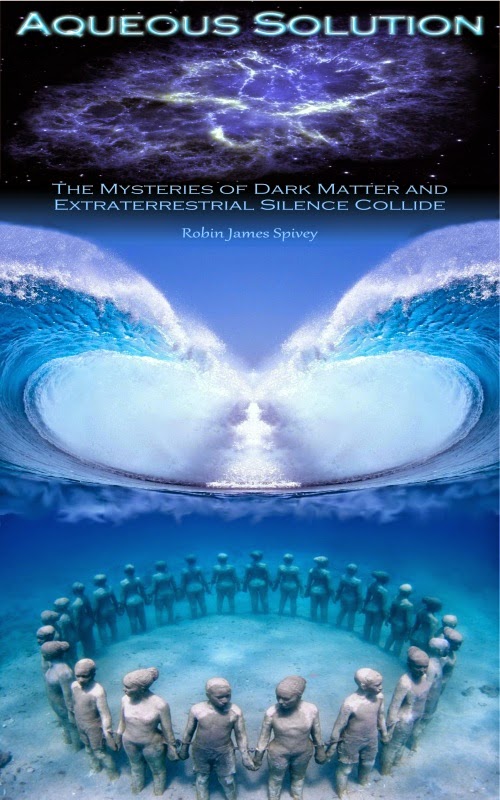
Robin James Spivey has lately published a book titled Aqueous solution, where he asserts that certain properties of the cosmos are supranthropic (they go beyond the anthropic principle) because they are not required for our existence, but their presence guarantees our long-range survival. According to Spivey, those properties are an inkling of design stronger than the anthropic properties, as the mediocrity principle opposes their presence.

Thursday, December 4, 2014

The fine tuning problem

In two previous posts I dealt with the relation between the multiverse theories and the problem of fine tuning, noting that those theories do not solve the problem. This third post describes briefly what is the fine tuning problem.
Brandon Carter
In 1973 Brandon Carter formulated the anthropic principle, a name later deplored by its author, because it may be prone to misunderstandings. This principle is simply the verification that the universe must fulfill all the conditions necessary for our existence, since we are here.
Over a decade later, John Barrow and Frank Tipler published a book entitled The anthropic cosmological principle, which offered a stronger version of the anthropic principle, posing that the values of many of the universal constants are critical and minor variations would make life impossible. This finding raises the fine tuning problem, based on the analysis of the possible effects of changing the values of those constants. In other words, the universe seems designed to make life possible. Let’s look at a few examples: