Showing posts with label H.G. Wells. Show all posts

Thursday, October 30, 2025

127 Years of The War of the Worlds

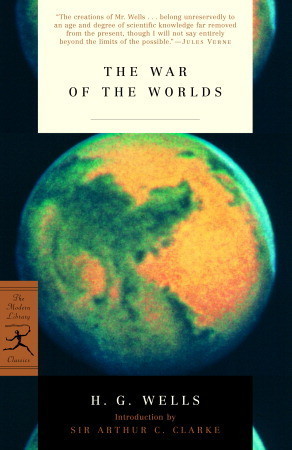
In October 30, 1988, the Sunday supplement of La Vanguardia (a major Spanish newspaper) published an article I had written, commemorating the 90th anniversary of the publication as a book of Herbert George Wells’s novel The War of the Worlds. (It had been published in instalments the previous year). That year also marked a half-century after Orson Welles’s radio adaptation of that novel, which caused panic in part of the United States, because many people didn’t realize it was an adaptation of a novel and thought that the Martians were invading Earth.

This year marks the 127th anniversary of the publication of this novel, perhaps the best-known of works of H.G. Wells. A generation after Jules Verne, Wells is the second great precursor of a literary genre (science fiction) that enjoyed enormous expansion in the 20th century. In light of this anniversary, I wonder: Why do these celebrations always take place when the number of years is a multiple of 25? Why can't the 127th anniversary be celebrated? 

Thursday, April 18, 2024

The aliens are coming!

Before the 20th century, some philosophers considered the possibility of the existence of intelligent aliens, from outside the Earth. We can cite Lucretius (De Rerum Natura, book II, 1st century BC), Nicholas of Cusa (15th century), and Giordano Bruno (16th century). The idea was happily adopted by science fiction writers, such as Lucian of Samosata (Vera Historia, 2nd century) and Cyrano de Bergerac (Comic History of the States and Empires of the Moon, 1656), of whom I spoke in another post.

During the 19th century, public attention focused on possible intelligent inhabitants of other bodies in the solar system, especially the moon and Mars. In 1835, The Sun newspaper published in New York six false reports declaring that flying men had been discovered on the moon. It is said that nine out of ten Americans believed it. In fact, The Sun had published a science fiction novel as though if it were real news, making reference to existing people, such as the astronomer Sir John Herschel. Near the end of the century, The War of the Worlds by H.G. Wells (1898) raised the possible existence of Martians, at the time of the scientific controversy over the canals of Mars, which was not finally solved until 1965.

Wednesday, April 12, 2023

Fads and fallacies in the name of science

Martin Gardner

As I pointed out in the previous post, Martin Gardner published in 1952 a book with the same title as this one. My edition, dated in 1957, contains an updating appendix and a new chapter, making a total of 26 chapters. Each chapter refers to one or more cases of pseudoscience. The book bears the following subtitle:

A study in human gullibility

I am sure that more than one of my readers will be outraged by at least one of Gardner’s selected pseudosciences, because they will not be considered pseudoscience. Like any human activity, the critique of pseudosciences is also debatable. I am not going to give my opinion. I will just summarize Gardner’s pseudosciences, although not all of them, for a few are no longer interesting. Nor will I mention those that have appeared after the publication of Gardner’s book, although I will dedicate other posts to some of these.

Thursday, April 22, 2021

Science and Science Fiction: mutual influences in the 20th century

H.G. Wells

NOTICE for those of you who have subscribed to the posts of this blog by email: Google has announced the end of "feedburner", its notification service, which was being used by this blog. From now on, another service will be used: "follow.it". You may initially receive two notices, one from each service.

Halfway between the 19th and 20th centuries, the British H.G. Wells also practiced the literature of scientific prediction, although his predictions are usually longer-term than Verne's, more remote from the technique of his time, so very few have come to be carried out. We still don't have The Time Machine and can't see it anywhere near. We cannot make artificial men by vivisecting animals (The Island of Doctor Moreau). Nor can we make ourselves invisible (The invisible man). And fortunately the Martians have not invaded us (The War of the Worlds). In 1938, a radio dramatization of this novel by Orson Welles caused a mass panic in the United States. Despite the boom in science fiction at the time, the public was still as credulous as when it had been fooled a century earlier by the articles in the Sun.

Wells also wrote (of course) about a trip to the moon and populated our satellite with intelligent giant ants, although the procedure to make the trip is more imaginative than, and as impractical as Verne's. But his great scientific foresight success is the novel The World set free (1913), which not only anticipated the atomic bomb, but also influenced its practical realization, stimulating Leo Szilard's research on the neutron chain reaction. Although Wells also made a tremendous mistake in this novel, by predicting in 1913 that the First World War would start in 1956. But as he said a few years later: [I have] always been... a rather slow prophet. You can also see my review of this book in Goodreads.

Thursday, July 12, 2018

Extraterrestrials in literature

Extraterrestrials can only appear in two types of literary works: in essays, or in novels, and in the latter only in the genre of science fiction. If an extraterrestrial appears in any novel, the novel automatically becomes science fiction.
Science fiction literature shows very many types of extraterrestrials:
  • Fully humanoid, such as the red men in the Mars series by Edgar Rice Burroughs, who are so humanoid that they are even fertile when mating with terrestrials, as shown by the two sons of John Carter and Dejah Thoris, despite the fact that Martian women are oviparous (!!!) To this group also belong the aliens of The People series by Zenna Henderson, who are only different from us by their mental abilities, and those of Perelandra by C.S.Lewis, also titled Voyage to Venus.
  • Partially humanoid, such as those in Star Ways by Poul Anderson, whose women are also capable of falling in love with terrestrials. This novel develops a typical Anderson argument: extraterrestrials who differ culturally from us in their ecological view of the world, but who are fated to be defeated when confronting terrestrials, who are much more active and aggressive than they are.