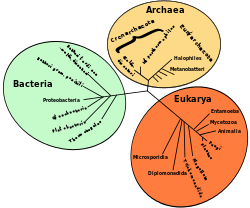
In the previous post, I discussed cladistics, the new way of classifying living things based on their position in the tree of life, and mentioned some of the difficulties that arise when trying to adapt the previous classification system, based on the taxonomic tree and Linnaeus's classic categories—kingdom, phylum, class, order, family, genus, and species—to cladistics.
There are more difficulties. For example, let's consider the concept of kingdom, Linnaeus's highest taxonomic category. Traditionally, living things were divided into two kingdoms: animals and plants. These two kingdoms were clearly separate, with very different characteristics. Thus, animals were defined as organic beings that live, feel, and move by their own impulse, while the plant kingdom were beings that live but do not feel and do not move. It was acknowledged that these definitions were imperfect, because there were exceptions, such as sponges, which barely move but are animals, and some plants, like mimosas, which seem to sense certain stimuli and move in response.

