Showing posts with label historic novel. Show all posts

Thursday, June 28, 2018

What is a good historical novel

Battle of Borodino, by Louis-François Lejeune
In the previous post I mentioned War and Peace by Leo Tolstoy as a paradigmatic example of a good historical novel. In my opinion, the three golden rules for good historical novels are the following:
1.      The main characters are fictitious: In the case of War and Peace those characters are Pierre, Natasha, Prince André and their relatives, friends and spouses.
2.      The real historical characters are secondary: In War and Peace the historical characters are Napoleon, Alexander I of Russia and General Kutuzov. These characters act in the novel exactly as they did in reality. Regarding them, facts are not invented, they are interpreted.
3.      The lives of both groups of characters are intertwined perfectly.

Thursday, June 21, 2018

Is History science or literature?

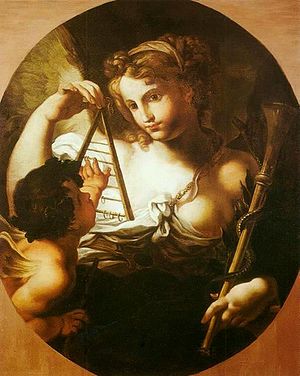
Allegory of Science, by Sebastiano Conca
There are different kinds of sciences. Some are rigorous and have great predictive power, others less, others practically none. Let us look at a classification of the sciences:
·         Formal sciences: They start from axioms or postulates, more or less unassailable, and use deduction as the main method of reasoning. A few play the role of fundamental basis for other sciences. In this group, we can include mathematics, logic and theoretical computer science.
·         Natural sciences: They use induction as the main method of reasoning. Their objective is to discover fundamental laws that explain the working of the world. They rely more or less on logic and mathematics. These sciences include (in order of decreasing rigor) physics and astronomy; chemistry; biology, geology and paleontology.
·         Social Sciences: They use abduction as the main method of reasoning (see an earlier article in this blog). Their object of study is man or society. These sciences include psychology, economics, sociology, anthropology, politics, archeology and history.
·         Finally, the applied sciences, whose objective is to develop practical applications from the theoretical knowledge provided by the experimental and social sciences. They usually associate under the name of technology, although there are some disciplines that fall outside that umbrella, such as legal sciences, applied economics, medicine, or applied psychology.

Sunday, March 1, 2015

Interview with Manuel Alfonseca

This is the translation of an interview about my activity as an author of fiction, published in El Templo de las Mil Puertas


1.         What drives an apparently scientific person to get involved on the wonderful task of creating, writing and sharing stories?
Many scientists have written novels, especially in the genre of science fiction. To name a few: Carl Sagan, Leo Szilard, George Gamow and Willy Ley. I also like to try other genres. Throughout my life, I've been interested in many subjects that are not supposed to be science, such as history or philosophy. Later, when I tried to express myself in the field of fiction, such knowledge found its natural place.