Showing posts with label Pierre Teilhard de Chardin. Show all posts

Thursday, November 14, 2024

Was Teilhard de Chardin persecuted for defending evolution?

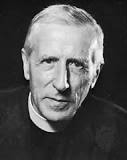
Pierre Teilhard de Chardin

In a previous post I have mentioned some myths related to the persecution of scientists as a result of their scientific ideas, for religious reasons. I mentioned, for example, Giordano Bruno and Miguel Servet, wrongly presented as martyrs of science, when in reality they were persecuted for their religious ideas, not for their scientific activities, which in the case of Bruno were practically non-existent.

The presentation of a recently published video publicizes one of these myths, also widespread: the claim that Teilhard de Chardin was repressed by his Jesuit order for advocating evolution. That this is false can easily be deduced from the fact that Teilhard was able to publish dozens of articles on the evolution of the ancestors of man in scientific and philosophical journals of impact, without being prevented from doing so by his order. One of these journals was Études, edited by the Jesuits. A curious way of repressing him for advocating evolution.

Thursday, February 15, 2024

Extraterrestrial intelligence and original sin

C.S. Lewis

These speculations may seem irrelevant, since we do not know if extraterrestrial intelligence exists. In fact, the probability of its existence is 50%, as I explained in a previous post, by which I mean that we know nothing, that we might as well flip a coin to decide. However, some serious theologians and science fiction authors have raised this question, so it may not be absurd to discuss it here.

Jean Jacques Rousseau asserted that man is good by nature, but society makes him evil. All the evidence we have refutes him. In every attempt made to correct this situation by modifying social structures, for example, in the French Revolution (which introduced the guillotine); in the Russian Revolution (which introduced the Gulag); and in German National Socialism (which introduced gas chambers); things have gotten worse. It is clear that we are prone to evil by nature, although we may also be capable of great heroism. That inclination to evil is a consequence of what we call original sin.

Thursday, September 17, 2020

Mind and Cosmos

Thomas Nagel
Thomas Nagel, philosopher, professor at New York University and specialized in the philosophy of mind, has published a book (Mind and Cosmos) where he summarizes his argumentation against materialist reductionism, dominant in philosophy since the mid-nineteenth century. I have read the book in a Spanish translation made by the Seville professor Francisco Rodríguez Valls, with whom I have collaborated more than once.
The book provides strong arguments in support of the claim that materialistic reductionism cannot explain conscience, reason, and other mental elements without explaining them away. But since conscience and reason are the dominant elements of our worldview, the conclusion we should arrive at is that materialistic reductionism must be false.

Thursday, September 19, 2019

The optimism of Teilhard de Chardin

Pierre Teilhard de Chardin
Teilhard de Chardin’s vision of the future is essentially optimistic, perhaps too much. In his book The Phenomenon of Man he outlines his vision of the future evolution of human beings, which he presents as a process of increasing convergence towards a unifying center with the appropriate name of Omega Point.
By studying the unifying process that should take us to the next stage (or the final point) of our evolution, Teilhard distinguishes three different areas:

Thursday, October 18, 2018

Science or philosophy

Pierre Teilhard de Chardin
In a previous post, speaking about intelligence, I mentioned that there are four incompatible philosophical theories that try to explain the phenomenon of human consciousness. I summarize them briefly here:
1.     Reductionist monism or biological functionalism: The mind is completely determined by the brain and by the network of neurons that makes it. The human mind is an epiphenomenon. Freedom of choice is an illusion. We are programmed machines.
2.     Emergent monism: The mind is an emergent evolutionary product with self-organization, which has emerged as a complex system from simpler systems made up by neurons. Some argue that the underlying structures cannot completely determine the evolution of the mental phenomena. These, however, would be able to influence the underlying structures.
3.     Neuro-physiologic dualism: Mind and brain are different, but they are so closely connected that they make up a unit, two complementary and unique states of the same organism.
4.     Metaphysical dualism: Mind and brain are two different realities. The first is spiritual and non-spatial, capable of interacting with the brain, which is a material and spatial substance. Both entities can exist independently of one another, although the body without the mind eventually decomposes.

Thursday, November 2, 2017

The end of mankind

Lord Kelvin
In an earlier post in this blog I spoke about the myth of the Enlightenment, which gave rise to the theory of indefinite progress and the forecast of enormous advances for humankind that would be within our reach in the not too distant future. Although the first half of the eighteenth century was a brake on almost all the cultural activities of our civilization, including science, they were delighted with themselves. Friedrich Melchior, Baron von Grimm (1723-1807), expressed it with unequaled candor, in these words [1]:
The eighteenth century has surpassed all the others in the praises it has lavished on itself.
One of the ideas in vogue by that time was the assumption that scientific advances would let man reach immortality, not too far in time. Although the idea, as a distant possibility, goes back to Roger Bacon, it seemed much closer in the late eighteenth century. Hence the anecdote told of the octogenarian wife of marshal Villeroi, who exclaimed, while looking at Professor Charles’s ascent in a hydrogen balloon:
Yes, it is true! They’ll discover the secret of not dying, after I’ll be dead!
The optimistic ideas of the eighteenth century suffered a sudden, impressive turn in the nineteenth, when came to dominate a pessimistic vision of the future of mankind, based mainly on two scientific discoveries:

Thursday, March 30, 2017

Brain transplant and personal identity

Daniel Dennett
In the previous post I wrote about brain transplants, but we must still consider the problem of how a brain transplant would affect our personal identity. Is our identity associated with the brain, and therefore would it be transferred to a different body in the case of a brain transplant? Or could something else happen?
In the first place, I must point out that this digression is not scientific, but philosophical, as for the time being a brain transplant is pure science fiction. It is not feasible now, and it does not seem probable that it will become so in a long time, assuming that it is possible to perform it successfully. This means that I am leaning on the void, the same thing I have criticized a few times when others do it...
In 1978, the American philosopher Daniel Dennett wrote a philosophical essay on this problem entitled Where am I?, where he used the science fiction genre to pose the problem of personal identity in the event of hypothetical scientific advances, such as the maintenance of an active living brain out of the body (although connected with it by wifi), or downloading the contents of a human brain into a computer.

Thursday, December 17, 2015

The phenomenon of man

Pierre Teilhard de Chardin
We know from experience that man has a mind and consciousness. It is also evident that animals seem to have more mental activities the closer they are to us. Thus, mammals have more minds that reptiles, reptiles more than fish, fish more than invertebrates (possibly excluding cephalopods). All animals except sponges have a nervous system, although some have very little: the nematode Caenorhabditis elegans has only 300 neurons. Plants do not have a nervous system, but they have some sensitivity and are able to move slowly. And when Antonie van Leeuwenhoek discovered microorganisms in the seventeenth century, no one doubted that these tiny creatures were alive. True, biologists have not yet agreed on whether viruses, even more tiny beings, are alive or not. I have written about this in another post in this blog.

Thursday, May 28, 2015

The final anthropic principle and the antiChrist

Pierre Teilhard de Chardin
In their popular science book, The Anthropic Cosmological Principle, published in 1986, cosmologists John Barrow and Frank Tipler define three different anthropic principles:
1.      The weak anthropic principle or WAP (this was offered by Brandon Carter in 1973): the simple verification that the fact that we are here imposes certain restrictions on the universe, such as having lasted long enough for intelligent life to appear.
2.      The strong anthropic principle or SAP: the claim that making possible the emergence of intelligent life was a necessary requirement for the universe.
3.      The final anthropic principle or FAP: The claim that, once intelligent life has appeared in the universe, it cannot disappear.