Showing posts with label classification of living beings. Show all posts

Thursday, February 19, 2026

The Kingdoms of Cladistics

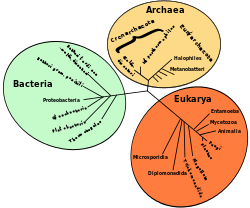
In the previous post, I discussed cladistics, the new way of classifying living things based on their position in the tree of life, and mentioned some of the difficulties that arise when trying to adapt the previous classification system, based on the taxonomic tree and Linnaeus's classic categories—kingdom, phylum, class, order, family, genus, and species—to cladistics.

There are more difficulties. For example, let's consider the concept of kingdom, Linnaeus's highest taxonomic category. Traditionally, living things were divided into two kingdoms: animals and plants. These two kingdoms were clearly separate, with very different characteristics. Thus, animals were defined as organic beings that live, feel, and move by their own impulse, while the plant kingdom were beings that live but do not feel and do not move. It was acknowledged that these definitions were imperfect, because there were exceptions, such as sponges, which barely move but are animals, and some plants, like mimosas, which seem to sense certain stimuli and move in response.

Thursday, February 12, 2026

Cladistics: A new classification of living beings

Tree of life
https://evogeneao.s3.amazonaws.com/
images/content/es/tree-of-life_2000.png

In 1735, the Swedish naturalist Carl von Linné (Linnaeus) created the binomial system of biological nomenclature still in use today, and a classification system for living things that is becoming obsolete. This system used at first seven successive categories: kingdom, phylum, class, order, family, genus, and species. The last two categories are used to name the species. Thus, according to Linnaeus's classification, the human species belongs to the animal kingdom, the phylum Chordata, the class Mammalia, the order Primates, the family Hominidae, the genus Homo, and the species sapiens. Its scientific name, according to Linnaeus's binomial system, is therefore Homo sapiens.

Thursday, December 3, 2020

Is there a tree of life?

Tree of life

Many biologists would not hesitate to answer this question in the affirmative. However, in these lines I am going to raise the possibility that the answer should be negative. Let us see why.

First of all, what is a tree? When we use this term, talking about the tree of life, we don’t mean a biological tree, i.e. a plant with a woody trunk that grows to a height of several (or many) meters. We mean a mathematical tree. But what is that?

Thursday, January 29, 2015

The mystery of the Cambrian explosion

Opabinia
550 million years ago, during the Cambrian period, animals appear suddenly in the fossil record. This spectacular phenomenon has been given the name of Cambrian explosion. Why did it happen then, and not before, has been, for over a century, one of the great mysteries of paleontology.
The evolution of life on Earth seems to have been rather discontinuous. Life is likely to have appeared 3,500 to 4,000 million years ago. Not much later, around 3,000 million years ago, photosynthesis appeared. Eukaryotes (cells with nuclei) emerged 2,000 million years ago. From then until the Cambrian explosion, nothing much seems to have happened for 1,500 million years. Then all the types of organization of the animals existing today appear suddenly. Why?

Thursday, December 18, 2014

Classifying living beings: Cladistics or complexity levels

The tree of life
Since Aristotle, living beings have been classified in kingdoms. At first there were two: plants, practically unmoving, and animals, capable of active movement.
When Antony van Leeuwenhoek discovered microorganisms, biologists tried to maintain this two-fold division, integrating some with animals (amoebas and Paramecium), others with plants (bacteria and microscopic algae and fungi). But at that level, the separation between animals and plants is blurry, and in the mid twentieth century a third kingdom was added to the other two: protists, unicellular living beings.
A little later, biologists came to the conclusion that the kingdom of plants should be divided into two: fungi at one side, all the other plats (metaphyta) at the other. By 1975, therefore, there were four different kingdoms.