Showing posts with label Jules Verne. Show all posts

Thursday, September 25, 2025

Hallucinations or Lies

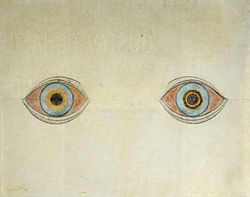
My hallucinations by August Natterer

Since ChatGPT appeared in late 2022, I have been warning that the answers provided by Large Language Models (LLM; I refuse to call these tools Artificial Intelligence) are unreliable and should be treated with the utmost caution. Often, these answers seem plausible and are written linguistically correctly, but they are false. These types of answers have been called hallucinations.

This is not surprising. It is a logical consequence of the algorithm used by these programs, which I described in another post in this blog, which I simulated by means of a program with only 18 instructions. The algorithm works by adding words extracted from the most frequent ones that follow the previous words, chosen from billions of files taken from the Internet. It is evident (just think about it) that this algorithm cannot guarantee that the answers these tools provide are true.

Thursday, April 15, 2021

Science and Science Fiction: mutual influences until the 19th century

Illustration of the Sun article

In the early years of the 20th century there was a flood of titles that led to the recognition of a literary genre called science fiction.

In fact, science fiction novels, understood as works using science (especially future advances) as an essential element of the plot of a novel, are very old. Lucian of Samosata, a Syrian satirist from the 2nd century, is usually considered the creator of the genre. One of his works (Vera Historia) tells of a journey from Earth to the moon in a ship that, lifted by a waterspout, is launched into space. The moon is inhabited by an advanced civilization, which has crossed space and is at war with the inhabitants of the sun over a conflict of interest regarding the colonization of planet Venus. As he didn't know about the existence of interplanetary vacuum, Lucian never thinks of explaining how his characters could breathe during their trip.

Thursday, December 31, 2020

Mesozoic marine reptiles

Jules Verne

In 1867, Jules Verne published his famous novel Journey to the Center of the Earth, whose protagonists discover an underground ocean at great depth, which they baptize as the Liddenbrock Sea, and witness the fight to the death of two great marine animals: a plesiosaur and an ichthyosaur, supposed descendants of ancestors that sank with the Liddenbrock Sea a hundred million years before and survived down there, protected by the Earth's crust, while their surface congeners became extinct as a result of the impact of the meteorite or comet that put an end to most dinosaurs, although that was not known in Verne’s time. But what were those plesiosaurs and those ichthyosaurs that populated the seas during the Mesozoic, formerly called the Secondary Era?

At the dawn of the age of dinosaurs, the oceans of the Earth were joined in a single sea, Panthalassa, which surrounded the supercontinent Pangaea. In that global ocean, at the beginning of the Triassic period, ichthyosaurs appeared. Since the Jurassic, and during the rest of the Mesozoic, Pangaea gradually fragmented, giving rise to new seas.

Thursday, February 14, 2019

The Chinese on the Moon

The hidden face of the moon
On January 2, a Chinese spacecraft landed on the opposite side of the moon.
The fact that the moon rotates around its axis in the same time that it revolves in an elliptical orbit around the Earth has the consequence that our satellite always shows us the same face. For several centuries, the hidden face of the moon was an enigma. In 1870, the science-fiction novel Around the Moon, by Jules Verne, leaves open the possibility that in the hidden face of the moon there could be air, water, life, and even intelligent inhabitants. While the three travelers pass over the hidden face during the lunar night, unable to see anything on the surface, a sudden flash of light caused by a meteor shower illuminates for a moment the hidden area and shows them clouds, seas, forests... or at least that’s what the dazzled observers think they have seen.

Thursday, December 27, 2018

Jules Verne’s scientific predictions for 2889

Jules Verne
In a science fiction story published in English in the United States in 1889, entitled In the Twenty-Ninth Century and subtitled One Day of an American Journalist in 2889, Jules Verne made several scientific predictions that, according to him, would take almost a millennium to be put into practice. Let us look at a few of the most interesting:
         The average lifetime of the human population will have increased from 37 in 1889, to 68 in 2889. According to the UN, the average longevity in the world exceeded 68 years in the five-year period from 2005 to 2010, almost nine centuries before Verne’s forecast. Here, as elsewhere, he underestimated.
         The land and sea voyages of the nineteenth century will have been replaced in the XXIX by air travel, or intercontinental underwater pneumatic tubes. At present, little more than a century after Verne’s story, although air travel has achieved great primacy, land and sea travel continue to exist, and for distances less than a thousand kilometers make a successful competition to air travel. Intercontinental pneumatic tubes, on the other hand, are still science fiction, although there some recent steps in this direction.

Thursday, September 20, 2018

Conan Doyle’s mistake

Sir Arthur Conan Doyle
Sir Arthur Conan Doyle is famous as the author of the character Sherlock Holmes, the detective who relies on logic to solve the most abstruse cases, as in the famous quote from the story The adventure of the blanched soldier, included in the collection The Case-Book of Sherlock Holmes:
When you have eliminated all that is impossible, then whatever remains, however improbable, must be the truth.
Apart from his mystery books, one of his science fiction novels is also very well known: The Lost World, published in 1912, whose protagonist is Professor Challenger, an unbearable scientist, who also appears in other stories by Doyle. This is the plot of The Lost World:
A group of explorers manages to reach an almost inaccessible mesa, lost in the Amazon rainforest, so isolated that dinosaurs and other extinct animals survive there, as well as two races of humans or primitive pre-humans (Pithecanthropus and Homo sapiens). After they manage to escape and return to England, Challenger gives a lecture about his findings, which nobody takes seriously until he exhibits a specimen of Pterosaur that he managed to take from the mesa in the form of an egg, later incubated.

Thursday, December 28, 2017

The best 40 science fiction novels I have read

Blade Runner poster
Lists of favorite books have always existed, and with the rise of the Internet they have proliferated. That’s why I decided to make a new list (in case there were not enough). But what I’m showing here is not just the list of my favorite books in this genre, but something a little more complex.
To build the list, I started with four lists made by others, sometimes individually, sometimes collectively. For example, one of those lists has been created in Goodreads, the social network for books, is called Best Science Fiction and contains over 2,000 books. In order to build this list, the members of Goodreads vote (almost 1000 people have voted for at least one book), together with the book’s score and the number of people who have read it (in some cases several million).
To form my new list I used the following criteria:
  1. It just contains books that I have read.
  2. It does not contain books that I have read, but did not like at all (i.e. those I would assign one star in the Goodreads or Amazon ratings). As an example of these books I will mention Do androids dream with electric sheep? by Philip K. Dick. Its argument is based on an interesting idea, but the way it has been developed in the form of a novel is deplorable, sometimes absurd. This is one of the rare cases where the film based on a book (Blade Runner) turned out to be far superior to the original work.
  3. Therefore, if one of your favorite books is not listed here, it may be for three reasons: because I have not read it, because I did not like it at all, or because it didn’t come among the top 40 in the average of the lists I have used to build mine.
  4. It only contains science fiction books. The Lord of the Rings, for example, has not been included, although it is on one of these lists, because I don’t consider it science fiction.

Thursday, June 23, 2016

The hollow Earth in religion and literature

The idea that the interior of the Earth is hollow and inhabited is probably as old as man. In almost all ancient religions, the dead are the inhabitants of the hollow Earth. The origin of this belief may depend on the custom of burying the bodies, which dates back at least from the Neanderthals. Volcanoes and earthquakes also contributed to this idea, while caves plunging into the bowels of the earth seemed to be the entries to the underworld.
In ancient Egypt, survival after death was an obsession. At first the Pharaoh, as representative of the gods, was the only one who could achieve immortality, but the privilege was later extended to others. During the second millennium B.C.E., the democratization of the afterlife was complete. The dead were judged by a court of forty-two gods, presided by Osiris, the lord of the underworld. The next life was considered a simple continuation of this life. This is why they filled the graves with useful objects and statuettes of slaves and workers, which would play the role of servants, replacing the deceased person in the work to be done in the afterlife. But the dead Egyptians did not spend all their time underground. In the night, provided with a lantern, they would stroll around heaven: these were the stars.