Showing posts with label Chesterton. Show all posts

Thursday, October 30, 2025

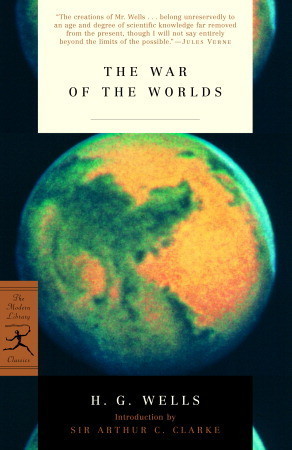
127 Years of The War of the Worlds

In October 30, 1988, the Sunday supplement of La Vanguardia (a major Spanish newspaper) published an article I had written, commemorating the 90th anniversary of the publication as a book of Herbert George Wells’s novel The War of the Worlds. (It had been published in instalments the previous year). That year also marked a half-century after Orson Welles’s radio adaptation of that novel, which caused panic in part of the United States, because many people didn’t realize it was an adaptation of a novel and thought that the Martians were invading Earth.

This year marks the 127th anniversary of the publication of this novel, perhaps the best-known of works of H.G. Wells. A generation after Jules Verne, Wells is the second great precursor of a literary genre (science fiction) that enjoyed enormous expansion in the 20th century. In light of this anniversary, I wonder: Why do these celebrations always take place when the number of years is a multiple of 25? Why can't the 127th anniversary be celebrated? 

Thursday, October 31, 2024

Boethius, time and eternity

Medieval manuscript of
Consolation of Philosophy

1,500 years have passed since the death of Boethius, but the event has gone unnoticed. A century ago, this would not have happened, as history was still being studied. In our times, however, history is despised. And we know what happens to those who despise it, in a phrase attributed to George Santayana: those who do not remember the past are condemned to repeat it.

Anicius Manlius Severinus Boethius was a politician and philosopher of the 5th and 6th centuries, who held important positions in the Ostrogothic kingdom that emerged in Italy shortly after the fall of the Western Roman Empire. In his political activity, Boethius was successively senator, consul and advisor to the Ostrogothic king Theodoric.

Wednesday, December 27, 2023

Responses to a reader who rejects Christianity

A loyal reader of my blog, who praises my way of popularizing science, rejects Christianity and seems bothered by the fact that my articles imply that I am a Catholic. In a series of comments that he wrote in one of my posts, he explains his arguments. I did not answer him there, because of the length of his comments, which in total contain 3,346 words, while my article only has 644 (more than five times less).

I think that this reader should be classified as an agnostic rather than an atheist, as it’s possible to deduce from the following words:

There is nothing stupid about rambling about the possible existence of God and deciding "I'm going 100% that he does exist." The universe is SO complex that, as long as there is no evidence to the contrary, believing that there may be someone/something that "designed" all this... cannot be dismissed as "stupid thinking."

I think the reader's various criticisms can be summarized by quoting the following words, which also appear in his first comment:

The problem comes when we try to use all these reasonings (which, in principle, speak of God as something completely ethereal and impersonal) to try to validate the story of Jesus Christ, which seems to be the goal.

Simple, right? The reader accepts my speaking about God, but not about Jesus Christ. Apparently, he deeply resents my doing so. I have named Jesus Christ in eight posts out of more than 450, although perhaps my Christianity is also clear in posts where I don’t name him. And he accuses me of trying to bring water to my mill (or sweeping home). This is a textbook case of the ad hominem fallacy. As we know, this fallacy (which in this case can be summarized as follows: you say this because you are Catholic) can be answered in the same way: you say that because you are an atheist, or agnostic, or whatever corresponds.

Most of the comments of the reader (2092 words) are directed against the possibility of miracles, and in particular against the miracle of Fatima, to which I have dedicated several posts in this blog. I suspect that the reader thinks that his arguments contradict what I said in those posts, but on the whole I think that he has just provided a confirmation. I said this:

  1. Either the event really occurred, i.e., the witnesses told the truth.
  2. Either the event did not take place, and the witnesses deliberately lied.
  3. Or the event did not take place, but the witnesses did not lie, they were simply mistaken, or were the prey of a collective hallucination, or some equivalent explanation.

And I added:

Skeptics say that the miracle was a collective hallucination, or an optical effect due to the contemplation of the sun. Believers prefer the first option.

G.K.Chesterton

And what does the reader do? Assert that the only valid alternatives to my trilemma are the second and the third. In other words, what I had anticipated. An agnostic or an atheist must deny the possibility of miracles, therefore must necessarily adopt the other two alternatives. A believer has one more alternative, the first. (Catholics don’t automatically accept everything we are told is a miracle, as proved by G.K. Chesterton’s stories in the collection The Incredulity of Father Brown.) Then those 2000 or so words confirm what I had predicted.

There is also some reference to the other argument used usually by atheists to deny the existence of God: the problem of evil. In this regard he says:

If the planes that were going to hit the Twin Towers had frozen in the air 20 meters from the impact... it would have been amazing, there would have been no explanation of any kind and it would have been recorded on video... However, that did not happen... And thousands of people died. And many others suffered a mind-blowing psychological impact. It seems that miracles only happen to do inconsequential nonsense.

This is the problem of human evil, to which the usual response is to point out that we are trying to blame God for the evil that men do. Or as Mark Twain may have said: There are many scapegoats, but the most common is Providence. In this specific case, God is blamed for not having performed a miracle to prevent a barbaric human act. Others usually mention Auschwitz. This demand of miracles reveals a magical-mechanical concept of God, who would only be the automatic corrector of the evil done by human beings. Times don’t change much; that was also what they said to Christ crucified: Save yourself by coming down from the cross! (Mk. 15:30).

It’s curious: some time before the reader posted these comments in my blog, I had used similar arguments in a debate about the existence of God between two artificial intelligences in my latestscience fiction novel: Operation Viginti. The debate ends in a draw, which is what usually happens in this type of debate. Reaching an agreement is almost impossible, for both sides start from different axioms: one affirms that God exists, the other denies or questions it, so it’s difficult to find a convincing argument.

The same post in Spanish

Thematic Thread on Science, Faith and Atheism: Previous Next

 Manuel Alfonseca

Wednesday, June 21, 2023

The (in)credulity of English writers

Charles Dickens

I am going to talk about three famous English writers, and their answers towards the pseudoscience of the time. One of them lived in the middle of the 19th century, another halfway between the 19th and 20th centuries, and practically all the work of the third was written in the 20th century.

Charles Dickens: His brush with pseudoscience appears in one of his best works (in my opinion the best): Bleak House. One of the characters, called Krook (who is really a crook), dies of spontaneous combustion.

The idea that the human body can ignite spontaneously arose from a series of anecdotal cases of people, often alcoholics, burning to death under dubious circumstances. Some argued that ingested alcohol could ignite spontaneously within the body, even though doctors claimed that the amount of alcohol needed to do so would have to be so large that the person would have died of alcohol poisoning long before igniting.

Wednesday, October 12, 2022

The hidden premise

Alvin Plantinga

In previous posts in this blog I have mentioned that atheists sometimes try to justify their beliefs by using hidden premises in their reasoning, the most important of which is this:

God does not exist

At the end of their line of thought, they usually conclude that God does not exist, or some equivalent statement. As the starting premise is hidden, they probably don’t notice that they have incurred in circularity, one of the best-known fallacies since ancient times, which tries to prove the truth of a statement, by assuming from the beginning that the same statement is true.

In the introduction to his Contribution to the Critique of Hegel’s Philosophy of Right, Karl Marx writes this:

Thursday, October 29, 2020

Chesterton speaks to us today

G.K. Chesterton
I don’t need to introduce Gilbert Keith Chesterton. Everybody knows him. Or everybody should know him. Everyone has read him. Or everyone should read him. Chesterton is one of the most important thinkers of the 20th century, but sometimes he seems to speak for the 21st. To prove it, I have chosen some of his quotes. A few are well known, others less so. Let Chesterton speak for himself:
“Progress” is a useless word; for progress takes for granted an already defined direction; and it is exactly about the direction that we disagree. (The works of Charles Dickens, ch. 8, 1911)
The whole modern world has divided itself into Conservatives and Progressives. The business of Progressives is to go on making mistakes. The business of the Conservatives is to prevent the mistakes from being corrected. (The blunders of our parties, Illustrated London News, 1924)
We do not need a censorship of the press. We have a censorship by the press. (Orthodoxy, chapter 7, 1908)
If you attempt an actual argument with a modern paper of opposite politics, you will have no answer except slanging or silence. (What's Wrong With The World, part 1, ch. 3, 1910)
The tragedy of the modern woman is not that she is not allowed to follow man, but that she follows him far too slavishly. (The Victorian Era in Literature, ch. 2, 1913)
It is idle to talk always of the alternative of reason and faith. Reason is itself a matter of faith. It is an act of faith to assert that our thoughts have any relation to reality at all. (Orthodoxy, ch.3, 1908)
The modern world is filled with men who hold dogmas so strongly that they do not even know that they are dogmas. (Heretics, ch. 20, 1905)
Most modern freedom is at root fear. It is not so much that we are too bold to endure rules; it is rather that we are too timid to endure responsibilities. (What's Wrong With the World, part 4, ch.6, 1910). See my post Plans, forecasts and estimations in this blog for E.F. Schumacher’s view on this question.
The old parental authority [will be replaced] by the far more sweeping and destructive authority of the State. (Illustrated London News, 24 Nov. 1928)
Many a school boasts of having the last ideas on education, when it has not even the first idea. (What's Wrong With the World, part 4, ch. 6, 1910)
If individuals have any hope of protecting their freedom, they must protect their family life. (The well & the shallows, "St. Thomas More", 1935)
To have a right to do a thing is not at all the same as to be right in doing it. (A Short History of England, ch. 10, 1917)

Men are ruled, at this minute by the clock, by liars who refuse them news, and by fools who cannot govern. (Utopia of Usurers and Other Essays, The New Name, 1917)

As this is a popular science blog, I will add a few more quotes, somewhat related to science:
Man is not merely an evolution but rather a revolution. (The Everlasting man, Part 1, ch. 1, 1925). See my post Is man just an animal? in this blog.
It is absurd to say that you are advancing freedom when you only use free thought to destroy free will. (Orthodoxy, ch. 7, 1908). See my post On intelligence in this blog.
There had begun that easy automatic habit, of science as an oiled and smooth-running machine, that habit of treating things as obviously unquestionable, when, indeed, they are obviously questionable. (The Victorian Era in Literature, ch. 4, 1913) See my post What’s a scientific theory in this blog.
Suppose something of the type of... contraception really stalks through the modern State, leading the march of human progress through abortion to infanticide... One of the chief features of the state of Peace we now enjoy is the killing of a considerable number of harmless human beings. (The well & the shallows, "Where is the paradox" and “Killing the nerve”, 1935) See my post This is what science says about human life in this blog.
Frank Sheed said this about Chesterton:
When a man is as right as that in his forecasts, there is some reason to think he may be right in his premises.
A fully scientific conclusion.

The same post in Spanish
Thematic Thread on Politics and Economy: Previous Next
Manuel Alfonseca
Thursday, October 17, 2019

Why we have no great men today

G.K. Chesterton
First, a clarification: I won’t let myself be dragged by political correctness. I’m not going to change the title of this post to “great human beings.” For me, the word “man” (equivalent to the Latin homo) still has a main generic meaning, different from the meaning whose Latin antecedent is vir (male), opposed to woman or female.
The absence of great men is a common place today and affects almost all fields:

Thursday, June 25, 2015

Is man just an animal?

Theodosius Dobzhansky
Modern biologists frequently say that man is not special, that we are just a species among many. Thus, for instance, Colin Tudge writes this:
Phylogenetically we are an outpost, a tiny figment of life, just as Earth is a cosmological nonentity that no other intelligent life-form in the Universe would bother to put in their celestial maps.
(The variety of life, Oxford University Press, 2000).
This is just the indiscriminate application of a pseudo-scientific dogma that few biologists would dare contradict, which can be expressed in one of the following equivalent ways:
  • All species of living beings are equivalent; no one is superior to the others.
  • There are no criteria that make it possible to compare the importance of different species.
  • Man is not superior to chimps, ants, bacteria...
  • Evolution has no direction.

Thursday, June 18, 2015

Evolution and progress

Friedrich Nietzsche
In the late nineteenth century, many biologists and thinkers, atheists or agnostics, relied on Darwin's theories to build philosophical schools that combined the newly discovered evolution with the eighteenth-century idea of ​​progress, to assert that the history of life and man shows clear traces of indefinite progress, and to predict that such progress will continue indefinitely into the future.
Among the biologists who ascribed to these theories the best known are T.H. Huxley and Ernest Haeckel. The philosophers were many, each one giving rise to a school of his own, often incompatible with those of others: Karl Marx (Marxism), Herbert Spencer (social Darwinism), Auguste Comte (positivism) and Friedrich Nietzsche (nihilism) were the more influential. In their forecasts for the future of evolution, the last-mentioned was the most exalted and predicted that man would soon be succeeded and supplanted by a superior species, the superman.