Showing posts with label trisomy. Show all posts

Thursday, October 16, 2025

Do people with Down Syndrome have a right to life?

A post I published in this blog in 2017 ended with this paragraph:

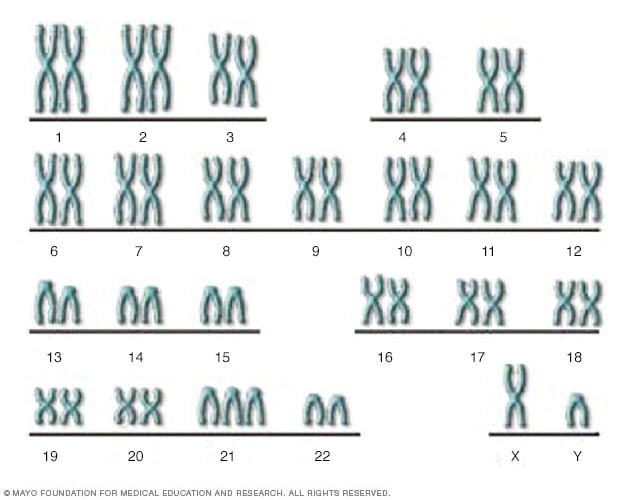
Why are human beings conceived with trisomy of chromosome 21 (Down syndrome) denied the right to life, to the point that, in many Western countries, in practice they are not allowed to be born?

In another post, published in 2015, during the first year of this blog's existence, I calculated the probability that the triple and quadruple screening tests, then in use to detect trisomy of chromosome 21 (the cause of Down syndrome), would produce false positives. The conclusion was this:

Thursday, March 9, 2017

Intersex

Hermaphroditus,
wall painting from Herculaneum
In the previous post I mentioned that in biological chimeras (individuals formed by the fusion of two independent fertilized eggs) it may happen that most of the body belongs to one sex, but the genital organs belong to the other. This phenomenon is called pseudohermaphroditism. It can also be the case (although it is rarer) that the same individual has the two genital organs, complete or incomplete. This phenomenon was formerly called hermaphroditismname of a son of Hermes and Aphrodite in Greek mythology, but these cases have recently been included in the concept of intersexa more general term that covers all cases that do not fit the usual definition of male or female bodies, reserving the word hermaphroditism for animals or plants where that condition is normal.
To clarify things, normal members of the human species have 46 chromosomes (23 pairs), with pair 23 formed by the two sex chromosomes, which are responsible for the differences between the sexes. They can be either two X chromosomes (one inherited from the mother, the other from the father); this genetic endowment is called XX and the individual is female. Or they can be an X chromosome (inherited from the mother) and a Y chromosome (inherited from the father); this genetic endowment is called XY and the individual is male. But in addition to these two cases there are others, much less frequent. Let us quote a few (frequency figures are taken from Wikipedia):