Thursday, April 28, 2022

Matter and antimatter. Why are we here?

The matter making the solar system, the Earth, all living beings and ourselves, is made up almost entirely of atoms which, in turn, are based on three elementary particles: protons, neutrons and electrons. For each of these particles, as well as for many others, not usually part of atoms, there is an antiparticle. Therefore, there could be antimatter antiatoms, made of antiprotons, antineutrons, and antielectrons (positrons).

An interesting property of matter and antimatter is that they cannot be together. As soon as they come into contact, they completely disintegrate, transforming into energy. Everything suggests that our galaxy (the Milky Way) is made up almost exclusively of matter. There is also some antimatter, in the form of antiparticle clouds, outside the galaxy, close to it and attracted by its gravity, but in such a small quantity, compared to the mass of the galaxy, that for practical purposes it can be ignored. It has also been said that there could be some (but very few) anti-stars.

Wednesday, April 20, 2022

October the first is too late

Fred Hoyle was one of the great scientists of the 20th century, as well as one of the most controversial, due to the eccentric theories he defended. His most important scientific discovery had to do with the nucleosynthesis of elements in stars, heavier than hydrogen and helium, which are the simplest and lightest in existence. In particular, from his theory on the formation of carbon atoms, Hoyle deduced an early version of the fine-tuning problem, which made him go from atheism to a vaguely theistic position, as can be seen in this paragraph from his article The universe: past and present reflections (Engineering & Science, 1981):

Would you not say to yourself… "Some super-calculating intellect must have designed the properties of the carbon atom, otherwise the chance of my finding such an atom through the blind forces of nature would be utterly minuscule... A common sense interpretation of the facts suggests that a superintellect has monkeyed with physics, as well as with chemistry and biology, and that there are no blind forces worth speaking about in nature. The numbers one calculates from the facts seem to me so overwhelming as to put this conclusion almost beyond question."

Wednesday, April 6, 2022

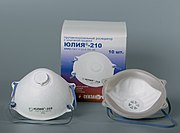
Masking against COVID-19, yes or no?

Some governments are using the mandatory or voluntary use of masks for political gain, for there are many people who do not like them, and the rulers think that lifting the obligation can give them votes. Some people deny that masking does prevent contagion, despite the fact that the use of masks to prevent the transmission of a respiratory disease is common sense. Is there any scientific study that clarifies the situation?

Thursday, March 31, 2022

Is solar energy clean?

For decades we have been sold the idea that when we fully harness solar energy, all our problems of getting cheap and abundant energy, air pollution, and global warming will be solved.

For decades I have been warning that this optimistic approach is not true. If we were able to completely replace energy from fossil fuels (coal, oil and natural gas) by solar energy, some of our problems will not go away, they will just take longer to become unsustainable, especially the problem of global warming.

Why do I think this? Because the Earth receives a certain amount of solar energy. A part is used by plants to carry out the chlorophyll function, which transforms inorganic matter into organic matter, thus making life possible for all animals, including us, humans. Another part heats the oceans and the continents, allowing the Earth to maintain an almost constant temperature, despite the heat losses it suffers every day from the side opposite the sun. Finally, another part of the solar energy is reflected or diverted, in the atmosphere or on the surface, and is lost in outer space.

Thursday, March 24, 2022

Superluminal interstellar travel

James H. Schmitz

The human imagination knows no limits. Einstein can tell us that the speed of light sets an insurmountable limit for objects with mass, but deep down we don't believe it. There has to be a way to break that limit! Otherwise, how could we reach the stars during the short span of our lives, return to Earth and tell here what we have seen?

People in our time, especially our civilization, are determined that we must get everything we want. I want to be immortal, so I must be; if I can't, at least my children or my grandchildren. (We don’t usually go beyond our grandchildren…) I want to travel to the center of the galaxy; if I can't, someone will. I want to do whatever I want with my life, so I will… no matter what!

Thursday, March 17, 2022

Traveling at the speed of light

Image of
"2001, a Space Odyssey"

Actually, the title of this post is wrong. Traveling at the speed of light is impossible, because it would take infinite energy to accelerate to that speed a body with rest mass greater than zero. What I am going to talk about here is travel at relativistic speeds (close to the speed of light), which means more than 10% of the speed of light (i.e. 30,000 kilometer per second).

Thursday, March 10, 2022

Interstellar travel in suspended animation

Most of the problems mentioned at the end of the previous post would disappear if the generational journey were combined with another scientific advance that does not seem, at first glance, impossible: the conservation of human beings in a state of latent life for very long periods of time. This state, which resembles what many living beings do when environmental conditions are unfavorable, is called hibernation when it is a response to cold, and aestivation when it is used as a defense against heat and dry seasons.

Under the current conditions of science, human hibernation is not feasible. It is true that it is possible to reduce the vital rhythm through the application of low temperatures, a technique that is being used in surgery to carry out complex or delicate operations, but the total suspension of vital activities is always transitory and limited to a short period of time, usually measured in hours.