Showing posts with label abortion. Show all posts

Thursday, October 16, 2025

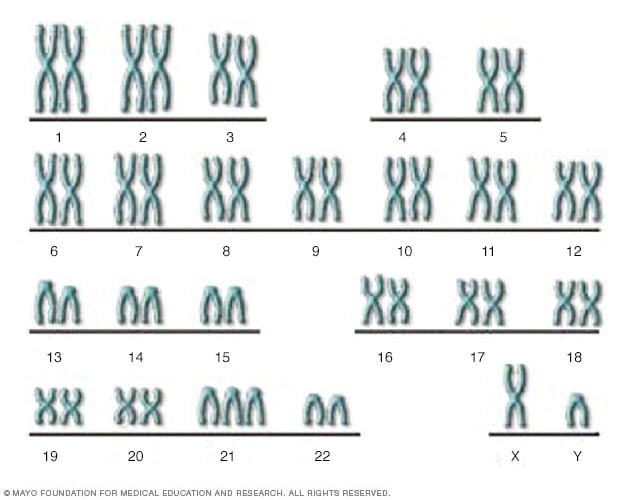
Do people with Down Syndrome have a right to life?

A post I published in this blog in 2017 ended with this paragraph:

Why are human beings conceived with trisomy of chromosome 21 (Down syndrome) denied the right to life, to the point that, in many Western countries, in practice they are not allowed to be born?

In another post, published in 2015, during the first year of this blog's existence, I calculated the probability that the triple and quadruple screening tests, then in use to detect trisomy of chromosome 21 (the cause of Down syndrome), would produce false positives. The conclusion was this:

Thursday, September 12, 2024

Longevity and aging

Almost eight years ago I wrote a post on this topic in this blog, which contained a figure that I built starting from data provided by the Spanish Institute of Statistics, which showed mortality data for Spain in three different years: 1900, 1991 and 2013. The three curves in the figure represent the percentage of people who have reached a certain age and will die during the next year. I’m showing here an equivalent figure, with updated data that correspond to the years 1900, 1991 and 2022, as we now have more recent data.

As I said then, the figure shows that medical advances have reduced mortality, especially at the beginning and the end of life, but their effects are little noticeable for people between 20 and 40 years old. The mortality curve, which in 1900 was U-shaped, is approaching an inverted L, with a very low rate for almost all of life and a fairly abrupt rise after age 80.

Thursday, January 19, 2023

The abolition of truth

Aquilino Polaino-Lorente

In his book Antropología e investigación en las ciencias humanas (Anthropology and research in human sciences, 2010), Aquilino Polaino-Lorente writes:

The evangelical phrase "truth will set you free" is being replaced by the opposite: "freedom will set you true." (Chapter 6). After scientific relativism, political absolutism almost always appears... only irrational attitudes remain, dominating the person, the world and politics... The truth is a mere hostage of the material world, without admitting any discussion outside of it. The absence of truth has maddened science. (Chapter 10).

Science has as its objective the search for truth. Its purpose is to discover what happens in the world, outside and inside of us. And once discovered, that truth also should set us free, because it makes technology possible, which increases our freedom (or should increase it).

Thursday, May 16, 2019

The dominant ideology dares to censor science


In one of the most read and controversial posts in this blog, What science says about human life, which had 92 comments in its Spanish version (so far the blog record), I explained how, for purely ideological reasons, supporters of abortion close the eyes to what science says, which asserts clearly (and has done so for a century and a half) that the life of every human being begins in the fertilization of the ovum by the sperm. Faced with this, abortionists insist on making false statements like these: a fetus is only a part of the mother’s body; a fetus is not a human being; a fetus is nothing but a set of cells (so what are the abortionists?).

A cover of The Lancet
Denouncing one more step towards the ideological control of scientific research, the British journal The Lancet, second in impact factor in the field of Medicine, has published an article accusing certain abortion NGOs and the government of the United Kingdom of interference in scientific research.
The scientists signing the article are part of a team working for the London School of Hygiene and Tropical Medicine, which undertook the evaluation of a project aimed at reducing deaths due to unwanted pregnancies in 14 countries in Africa and Asia (i.e. the number of deaths caused by induced abortions). The project, which was allocated £140 million in funding, was sponsored by the United Kingdom's Department for International Development (DFID) and carried out by two major NGOs working on international reproductive health (an euphemism hiding the word abortion, although those organizations don’t hide it in their websites).

Thursday, August 30, 2018

Zero risk does not exist

No entry: radiation risk
We would like to live in a world where we run no risks, but that is impossible. Whenever we get into a car, cross the street, turn on the gas, or play sports, we run a risk. The most elementary acts of our life entail a risk: breathing polluted air; getting exposed to the natural radioactivity in buildings; passing under a roof just when a tile is falling down... We have always known that life is synonymous with danger, and we have adapted to that. In our time, however, it seems that the threshold of risk we are willing to tolerate has fallen down. In other words: we are now more cowardly.
The media are largely to blame. Trying to attract readers and increase their profits, they often encourage states of opinion close to panic. We can see it in the way many news are presented, especially those affecting health (mad cow syndrome, bird flu, SARS, type A influenza, whatever...); the viability of human life on Earth (global warming, collision with an asteroid); or the economy (times of crisis). Many of these threats are real, but they are systematically exaggerated.

Thursday, December 1, 2016

A global conspiracy?

Isaac Asimov
In 1976, at the peak of the pessimistic forecasts about the catastrophic rise in global population, foreseen by the first report of the Club of Rome (1972), Isaac Asimov published a science fiction short story (The winnowing), which suggested a (highly unethical) way to stop this catastrophic increase in population. This is the summary of the story:
In 2005, the unstoppable population growth causes famine in the third world countries. To contain it, the world authorities (the UN), controlled by the developed world, decide to apply a triage to the world population. To do this, a scientist (who does not want to do it, but is threatened with reprisals against his family) is ordered to develop a protein, poisonous for 70% of the population, but harmless for the remainder, depending on each individual DNA, so that its effects will be dramatic, but random. The protein will be introduced in the food sent to alleviate famines, so as to bring the world population down to more manageable levels. The project is not applied exactly as planned, because the biologist who must develop the protein gives it to eat to the world leaders without their knowing, so that 70% of them will die. As the protein has been adapted to the scientist’s DNA, by eating it he commits suicide, thus escaping the consequences of what he has done.

Thursday, September 8, 2016

Ideology and contempt for science

The sentence against Socrates
In several previous articles I have warned about some of the dangers that are just now threatening the advancement of science, which has proceeded for over two centuries and a half. One of the most important is the dominance reached by certain ideologies with great political influence, that when their ideas are attacked on scientific grounds are oblivious to what science says, or just call it pseudoscience.
  • It is a scientifically undisputed fact that the life of a human being begins at the fertilization of an egg by a spermatozoon. Despite what certain politicians and journalists say, there are no discussions on this issue in the scientific world. In a previous article I have summarized the scientific consensus, which has been unanimous for over a century and a half. Nevertheless, the proponents of a certain radical feminist ideology proclaim a right to abortion which in fact is the right to kill their children. If these abhorrent laws hold, it is due to the cowardice of the rulers, who do not dare to repeal it. The result is a step back in the defense of human rights. We are going back to the Middle Ages, when parents had the right of life and death over their children (this right is now granted to mothers). We are going back to slavery, when some human beings (the masters) had the right of life and death over others (the slaves). We are going back to the Roman Empire, when abortion and infanticide were legal until 24 hours after birth. Is this what they call progress? I would rather call it going backwards.

Thursday, April 28, 2016

What is science and what is politics?

In March 2009, the Spanish Directorate General of Traffic made the following announcement in the media: 22% of those who died in traffic accidents were not wearing seat belts. To save lives, everyone is recommended to use them.
Expressed in this way, the data are ambiguous. One might argue in this way: if just 22% of the victims were not wearing the seat belt, then a number over three times larger (78%) were in fact wearing seat belts when they died in an accident. Therefore it looks like it would better not to use the seat belt at all.
I’ll explain why this conclusion is fallacious. In order to draw the correct conclusion out of the data, one fact is missing: with or without accidents, how many people do use the seat belt and how many don’t? This piece of data can be found, although it took me some time and effort: 95% drivers do wear the seat belt, just 5% don’t. Combining this with the original data, we can compute the probability of dying in an accident with and without the seat belts: it is over 4 times higher among those who do not wear it than among those who do. If everybody used it, the number of deaths could decrease by 18%. Therefore the advice given was sound, although the data were incomplete.
Given how this news was presented, I feel moved to complain about the way in which politicians and the media use statistics and incorrectly report scientific data. If I do that, am I doing politics? Or am I defending science?

Thursday, December 3, 2015

Malthus’s mistake

Thomas Robert Malthus
Since the end of the eighteenth century, apocalyptic warnings as regards the unstoppable increase of the world population have followed one another. In 1798, Thomas Robert Malthus published An essay on the principle of population, as it affects the future improvement of society, with remarks on the speculations of Mr. Godwin, M. Condorcet, and other writers. This essay includes the famous quotation:
Assuming then my postulata as granted, I say, that the power of population is indefinitely greater than the power in the earth to produce subsistence for man.
Population, when unchecked, increases in a geometrical ratio. Subsistence increases only in an arithmetical ratio. A slight acquaintance with numbers will shew the immensity of the first power in comparison of the second.

Thursday, April 2, 2015

The slaughter of the innocents

This image shows a possible result of the tests
described in the post. Black figures represent
pregnant women who tested negative.
Red figures are false positives.
Only the white figures are true positives.
Above-left are the results
for the Down syndrome
A study performed a few years ago [1] describes a delicate situation regarding certain widely used medical tests. The triple test has been performed on many pregnant women in order to detect whether the fetus will have the Down syndrome and other deficiencies. When the test is positive, gynecologists often recommend an amniocentesis or a chorionic villus sampling (biopsy), but as these tests involve some risk, many pregnant women do not want to do it, and some may decide to have an abortion based only on the results of the triple test.
The Down syndrome affects approximately 0.13% of fetuses. The problem is that the triple test used to detect it has a 70% sensitivity (or what is the same, the probability of a false negative is 30%) and a 91% specificity, which means that the probability of a false positive is 9%.
How should we interpret these numbers?
Suppose the triple test is performed on 1000 pregnant women. By applying the above data we conclude that:
         The likely number of fetuses affected by Down syndrome will be 1 or 2.
         The probability of detecting them with the test is 70%.
         90 women (9% in 1000) will test positive, even if their child won’t be affected by the Down syndrome.

Thursday, August 21, 2014

This is what science says about human life

With respect to current discussions about abortion, protection of life, and the rights of the pregnant woman, I think it timely to recall the scientific consensus about human life:

·        The life of every living being generated by means of sexual reproduction begins with the fertilization of the female by the male gamete, i.e. with the formation of the zygote. That is the point in time when a new being appears, of the same species as its parents, whose genetic endowment (its DNA) is different from that of its parents and any other living being of the same species, except for identical twins. This new living being will keep its genetic endowment until its death. This is the reason why the eggs of sea turtles and other endangered species are protected, because they are individuals of those species.
·        In every species of living beings who do not go through metamorphosis (including all reptiles, birds and mammals, and of course man) there is no sharp change in their development from the zygote to death. The different phases we use to make out (embryo, fetus, neonate, child, teenage, adult and old) are arbitrary, without any discontinuities. Not even the birth is anatomically discontinuous (it consists in cutting a blood vessel; physiologically it has other effects). There is no doubt that in all those phases, from the first to the last, the same individual is involved.
·        In every placental mammal (including man), the first phase of the life of the new individual takes place inside the body of the mother. Pregnancy is equivalent and replaces development inside the egg, which in reptiles and birds takes place outside the mother’s body. In both cases, maternity begins in fertilization, not in birth, whose equivalent is the rupture of the egg shell. A woman is a mother from the moment she becomes pregnant.