Thursday, November 17, 2016

Alternatives to the Big Bang

The Big Bang theory has a problem, which can be explained by the following set of questions:
  • The farthest we can see is the cosmic microwave background radiation, which originated about 380,000 years after the Big Bang. We cannot see directly what happened before, because it is hidden behind that radiation.
  • It is true that we cannot see, but we can deduce what happened in those first 380,000 years by applying the standard physical theory, i.e. general relativity. It is also possible to check those deductions, for they offer predictions, such as the average composition of the cosmos, which fit well with the experimental data.
  • The problem is, general relativity does not take us to time zero, the Big Bang itself. This theory can be applied only from 5×10-44 seconds after the Big Bang (the Planck time), as quantum effects were predominant before that time, and we do not have a physical theory that unifies quantum mechanics with general relativity.

Thursday, November 10, 2016

Did the universe have a beginning?

Georges Lemaître
This question has fascinated scientists since 1931, when the Belgian astronomer, physicist and priest Georges Lemaître formulated the theory of the primordial atom, which since 1950 was known as the Big Bang theory. According to this cosmological theory, as the universe is expanding, if we move back in time we must come to a point (13,800 million years ago, the cosmologists tell us) when it would have gone through a singularity, with a volume tending to zero, while pressure and density would tend to infinity. Could this have been the beginning of the universe?
In 1951 Pope Pius XII, in a speech to the Pontifical Academy of Sciences, said the following words:
A mind illuminated and enriched by modern scientific knowledge, calmly evaluating this problem, is led to break the circle of a matter entirely independent and autochthonous, either uncreated, or because it has arisen by itself, and to rise to a creative Spirit... It seems really that present science, by jumping back over millions of centuries, has succeeded in being witness to that primordial “Fiat lux”, when out of nowhere burst forth, together with matter, a sea of light and radiation, while the particles of the chemical elements split and were reunited into millions of galaxies

Thursday, November 3, 2016

More about immortality

Ray Kurzweil
Ray Kurzweil calls himself futurist, meaning that he knows how to predict the future of technology. Actually, what he does is adjusting his predictions as time passes, when he sees that they won’t be fulfilled, as I explained in a post on the horizon effect, which dealt with his predictions about artificial intelligence.
Lately, Kurzweil’s predictions have expanded their scope to medicine. One of his obsessions is that we are about to become immortal. At first he thought this would happen when we will be able to download our consciousness into the memory of a computer, and continue living inside it after our biological death. A few years ago, he predicted that this would take place before 2035.
No longer so confident in this prediction (2035 is around the corner), he now expect us to be immortal shortly before 2050, when he will be 102 years old, so that, by delaying the fulfillment of his prophecies, he begins to risk not to be able to see them.
In a widely publicized interview with Computerworld, Kurzweil now expects us to become immortal through the development of a family of nano-robots that will be injected into our blood and act as a new, much better than our original immune system, detecting and attacking all possible pathogens and cancer cells before they can affect us. Without diseases, we would be immortal. Let's look at a paragraph about that interview:
Imaged prepared by Waquar Ahmad
Futurist Ray Kurzweil said that anyone alive come 2040 or 2050 could be close to immortal. The quickening advance of nanotechnology means that the human condition will shift into more of a collaboration of man and machine, as nanobots flow through human blood streams and eventually even replace biological blood, he added. That may sound like something out of a sci-fi movie, but Kurzweil, a member of the Inventor's Hall of Fame and a recipient of the National Medal of Technology, says that research well underway today is leading to a time when a combination of nanotechnology and biotechnology will wipe out cancer…
That figure, 86% hits, is provided by Kurzweil himself, and in my opinion is far from being real, as Kurzweil usually does not score failures, just delays the date of his predictions. The headline of the story (Nanotech could make humans immortal by 2040, futurist says) would be more suitable if it had been replaced by the following: Ray Kurzweil delays by 10 years the date when we will attain immortality.
Normal and cancer cells
One must be very optimistic to think that in 30 years we will be able to design a better immune system than the one we acquired during a 1000 million years evolution, after a never ending arms race between multicellular beings on the one side, and pathogenic microorganisms and cancer cells on the other. Also remember that these organisms are quite capable to adapt to new situations very quickly, so they would probably find ways to escape from our nano-robots, whose software would have to be constantly changed to adapt to them. I think it probable that we will never be able to defeat them completely.
Finally, overcoming disease is not enough to achieve immortality, we must also stop aging. Otherwise, as I said in last month’s post, we would live for 100 or 110 years, and then die. Too many advances, to be achieved in just about 30 years.

The same post in Spanish
Thematic thread on Immortality: Preceding Next
Manuel Alfonseca

Thursday, October 27, 2016

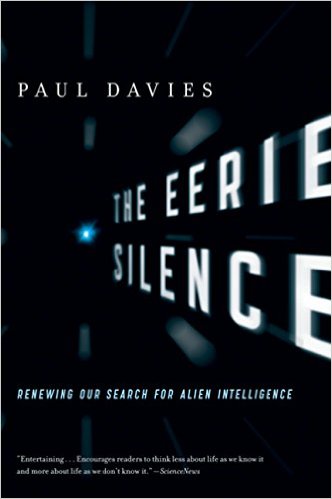
The eerie silence

A little over half a century ago, saw the beginning of project Ozma (named for the princess ruling the fictional country of Oz), which continued with the SETI program (Search for ExtraTerrestrial Intelligence). Assuming that there must be many cases of extraterrestrial intelligence, most of which will undoubtedly have reached a technology capable of communicating by means of electromagnetic waves, surely some of them are sending messages that perhaps we can detect and answer. Initially it was thought that we could take the initiative, sending messages to stars that might harbor planets with life similar to ours, but this was soon considered too expensive, so all efforts were allotted to intercept messages, not necessarily addressed to us. After half a century of efforts, nothing has been achieved. There have been a few false alarms, but none that has been confirmed.
In a previous article I mentioned the Fermi paradox, which holds that we must be alone in the galaxy, because otherwise any extraterrestrial intelligence with several million years advantage would by now be here, because it would not take long to colonize the whole galaxy, even at the interstellar speeds we will reach in the next few centuries.

Thursday, October 20, 2016

Aging and longevity

Life span of several species.
Data from Science News, 7-13-2016
It is often said that aging has been favored by natural selection to facilitate the replacement of one generation by the next. According to Alex Kowald (University of Newcastle), this statement is nonsense. It is evident that natural selection would favor individuals aging less and able to reproduce longer. Peter Medawar, Nobel Prize in Physiology and Medicine (1960), said in 1951: Wild living beings do not live long enough for natural selection to act on genes that affect aging. Death overtakes them long before they are near their limit of longevity.
Each species of living beings seems to have a maximum longevity. In humans, according to appearances, this limit does not seem to go far above 110 years. The longest proven human longevity corresponds to Jeanne Louise Calment (a French woman), who died at age 122.5.

Thursday, October 13, 2016

Who is to blame for human atrocities?

Dr. Thomas A. Dooley
The following paragraph was written by Dr. Thomas A. Dooley in his book Deliver us from evil (1956). After several months in medical command of the camp for the refugees who fled North Vietnam after the partition of the country, at the end of the French colonialism in Indochina, Dr. Dooley provided medical aid in Laos and was a founder of MEDICAL (Medical International Cooperation), a department of the International Rescue Committee (IRC).
Having set up their controls in the village of Haiduong, Communists visited the village schoolhouse and took seven children out of class and into the courtyard. All were ordered to sit on the ground, and their hands and arms were tied behind their backs. Then they brought out one of the young teachers, with hands also tied. Now the new class began. In a voice loud enough for the other children still in the classroom to hear, the Viet Minh accused these children of treason. A "patriot" had informed the police that this teacher was holding classes secretly, at night, and that the subject of these classes was religion. They had even been reading the catechism. The Viet Minh accused the seven of "conspiring" because they had listened to the teachings of this instructor. As a punishment they were to be deprived of their hearing. Never again would they be able to listen to the teachings of evil men.

Thursday, October 6, 2016

The mystery of the missing neutrinos

Detection of solar neutrinos in a one mile deep
South Dakota mine (1972)
One of the pseudoscientific hoaxes running in Internet says something like this:
According to the justification of the Nobel Committee in 2015, Takaaki Kajita and Arthur B. McDonald received their Nobel Prizes for the discovery of neutrino oscillations, which shows that neutrinos have mass. The Nobel Committee donated again Nobel Prizes and 8 million Swedish Coronas for NOTHING, since the numerical value of the frequency, impulse, kinetic energy, and therefore the mass of the neutrinos, are still unknown. Without the numerical value of the frequency, it has not been proved that the neutrinos oscillate and have mass. According to the pseudo-scientific theory of modern physics, one light-year thick layer of lead absorbs only half of the neutrinos, then how is it possible to detect neutrinos and the neutrino oscillation? Since Takaaki Kajita and Arthur B. McDonald have not one light-year thick layer of lead in their laboratories, therefore the discovery of the neutrino oscillations is only a scam! The neutrino is an invented particle, which comes from the wrong pseudo-scientific theory of modern physics.
This paragraph, which calls pseudoscience the standard theory of particle physics, contains a few glaring mistakes that I will try to detail here: