 |
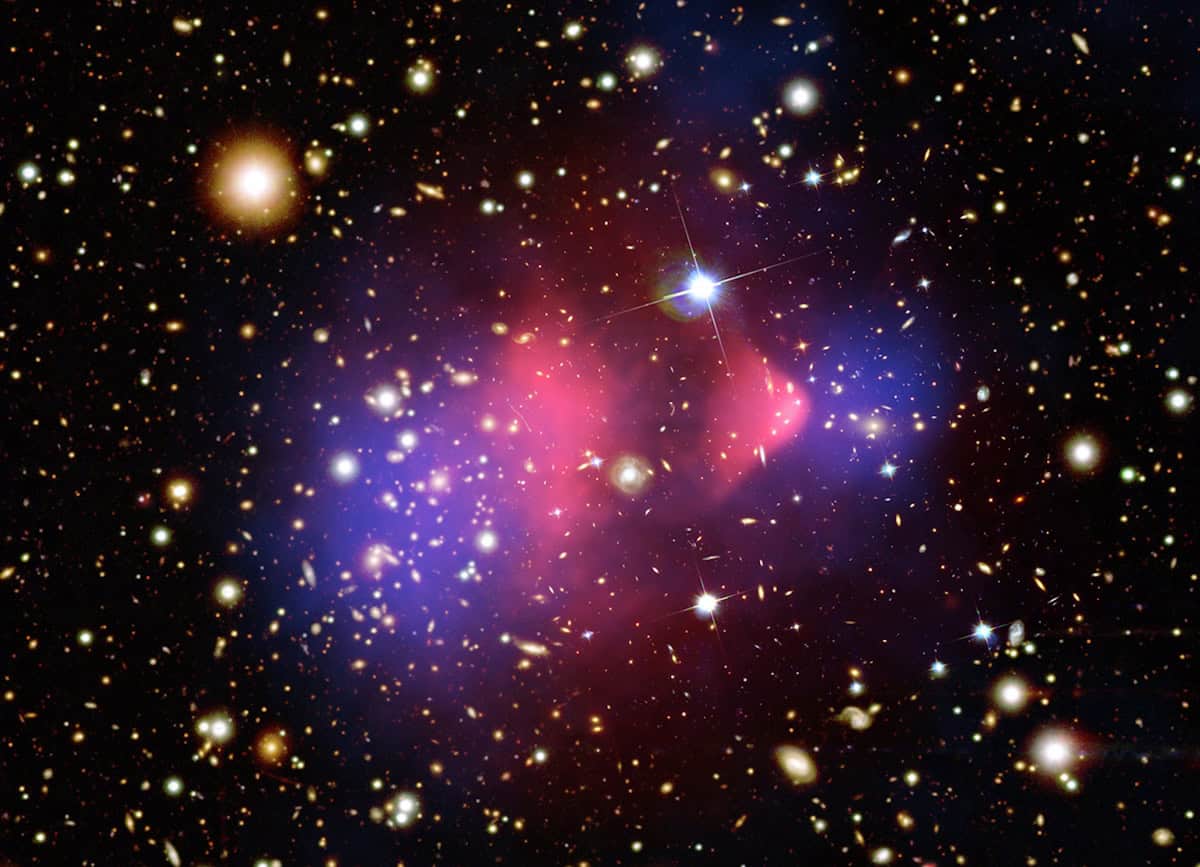
| Bullet Cluster, hot gas in pink, dark matter in blue |
In several previous posts in this blog, I have pointed out that physicists and cosmologists frequently forget the real world and construct theories based on speculations not based on concrete data, observations, or experiments, but only in their imagination. Let’s look at a few examples:
·
Is
physics losing touch with reality? In this post, published in 2017, I used as
examples the various theories about multiverses, the theory of everything, and some
ideas that would make it possible to build a time machine (in principle, but
hardly in practice).
·
Is
physics: science or literature? In this post, published in 2018, I referred to
Freeman Dyson's procedure for extracting energy from stars and the idea that an
advanced civilization could resist the accelerated expansion of the universe.
· Pathological science, wishful science, or ironic science? This post, published in 2023, points out eleven cases of scientific research without experimental basis.
.jpg/250px-Darth_Vader_at_Galaxy%E2%80%99s_Edge_(cropped).jpg?utm_source=en.wikipedia.org&utm_campaign=parser&utm_content=thumbnail)